Description
A major figure in twentieth-century animal sculpture, Édouard-Marcel Sandoz grounded his work in close observation of the animal world and a profound understanding of materials. In the final phase of his career, he moved toward an increasingly realistic mode of representation, distancing himself from the simplification of masses and the stylization of volumes that had characterized some of his earlier productions. Genet and Snake, created around 1955, belongs to this mature period, at a time when the artist asserted his commitment to figurative sculpture in the face of the rise of abstraction. The work demonstrates a finely balanced synthesis of naturalism, formal sensitivity, and modern plastic expression.
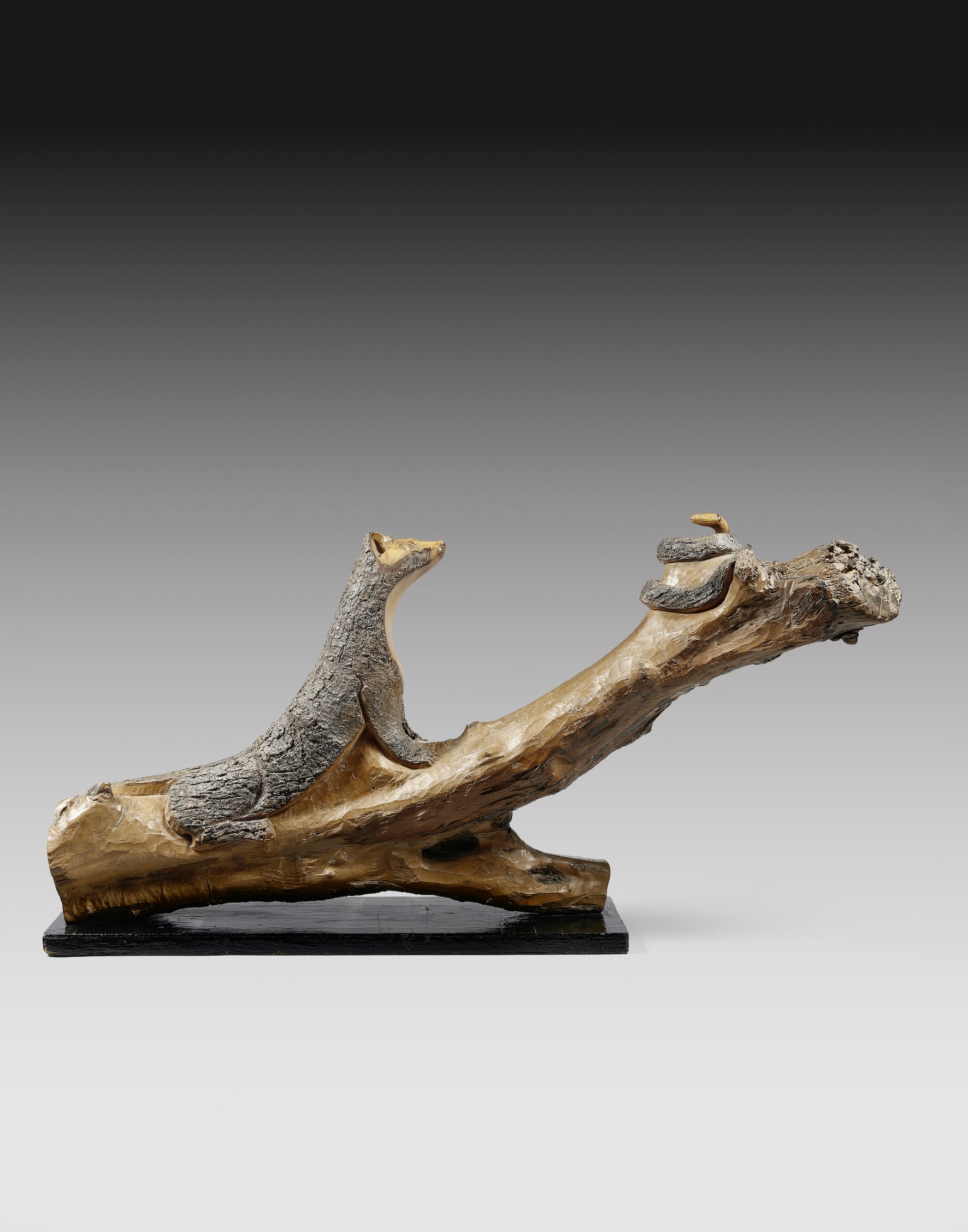
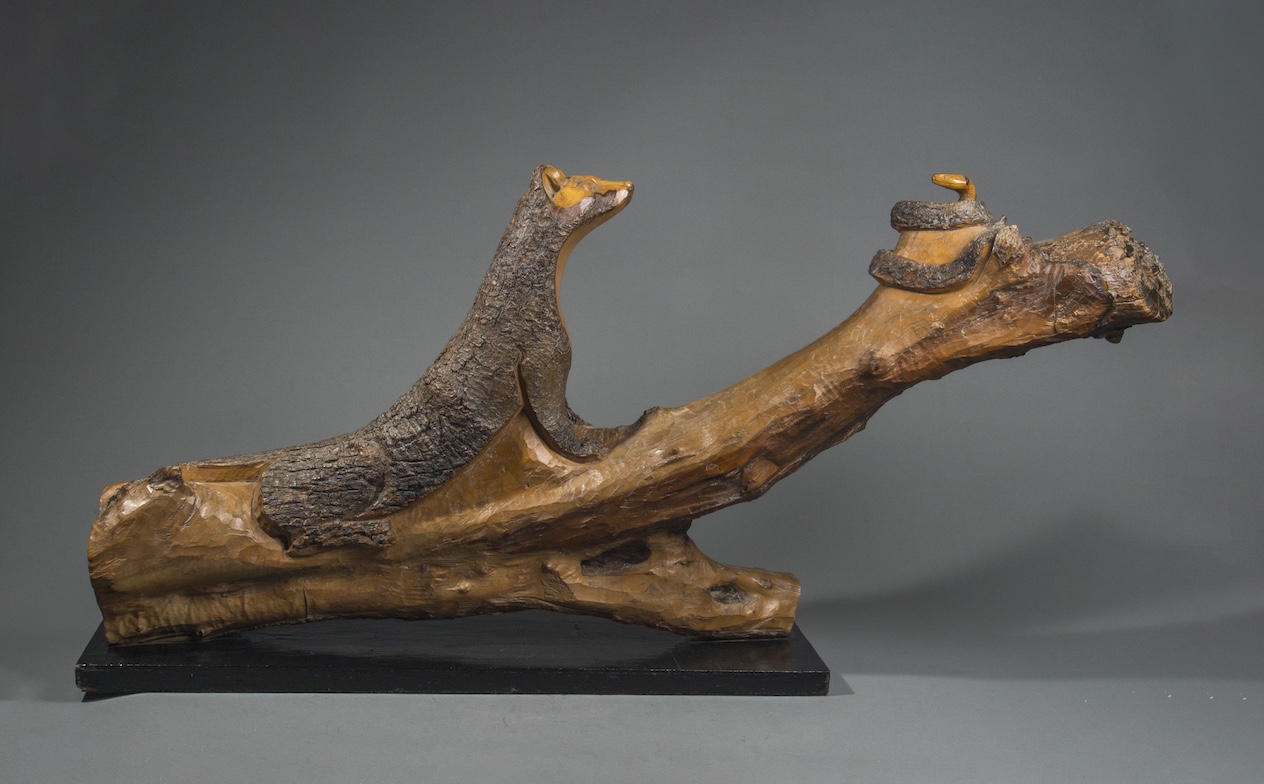
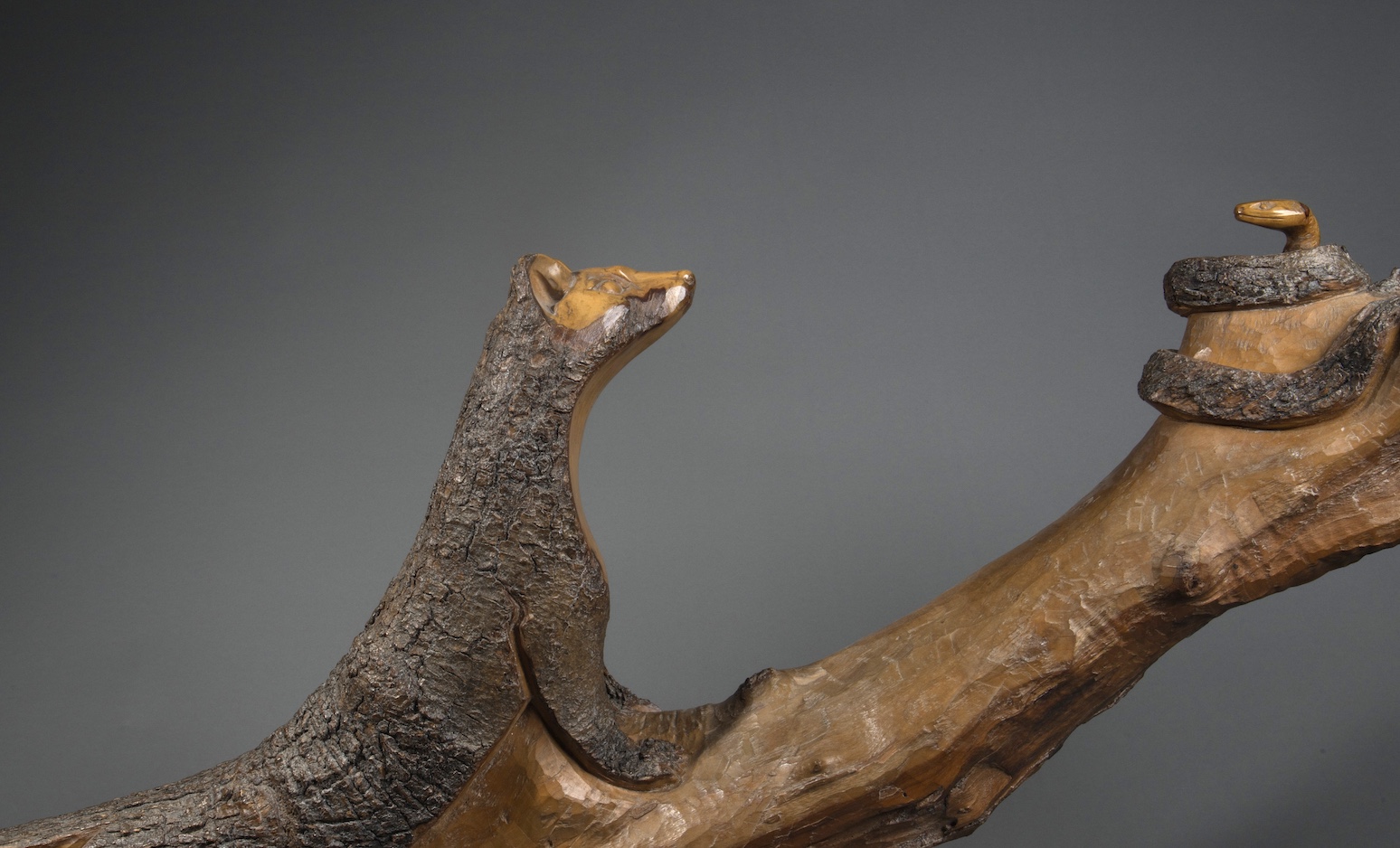
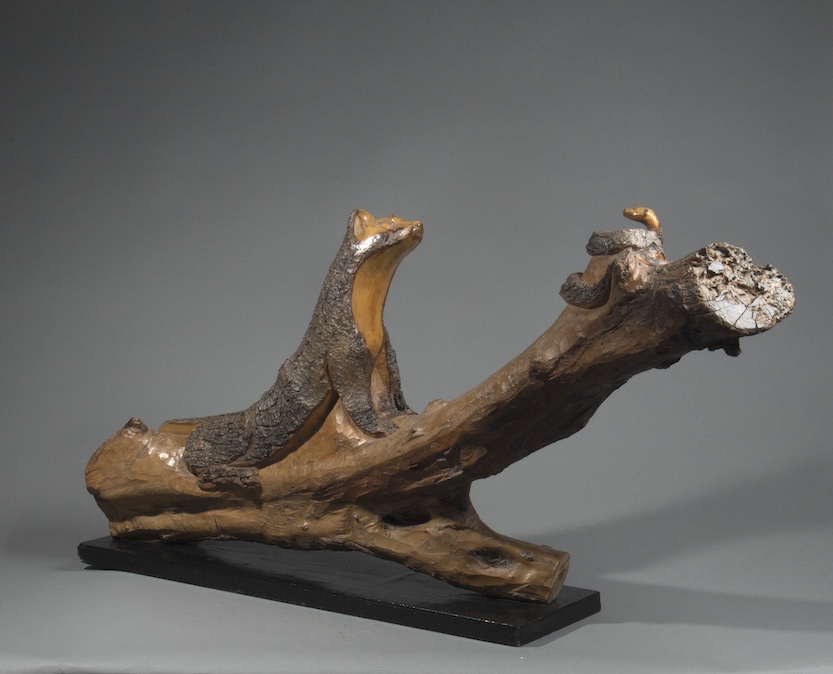
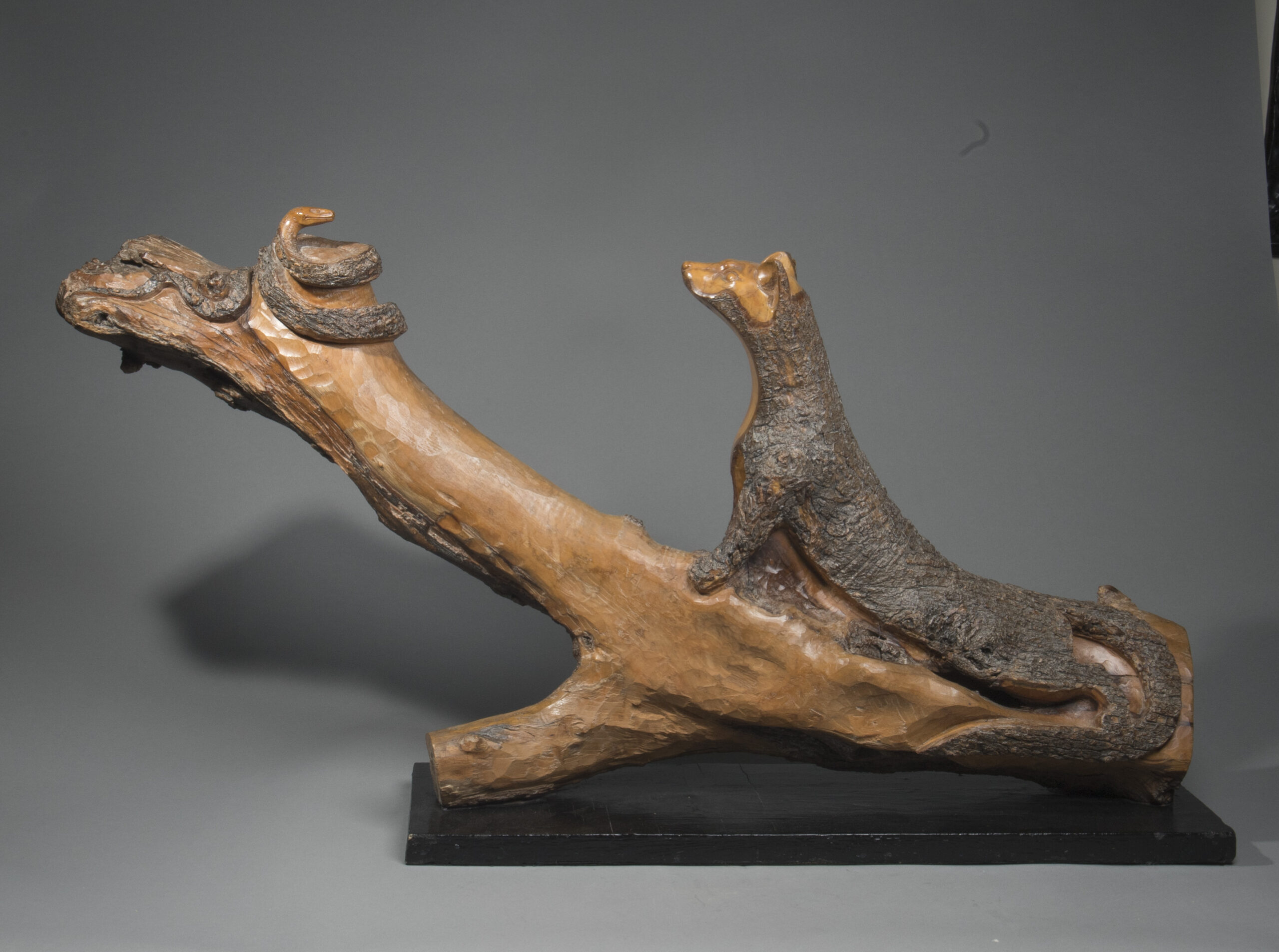
The sculpture is carved directly from a trunk of olive wood, a dense and demanding material that Sandoz prized both for its expressive qualities and its symbolic resonance. True to his approach, the artist does not seek to force the material but rather to reveal its inherent plastic potential. The natural curves, knots, and irregularities of the wood guide the composition, while the alternation between carved passages and areas left in their raw state grants the branch a fully constitutive role within the scene. More than a mere support, it becomes the site of an encounter between a genet and a snake.
While reptiles recur frequently in Sandoz’s œuvre, the genet appears only exceptionally. The artist produced just four models of this animal, all dating from his final creative period. This rarity may be explained by the presence of the animal at that time in the artist’s Paris studio on the rue d’Alésia.
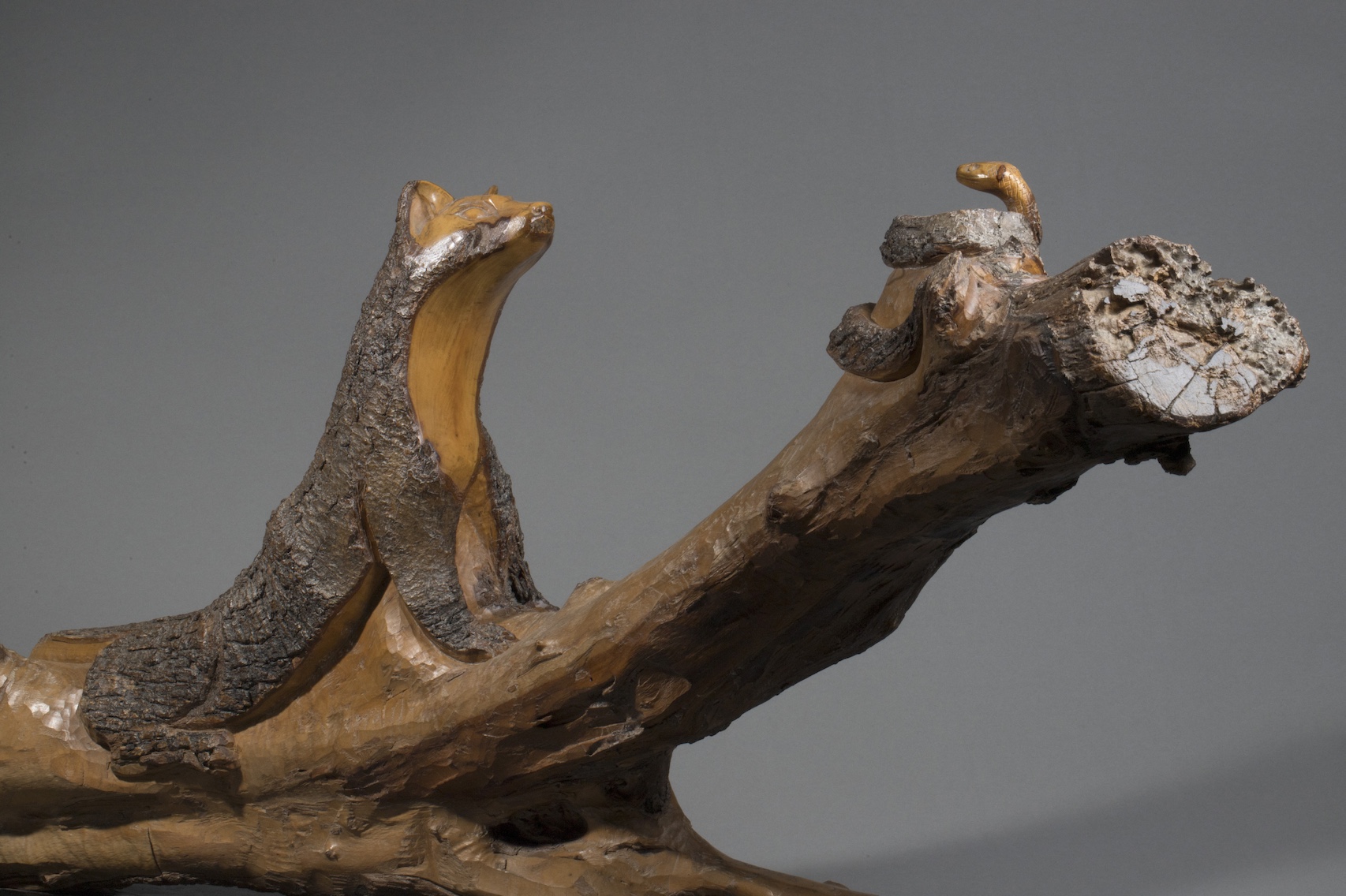
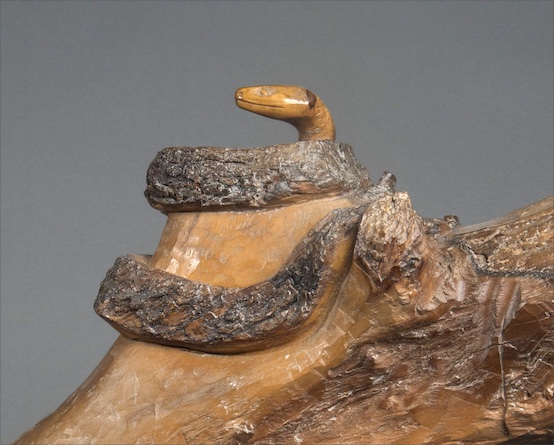
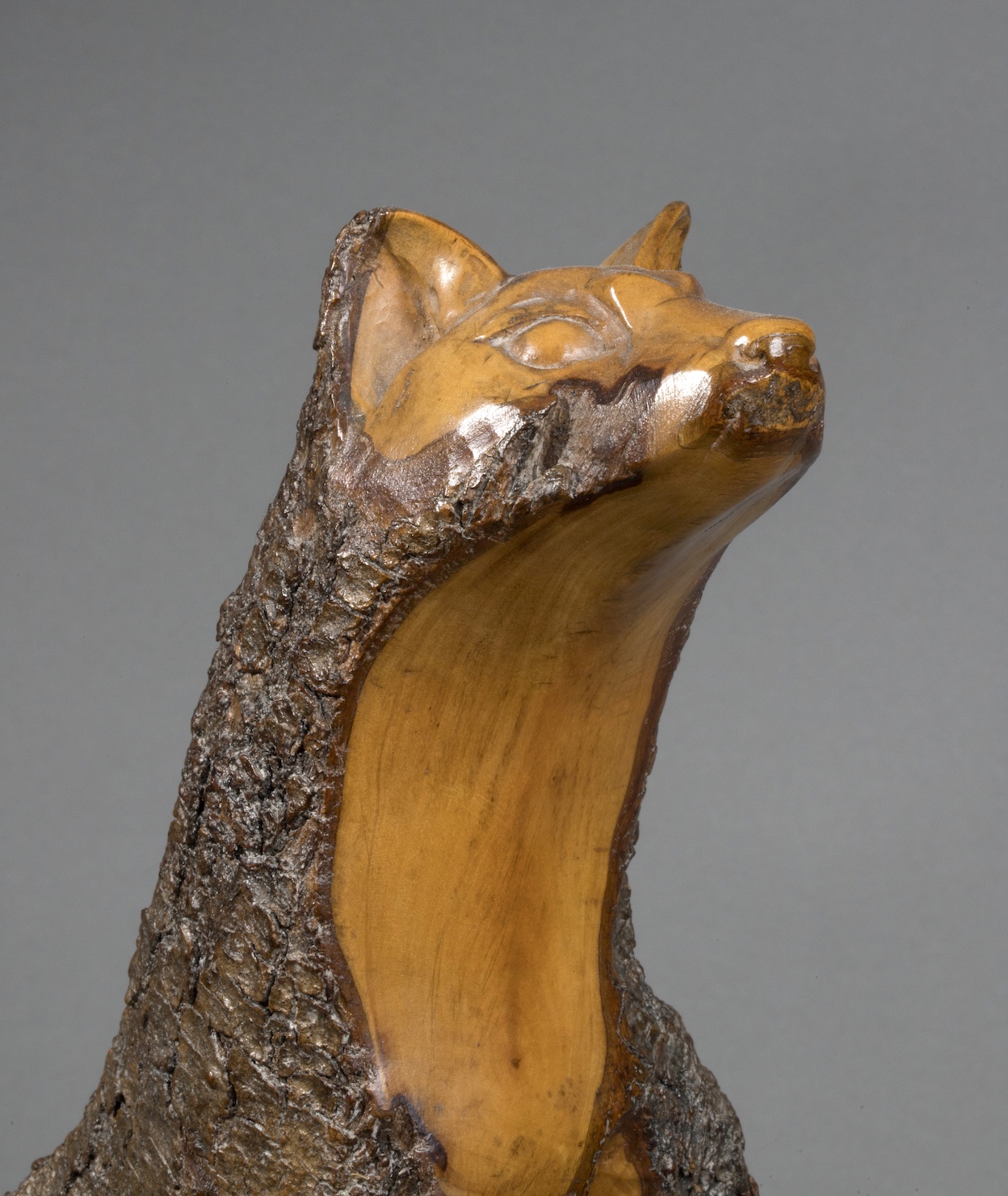
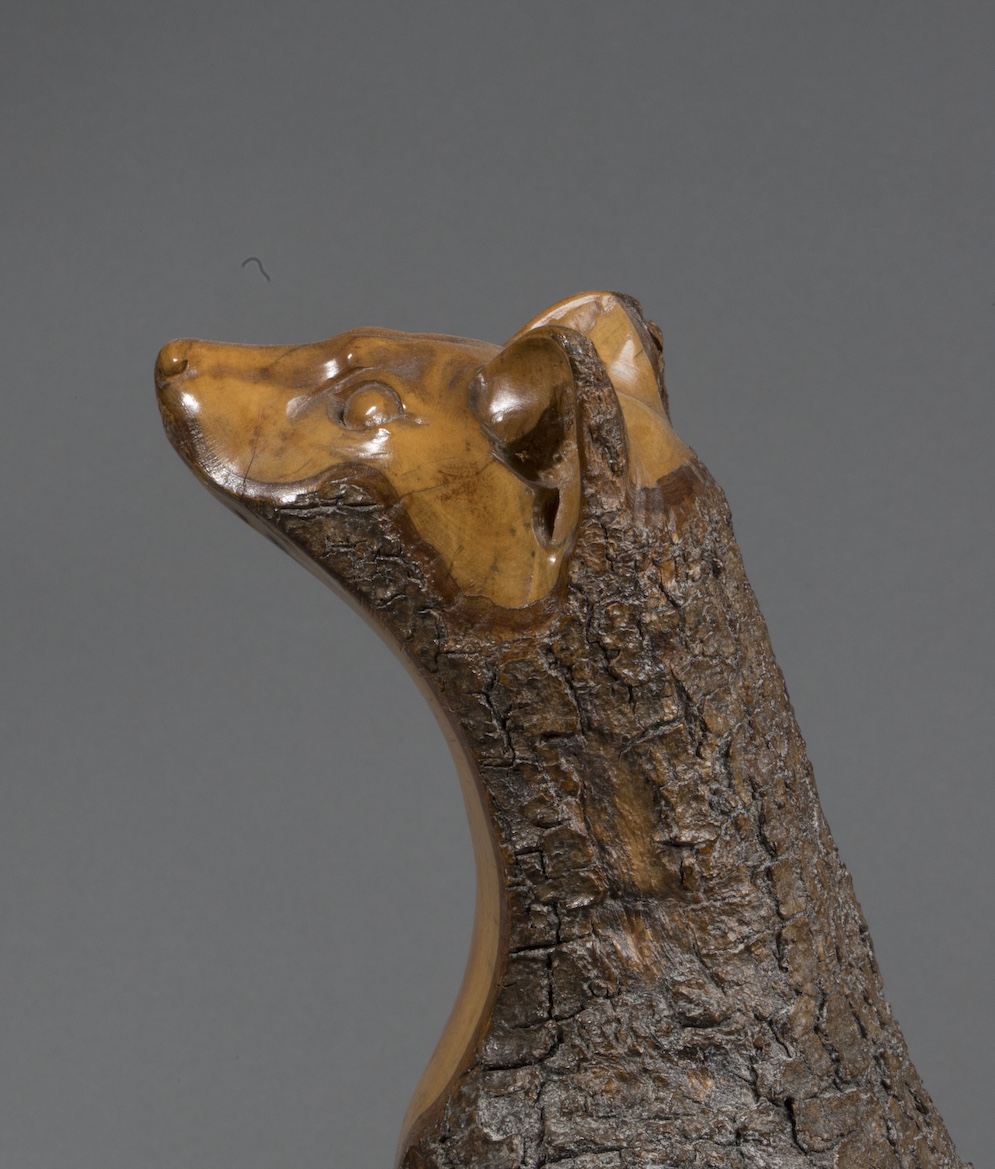
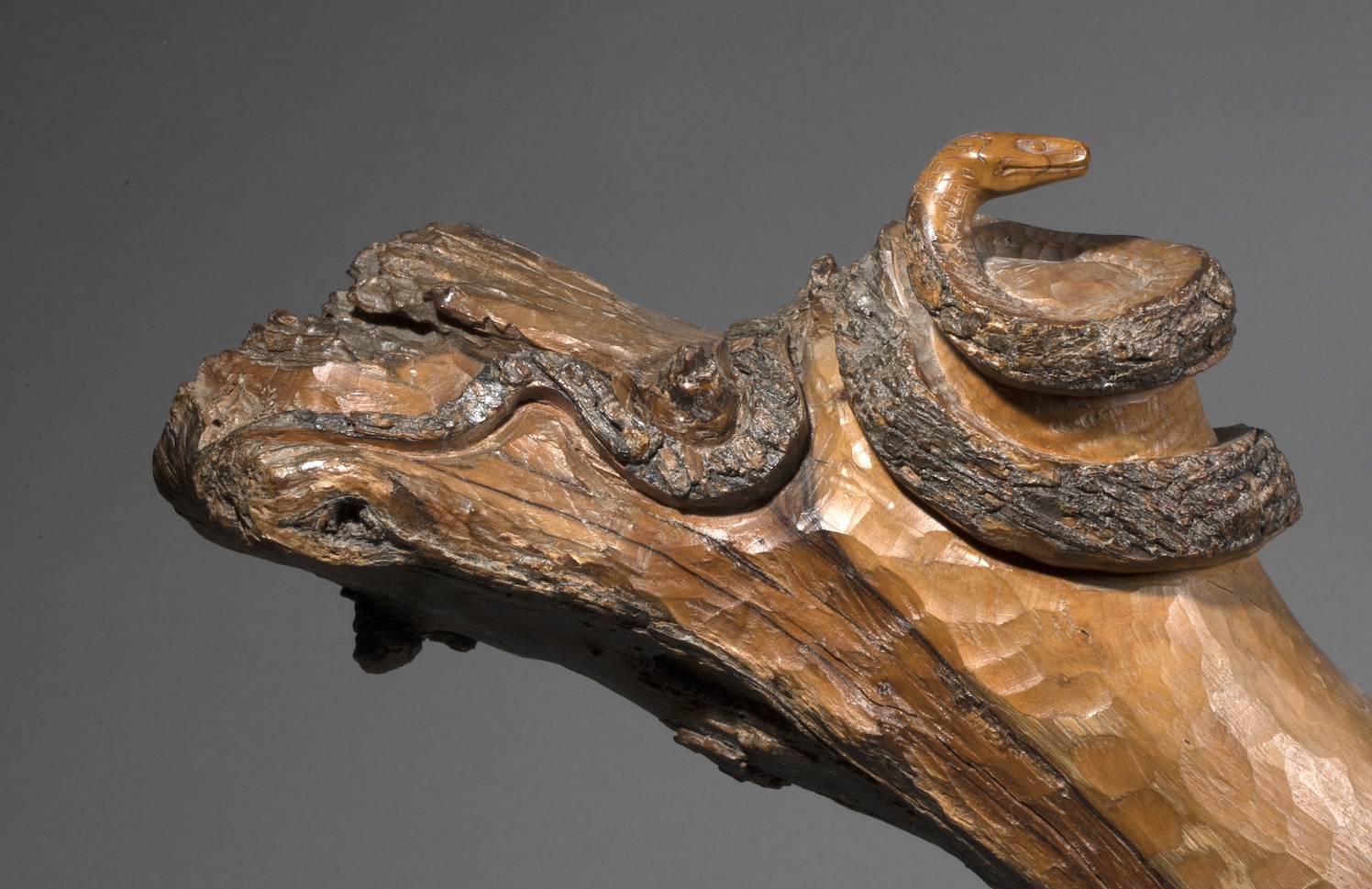
The genet is rendered with striking anatomical accuracy. Its elongated, taut body conveys a state of extreme alertness as it confronts the snake coiled at the opposite end of the branch. The confrontation—suggested rather than depicted outright—remains silent and suspended, endowing the work with a restrained dramatic intensity based solely on the tension of forms and postures. The snake plays a crucial role in the compositional balance: its spiral form introduces a circular movement that counteracts the horizontal thrust of the wood and heightens the tension of the scene.
The sculptural treatment combines passages of great refinement—particularly the genet’s head, muzzle, ears, and paws—with deliberately rougher areas where the natural texture of the wood remains visible, serving to suggest the fur and skin of the two antagonists. This contrast affirms a modern aesthetic, free of academic convention, in which fidelity to the material engages in dialogue with the precision of scientific observation. Sandoz here translates his study of living forms into a synthesis that is both essential and expressive.
Previously known only through family photographic archives, this unique wooden sculpture represents an exceptional rediscovery. As a non-reproducible work, it occupies a singular position within Sandoz’s production. Wooden sculptures are in fact far rarer in his œuvre and reveal a more intimate dimension of his practice, rooted in direct engagement with the material and the spontaneity of the gesture.
This work thus stands as a major testament to Sandoz’s creative freedom and to his significant contribution to the modernity of twentieth-century animal sculpture.