Description
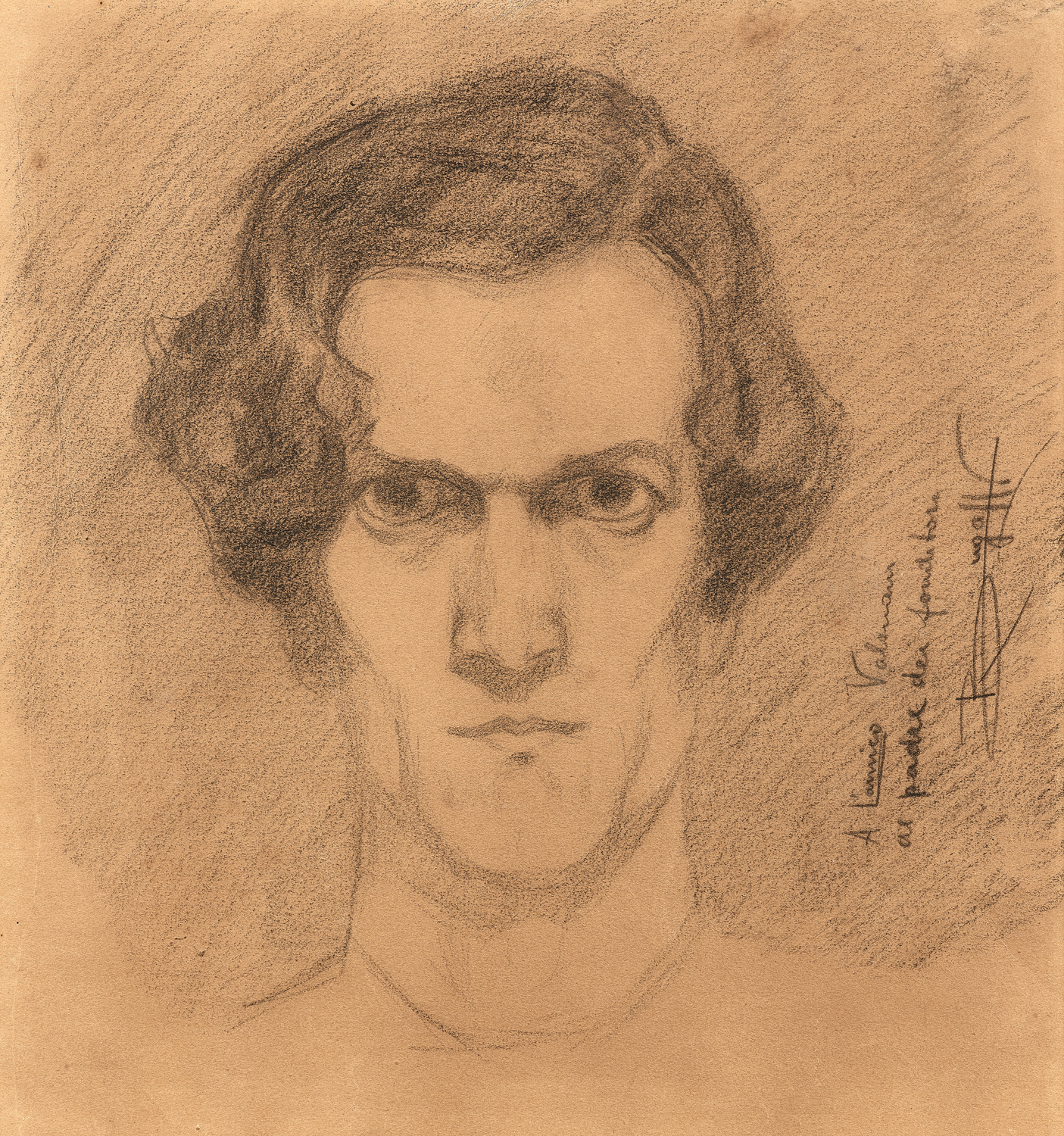
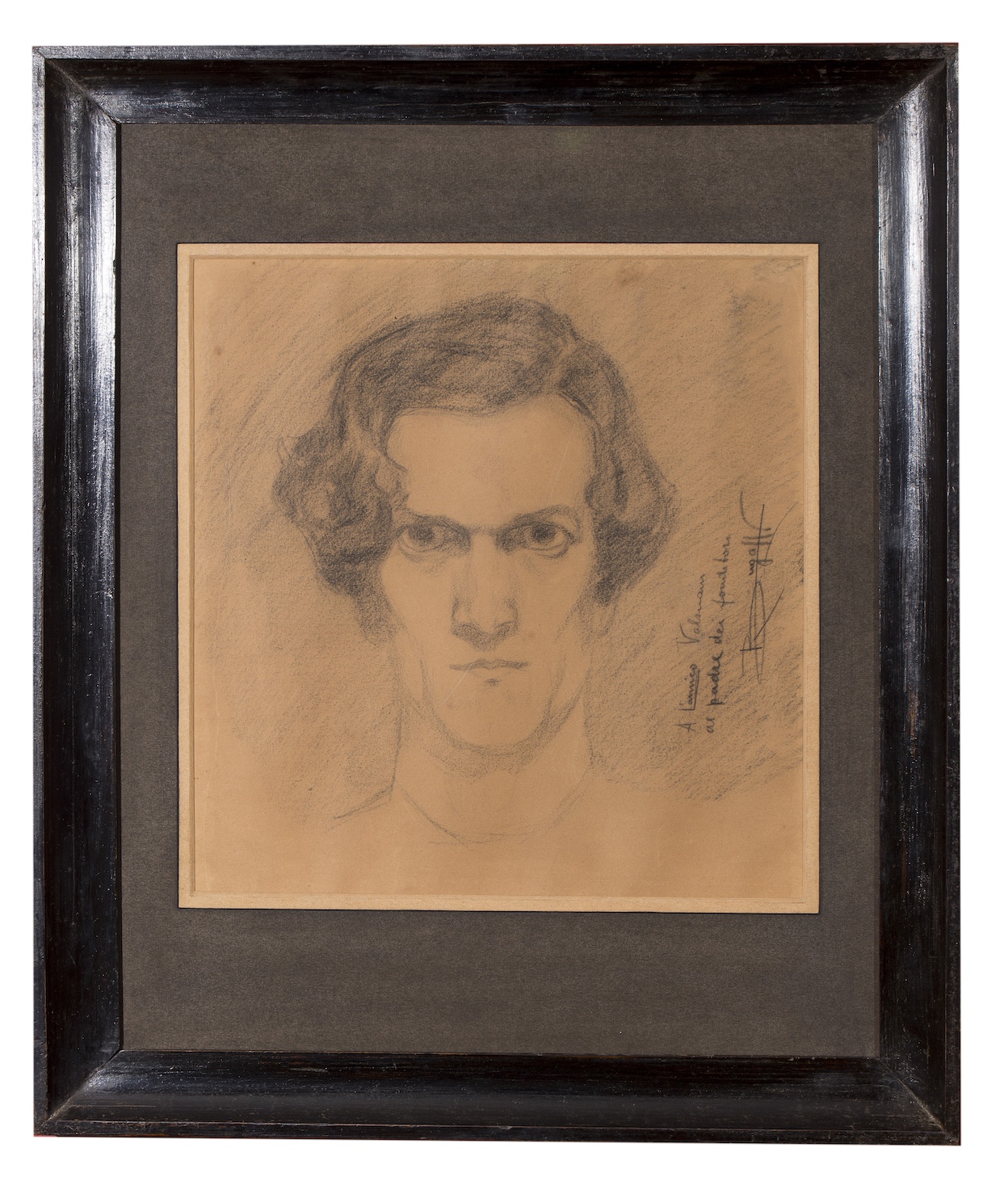
A sculptor of genius, Rembrandt Bugatti occasionally tried his hand at painting and drawing, as demonstrated by this self-portrait. A self-portrait, a staged self, is above all a means of expressing one’s inner self. It also serves to manifest the desire to capture a significant moment in life. Finally, it constitutes a unique testimony, as intimate as it is introspective, capable of conveying profound emotions. It is a genre that spans centuries, created by the greatest artists from Rembrandt to Picasso, to name but two.
Here, the emphasis is on the artist’s gaze, scrutinizing and imbued with profound melancholy. His face, facing forward, has closed features; it exudes intense concentration, a self-assertion that reveals the sculptor’s excessive temperament, entirely devoted to his art. A dedication to his friend, the founder Valsuani, of Italian origin like himself, is an affirmation of his vocation. Indeed, it was in 1903, at the age of 19, that Rembrandt Bugatti settled in Paris and, through his adoptive father René Dubois, met Adrien Aurélien Hébrard, who took him under contract. Hébrard managed the renowned foundry as well as the gallery on Rue Royale in Paris. The workshop manager, assisted by Marcello and Claude Valsuani, then produced his sculptures using the lost-wax casting method in bronze.
From this close collaboration emerged a magnificent talent dedicated to sculpture, tragically cut short by the artist’s death at the age of thirty-one on January 8, 1916. Profoundly melancholic, Bugatti orchestrated his own end; he was found dying, lying on his bed, dressed in impeccable formal attire. He had gassed himself, leaving his lamp open. On his bedside table, he left a bouquet of violets and two letters. Taken to Laennec Hospital, he there breathed his last. The founder Albino Palazzo would later cast his death mask (Paris, Musée d’Orsay). “I hope and believe I have succeeded in creating a work that no animal sculptor, ancient or modern, has ever produced,” he had one day written to his brother.