Description
Initially an animal sculptor, Frémiet began tackling more ambitious subjects around 1850. In 1859, he submitted a Gorilla Abducting a Woman to the Salon. The jury rejected the work, deeming it offensive to public morals. Nevertheless, it was exhibited thanks to the Superintendent of Fine Arts, but in a niche veiled by a curtain. It attracted both curiosity and criticism, including that of Charles Baudelaire, for whom this depiction of rape was unworthy of the sculptor’s talent.
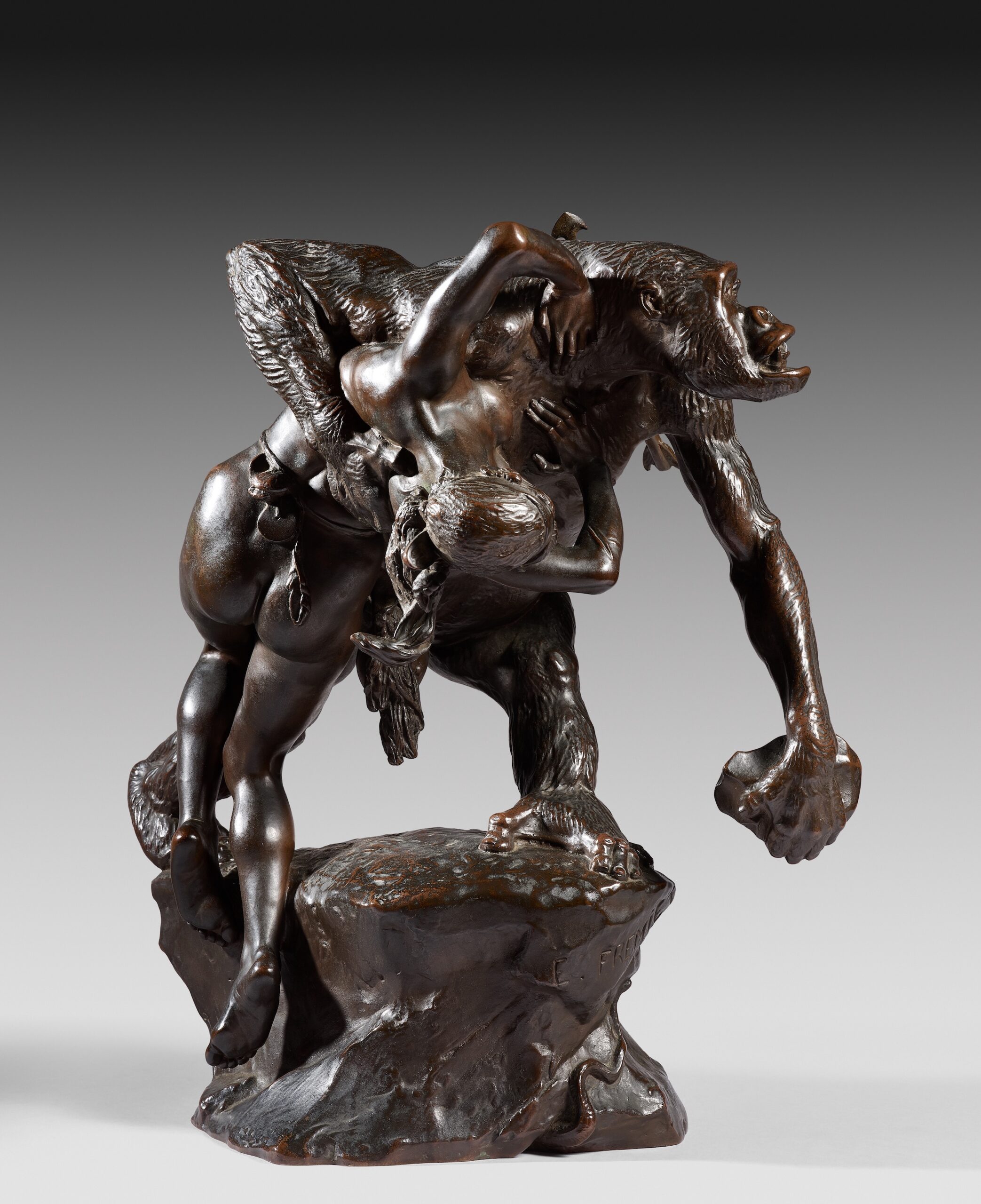
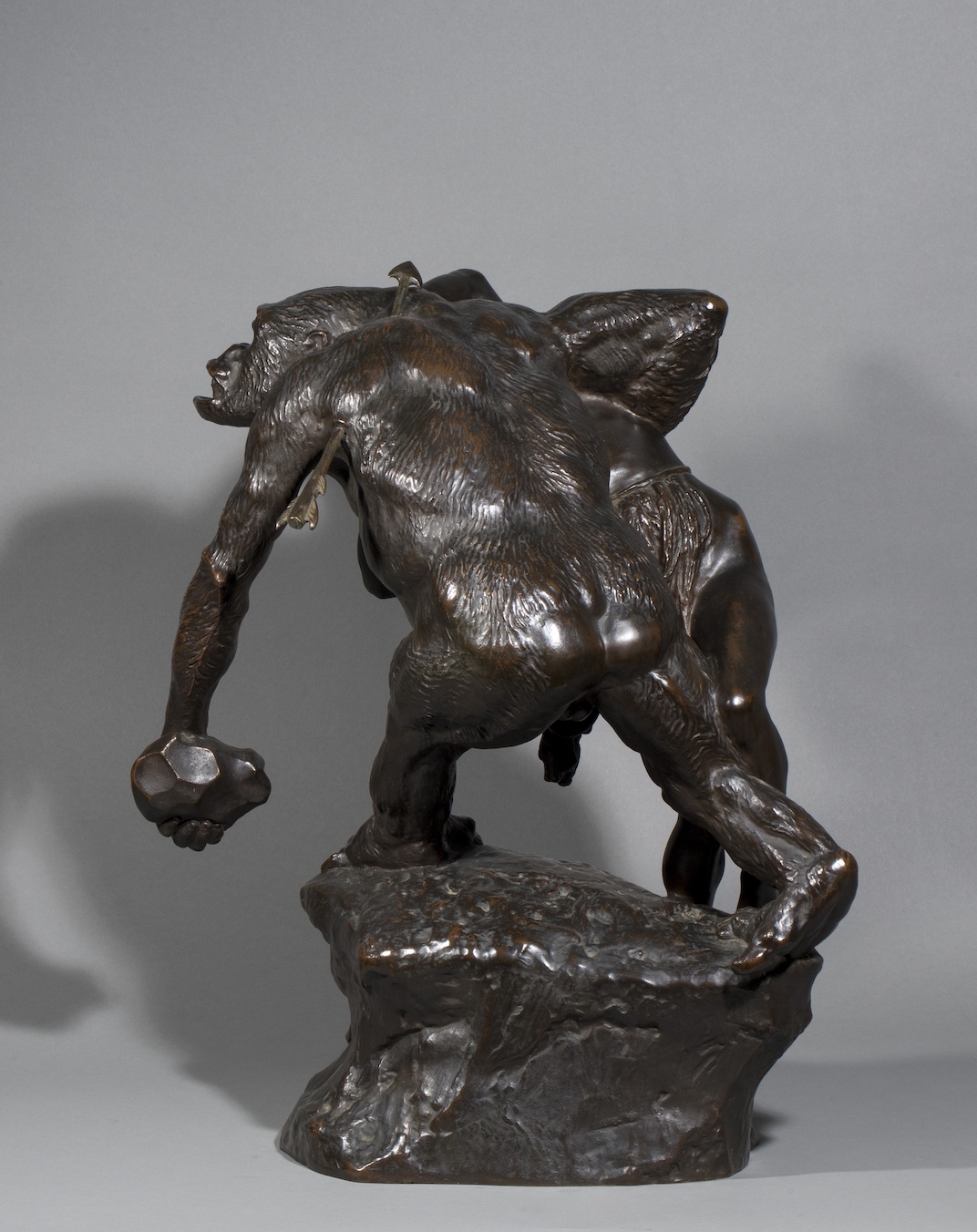
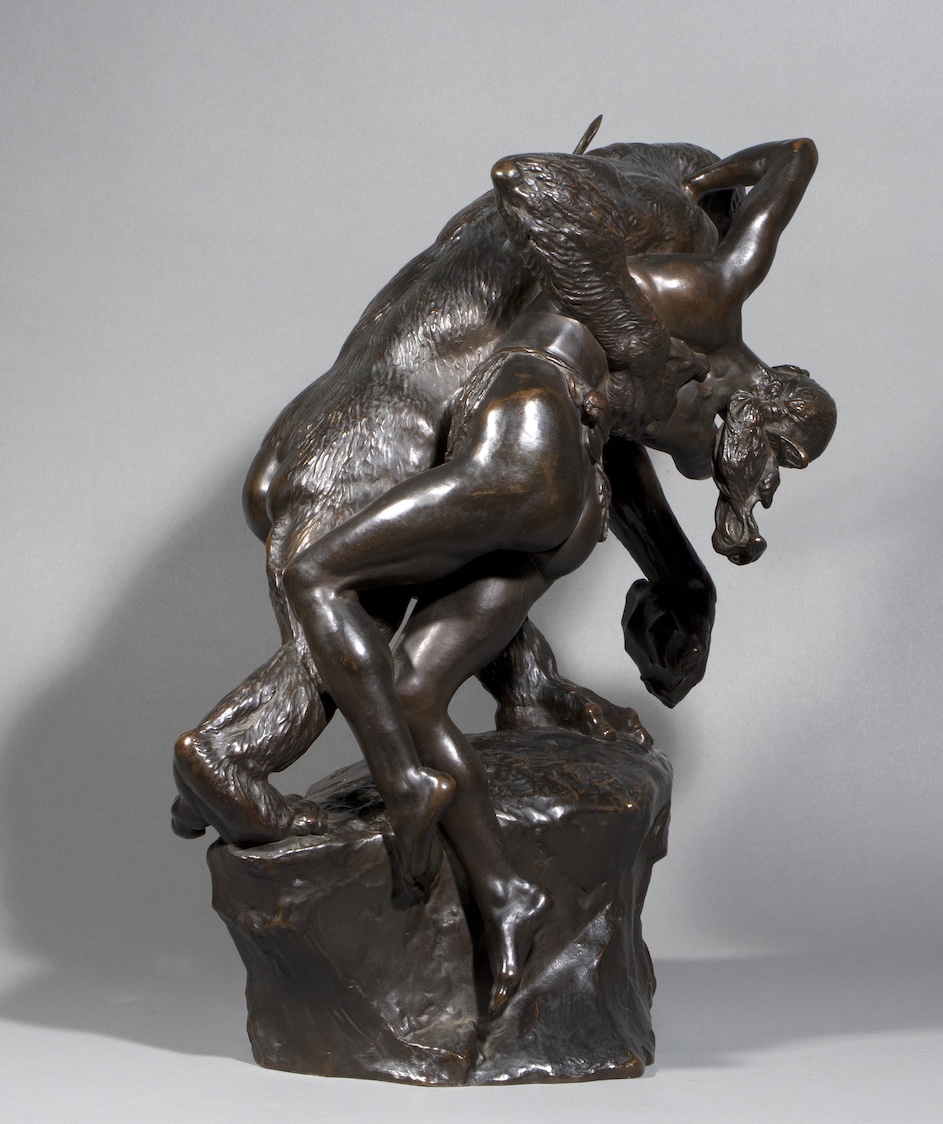
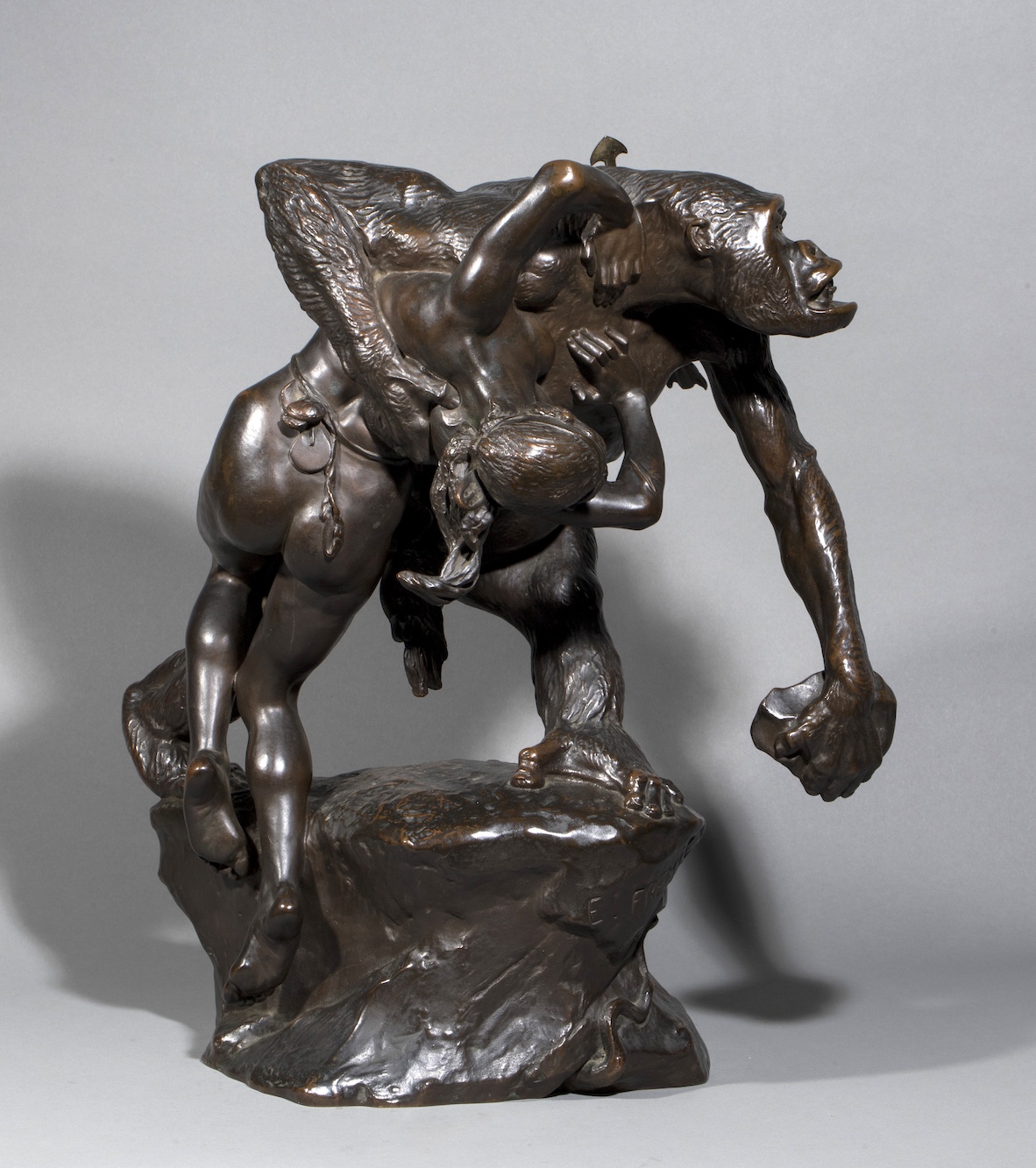
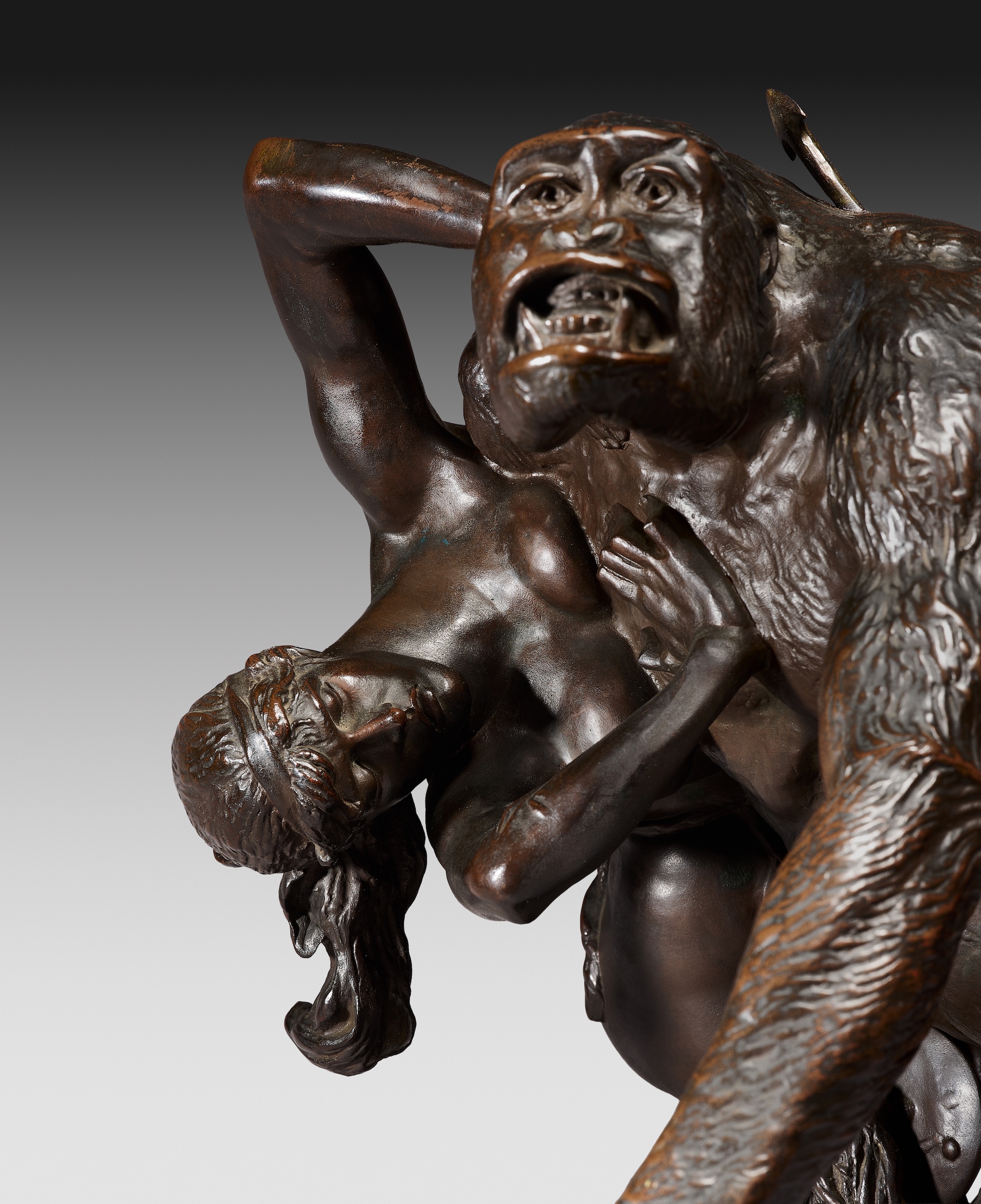
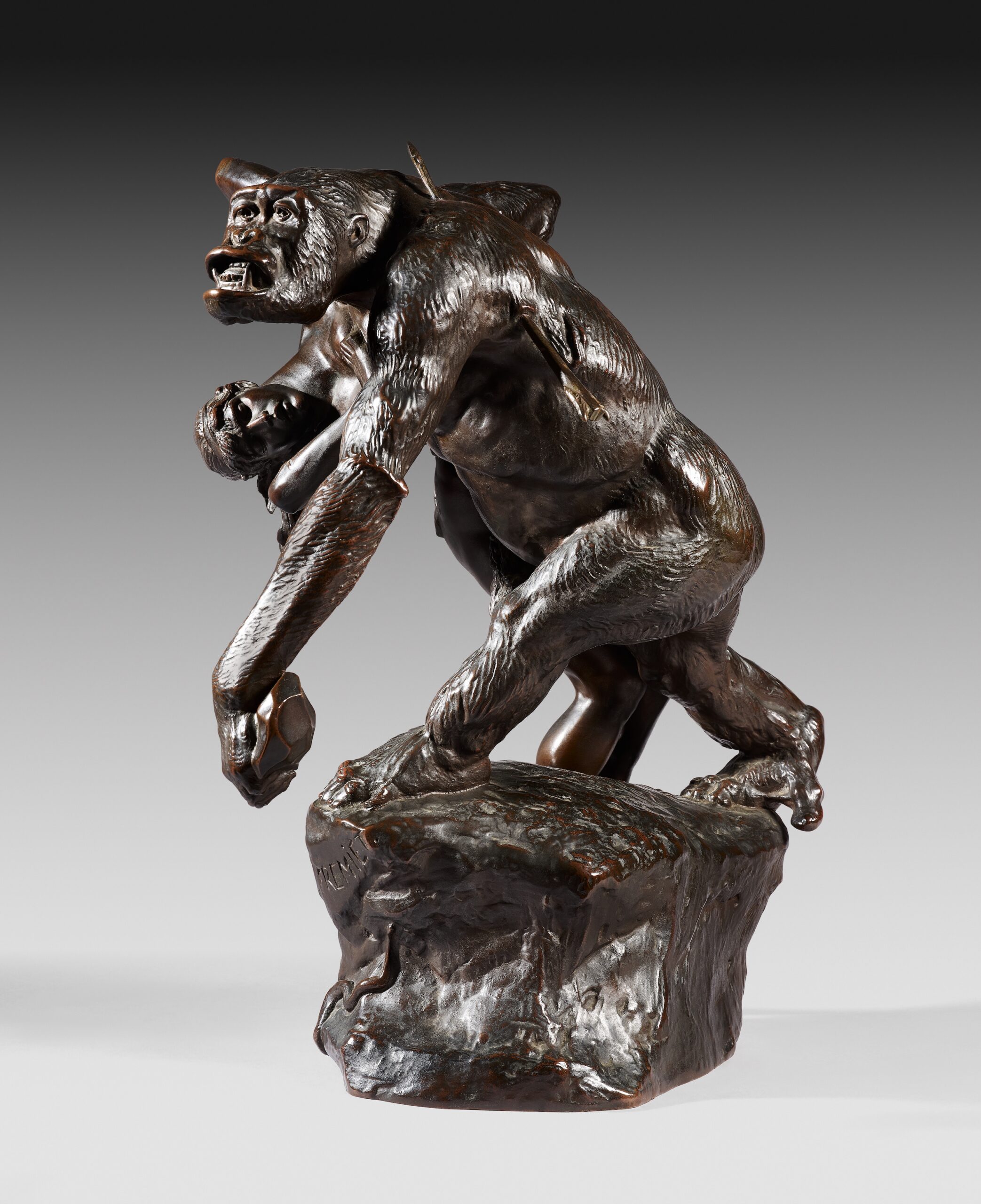
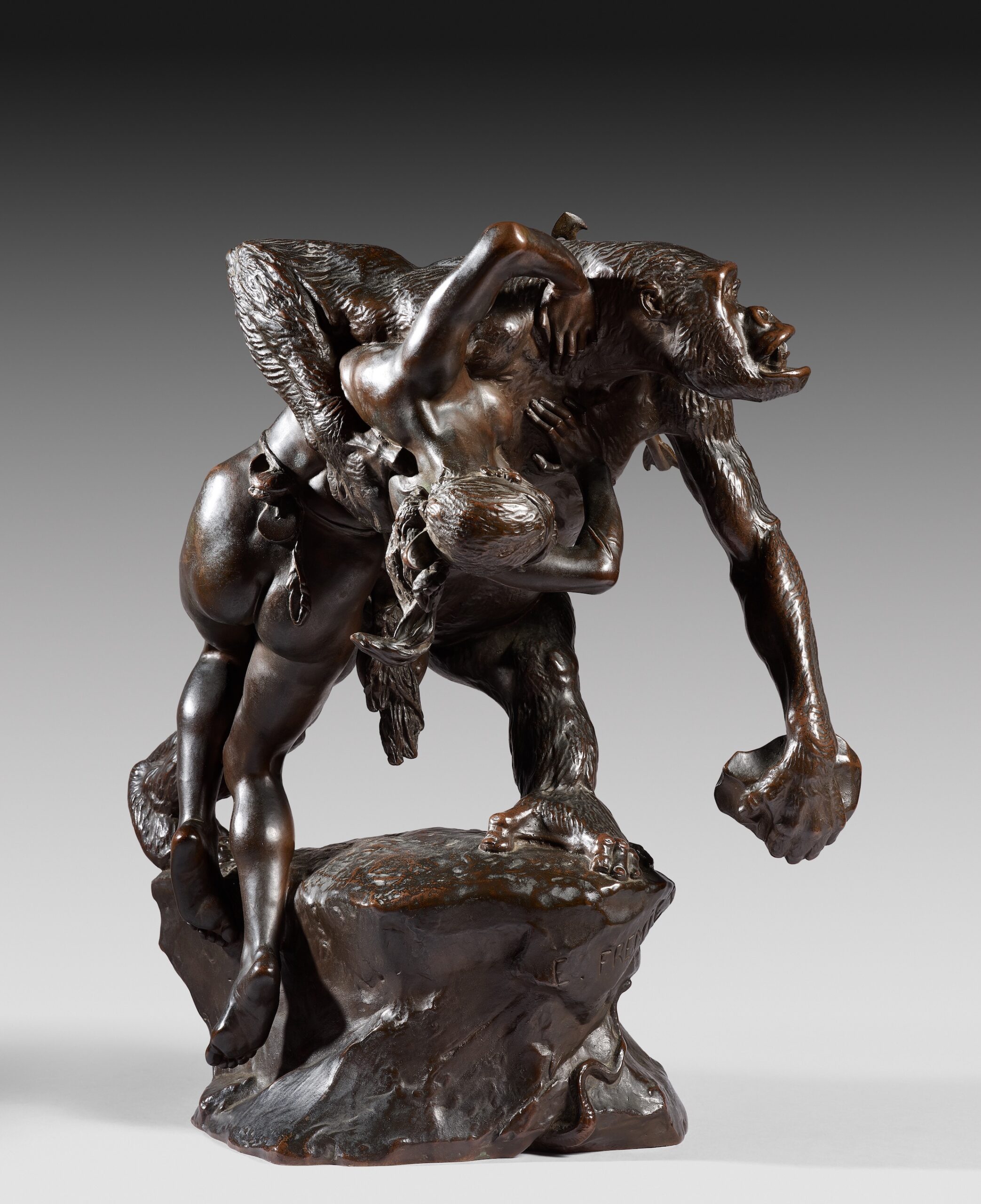
Frémiet had to wait nearly thirty years for this opinion to change. A second version of his Gorilla Abducting a Woman was exhibited at the 1887 Salon (plaster, no. 3981), where he was awarded a medal of honor, the highest distinction, and then at the Munich exhibition the following year. The new version depicts a gorilla on a rock, holding a stone in its left forepaw, advancing while clutching a naked young woman held by her waist and struggling in vain against the monster’s grasp. The group powerfully embodies the major questions and interpretations surrounding the theory of evolution, eroticism, the definition of the body, and the status of women…
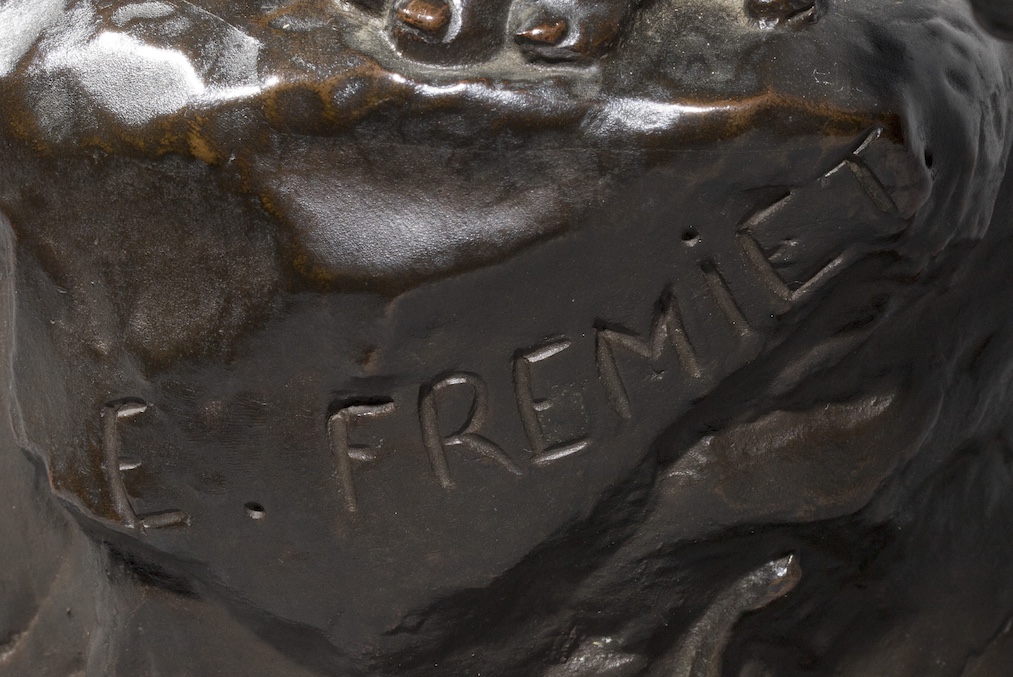
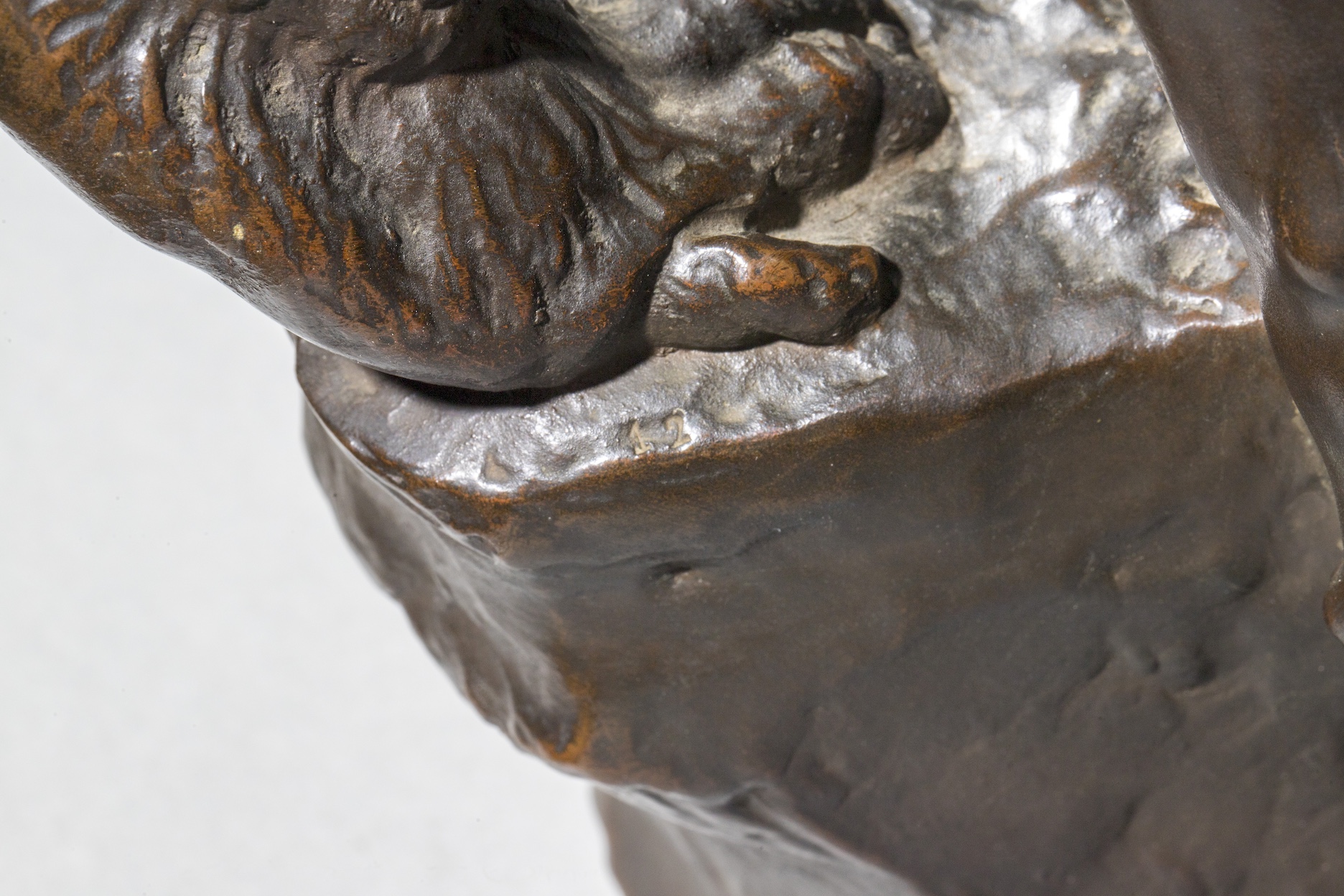
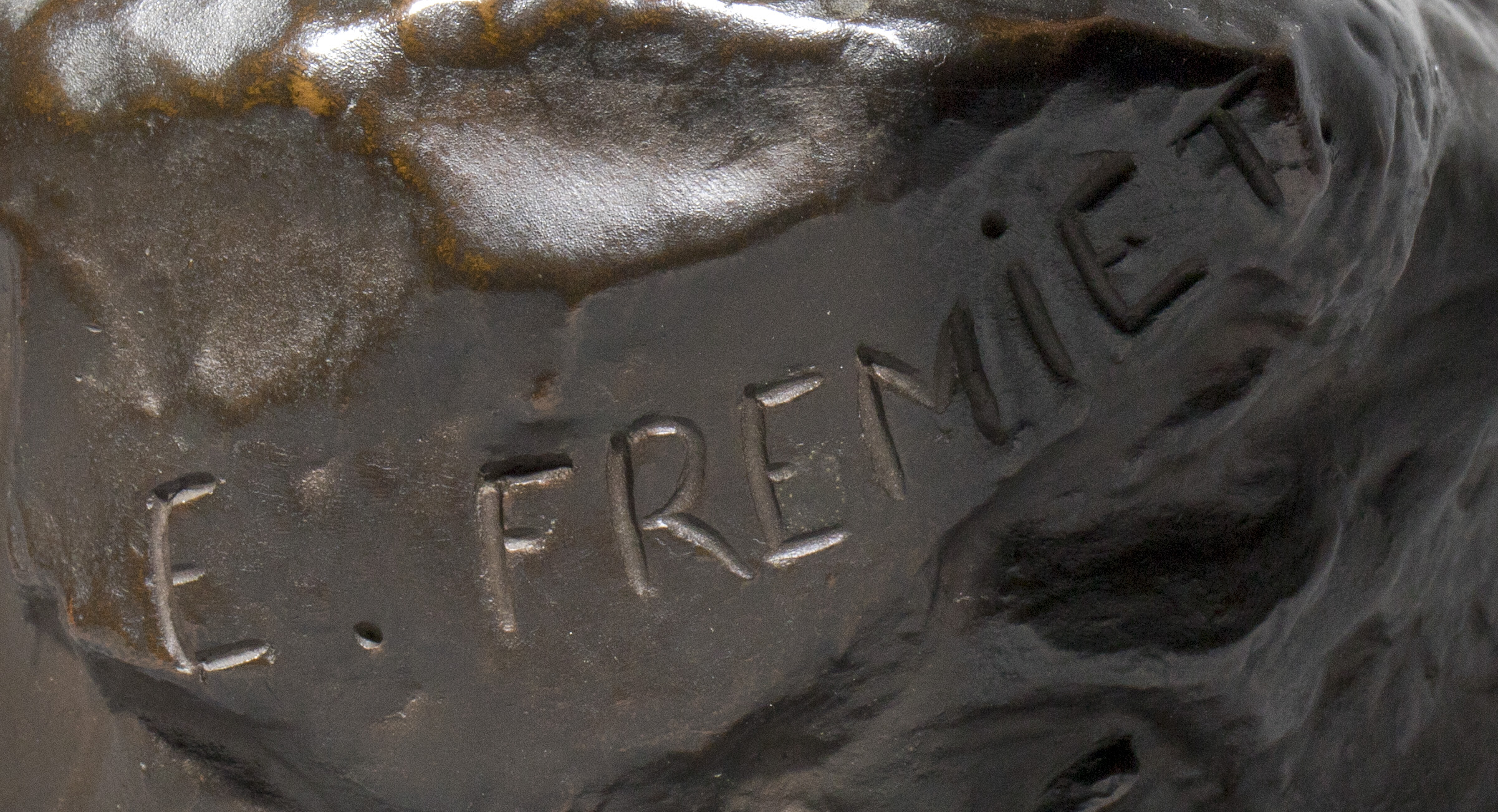
That same year, Frémiet requested the acquisition of the plaster cast; the acquisition was approved by decree on July 12, 1887, and payment was made on July 22. The following year, a decree dated April 16, 1888 authorized the sculptor to create bronze reductions. Our example bears the number 12 marked by More, Frémiet’s founder during his lifetime before Barbedienne.
The sculptor clearly wanted the Gorilla to be placed in the Jardin des Plantes. But his efforts were in vain; the work remained in plaster and was sent to Nantes in 1895 (Museum of Fine Arts). It would become one of the sources of inspiration for the story of King Kong, adapted numerous times for film since the first version in 1933.