Description
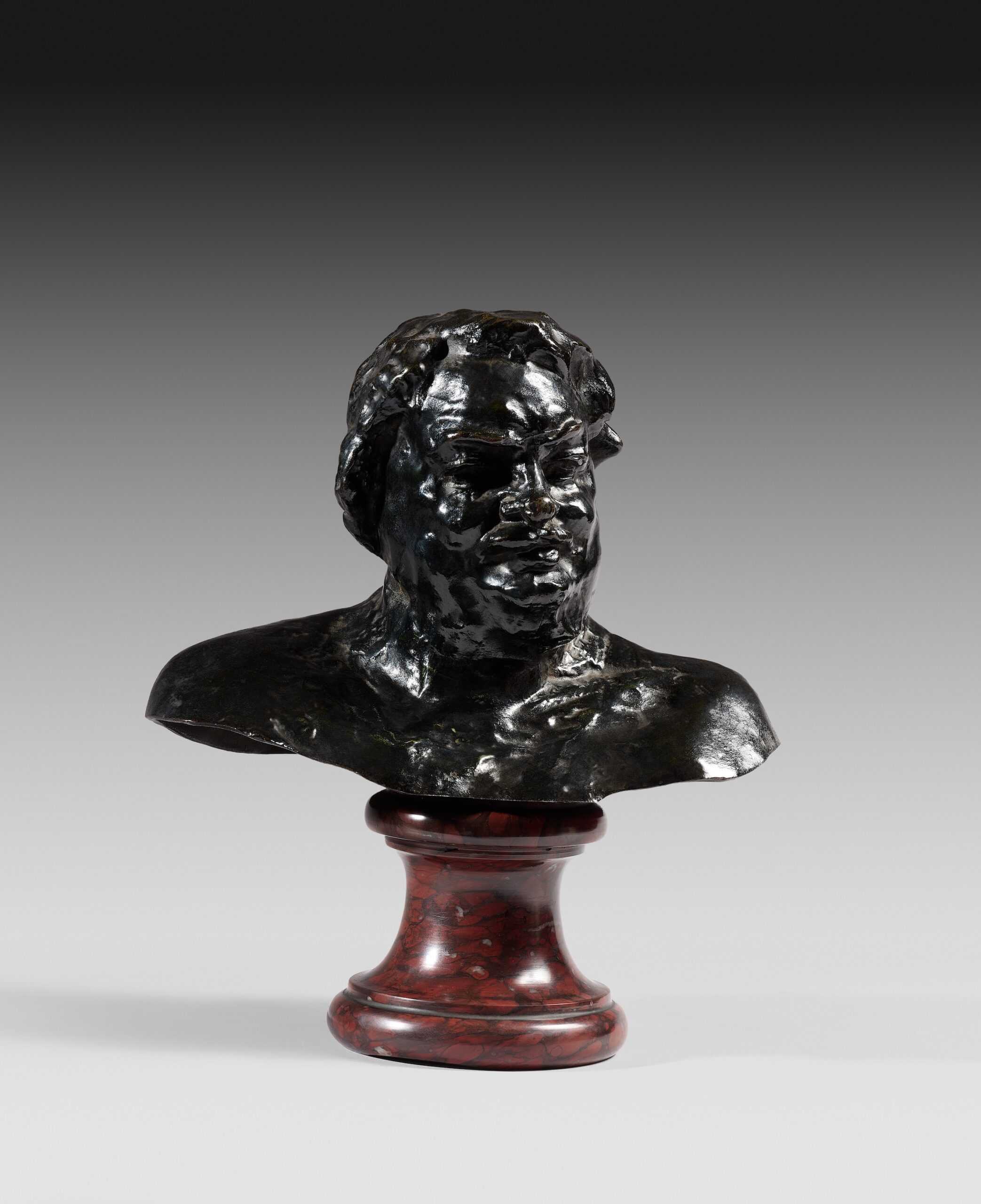
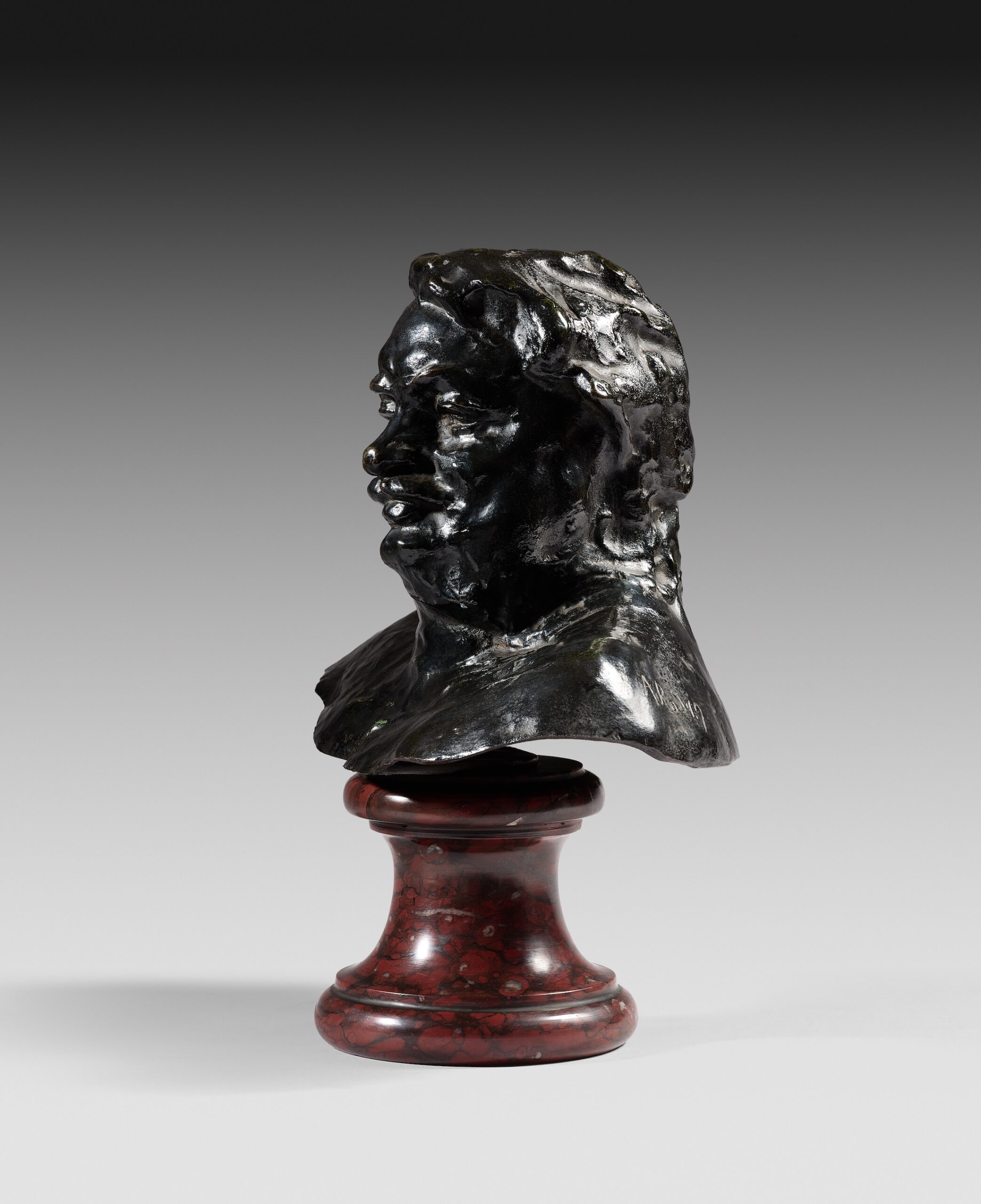
The Société des Gens de Lettres (Society of Men of Letters), of which Émile Zola was then president, approached Rodin in July 1891 to create a monument to Balzac (1799-1850), one of its first presidents. Full of enthusiasm, Rodin immediately set to work and, in January 1892, presented three projects, from which a standing Balzac was chosen, dressed in the monk’s robe the writer customarily wore while working. The sculptor gradually eliminated physical details, retaining only the essential elements intended to express the novelist’s creative power: the bull neck, the lion’s mane, the large, ironic and sensual mouth, and above all, the eyes — those fiery eyes that had so captivated Balzac’s contemporaries. The art dealer Gustave Danthon had the opportunity to produce bronze casts of an unpublished plaster model of Balzac, known as ‘Type C’, which Rodin had given to Dr. Joseph Charles Mardrus. Casts were made as the full-length figure, a bust, and a mask. A copy of the agreement between Dr. Mardrus and Gustave Danthon, dated February 15, 1918, relating to the casting of this figure, is preserved in the Rodin Museum archives.A reduced version of the figure, as well as various versions of the bust cut off at different levels, were produced in 1918 at the initiative of Gustave Danthon after the artist’s death. The museum repurchased most of these plaster models, along with their reproduction rights, in 1927 and again in 1933.
According to current knowledge, it is estimated that Gustave Danthon commissioned at least three bronze casts of this version of the bust, known as the first version, a small model of which is ours.Even though the work remained misunderstood in Rodin’s time, his Balzac is nonetheless one of his masterpieces. “My Balzac,” he said, “through his pose and his gaze, evokes the environment in which he walks, lives, and thinks. He is inseparable from his surroundings. He is like real living beings.”