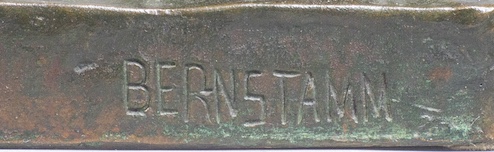
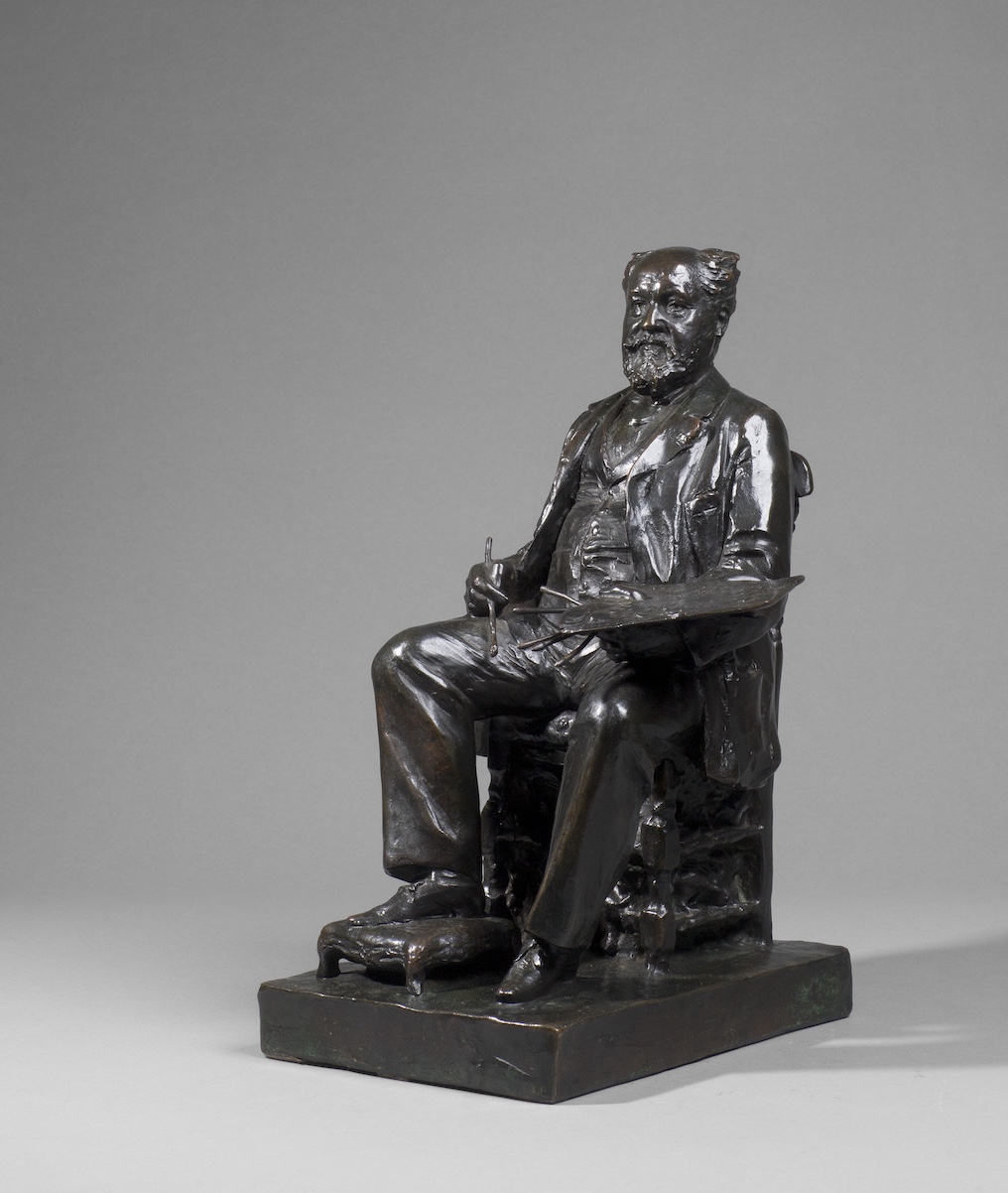
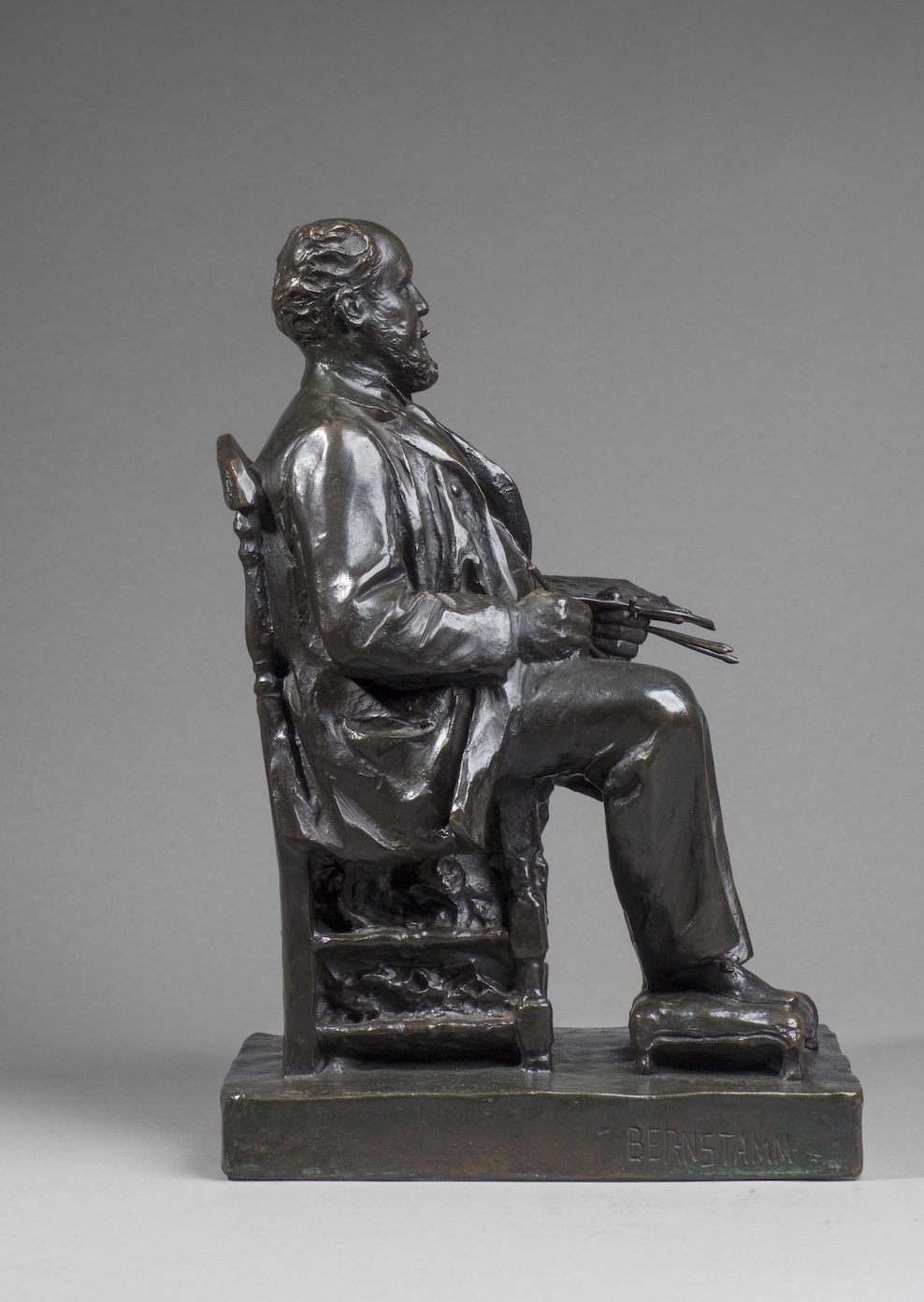
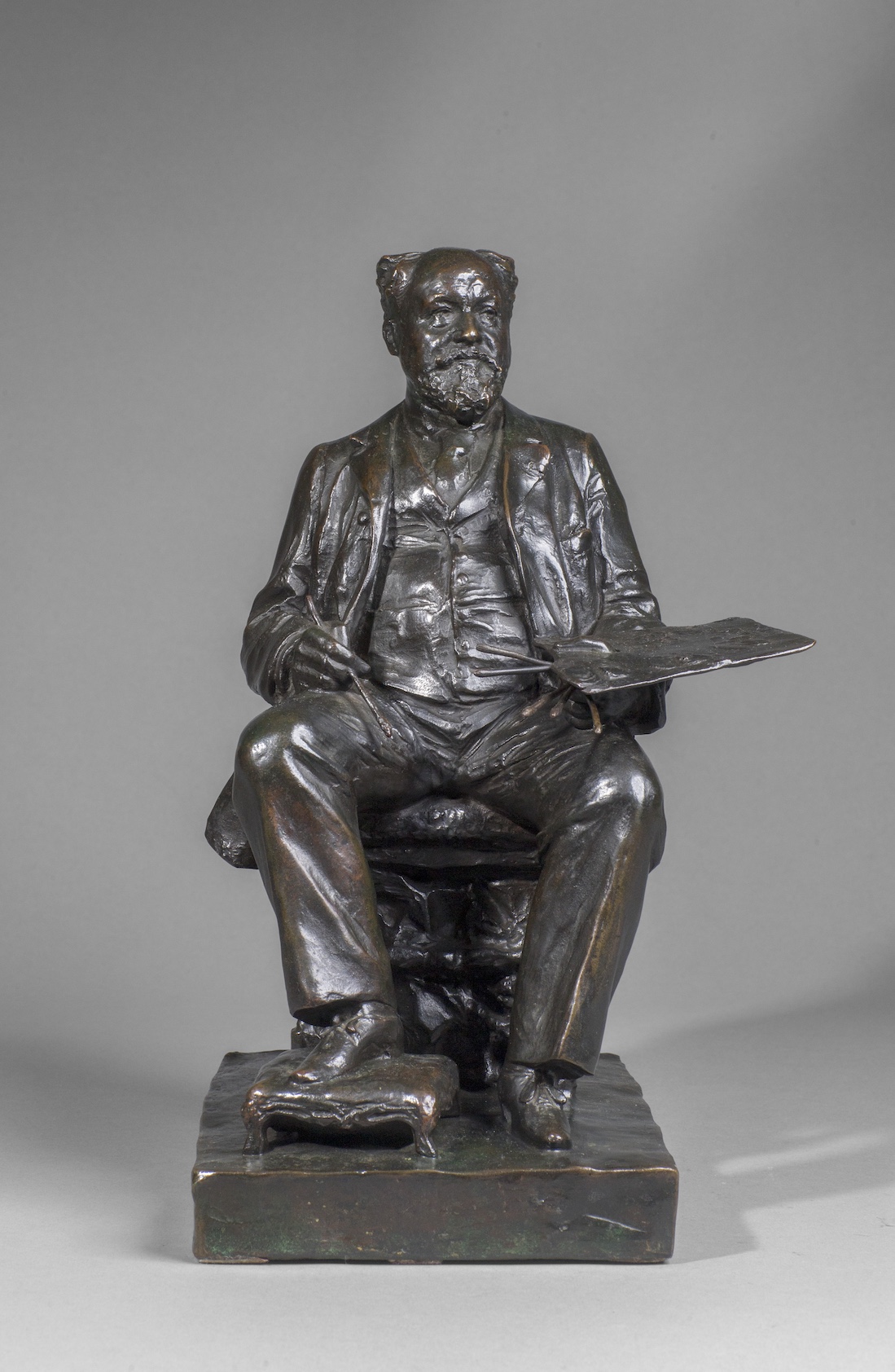
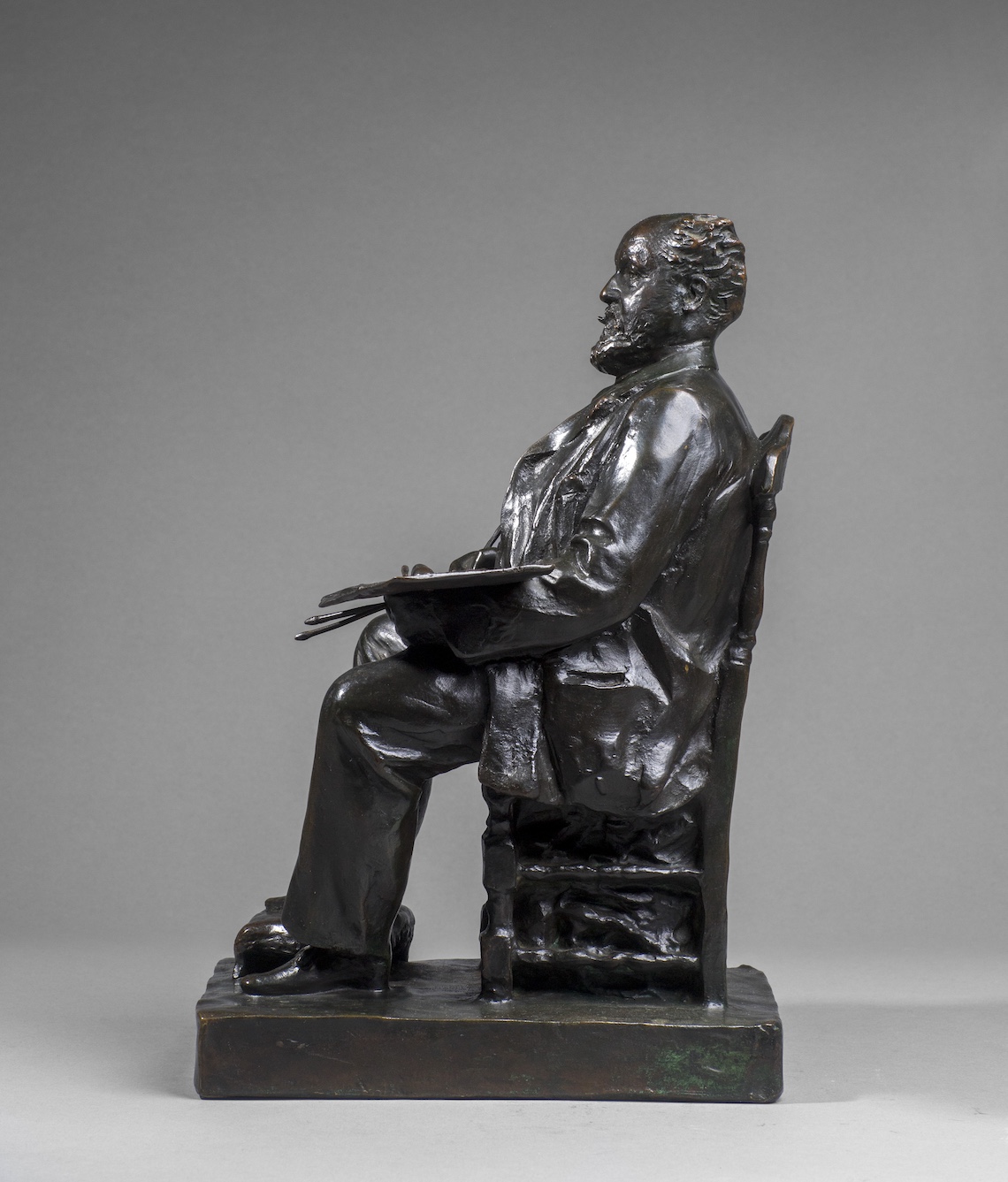
Description
Few artists, like the Russian-born sculptor Léopold Bernstamm, were able to capture with such acuity, accuracy, and intensity the character of a face, grasping it with an almost instinctive ease. He proved to be an extraordinary portraitist, all the more appreciated for the speed with which he worked. No fewer than three hundred busts, statues, or statuettes of illustrious figures were created by him.
It was against his father’s wishes that the young Léopold embarked on an artistic career, beginning with training in drawing before entering the sculpture department of the Imperial Academy of Fine Arts in Saint Petersburg. He quickly distinguished himself there and, from the early 1880s onward, received commissions for busts of numerous Russian political and, above all, artistic personalities, including Dostoevsky, Anton Rubinstein, and Konstantin Makovsky, whose bronze bust dated 1882 is preserved in the Russian Museum in Saint Petersburg.
Bernstamm subsequently left Russia to continue his training in Italy and then in Paris, where he settled in 1885 and joined the studio of the sculptor Antonin Mercié. The following year he exhibited at the Salon, where his talent as a portraitist attracted considerable attention. He was soon appointed chief sculptor at the Musée Grévin and simultaneously opened a studio through which, for some thirty years, many of the great figures of the period would pass.
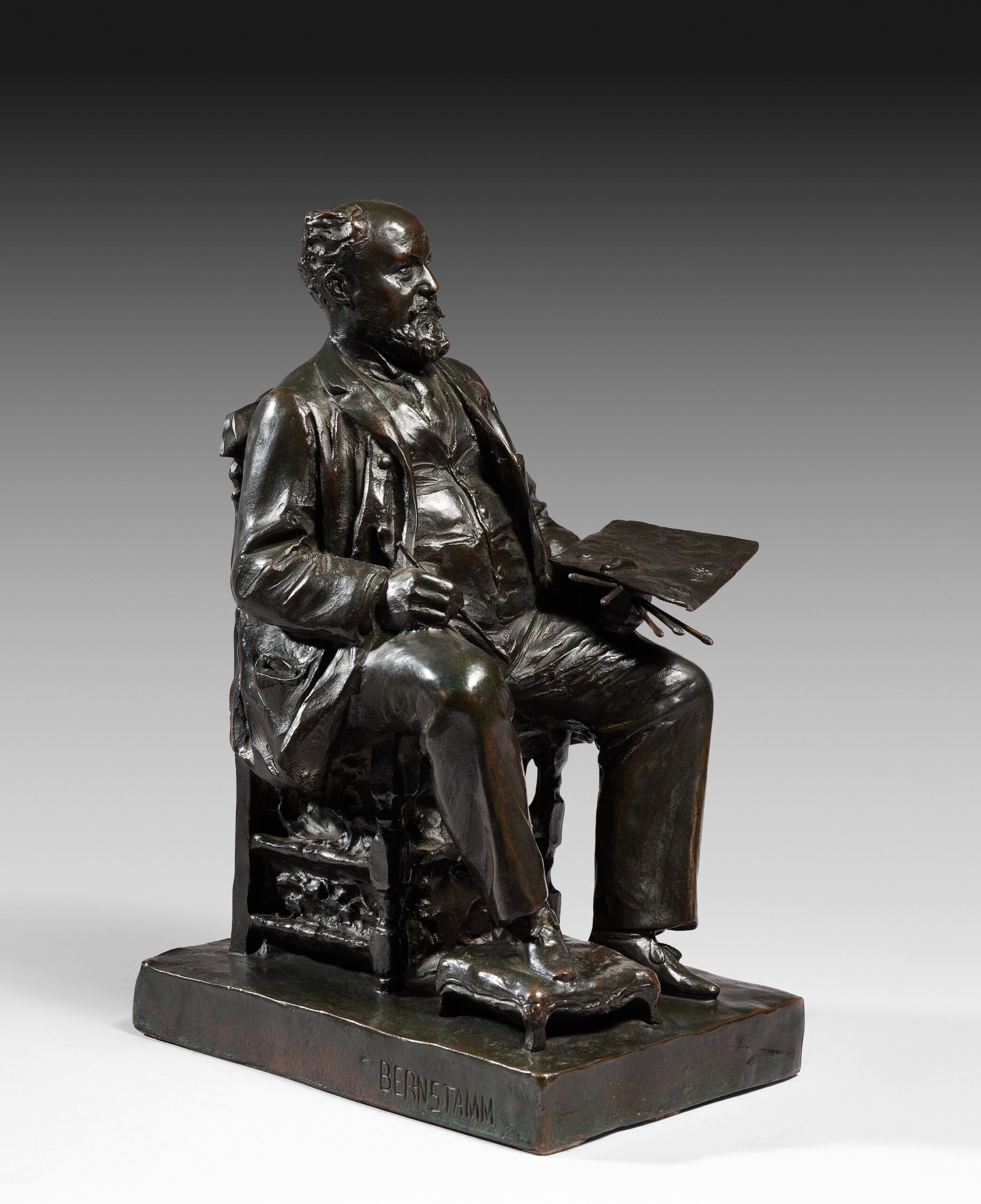
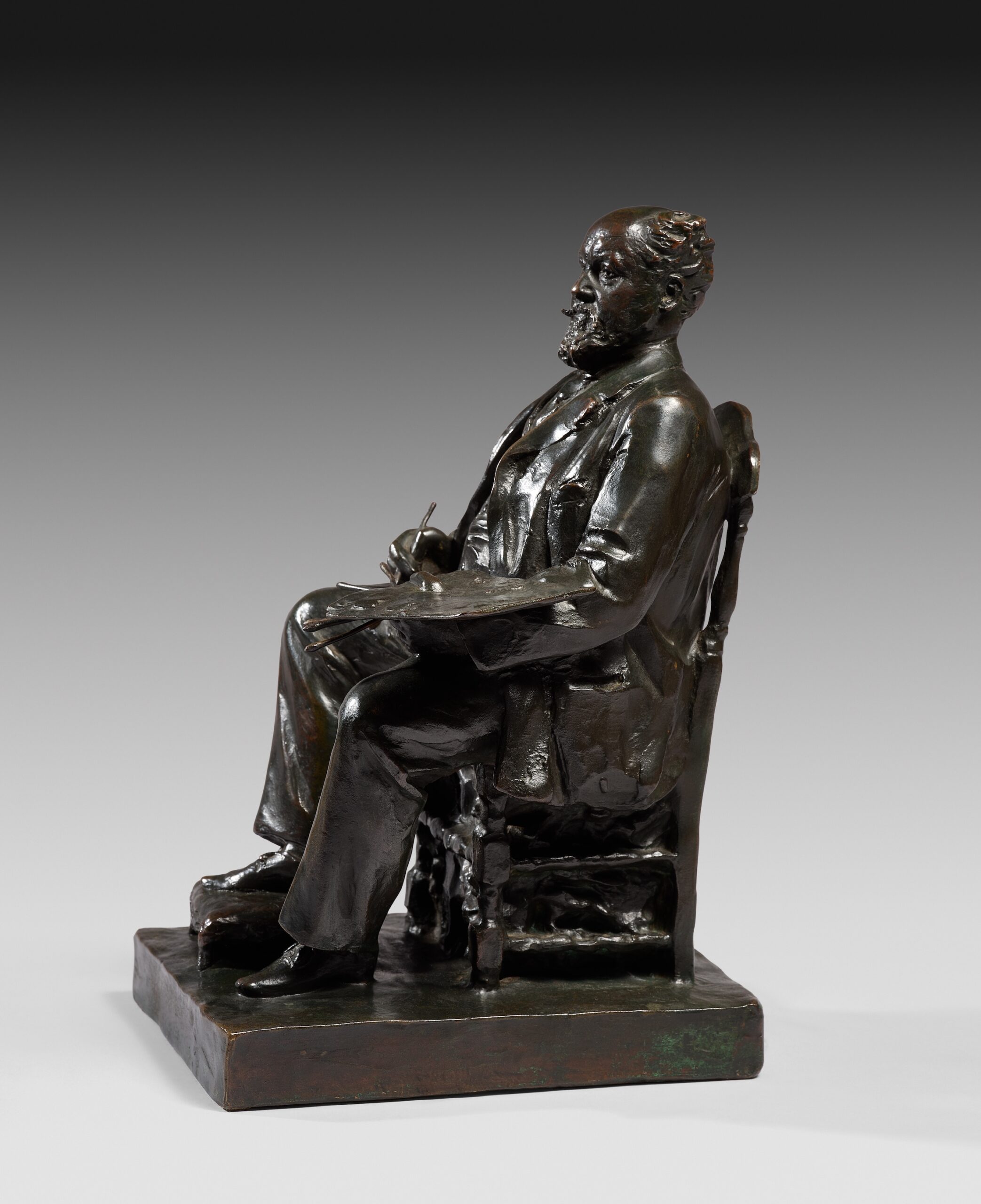
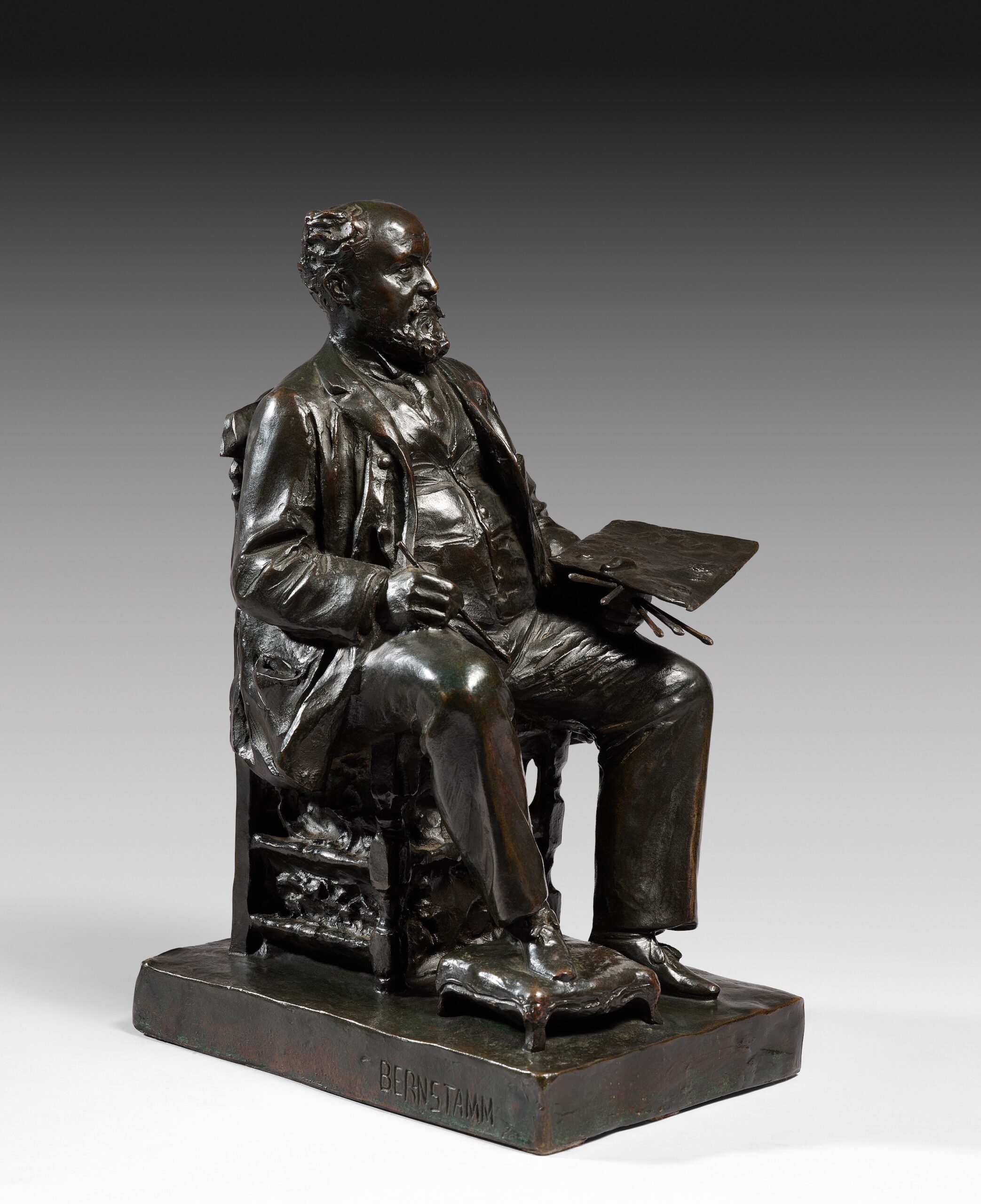
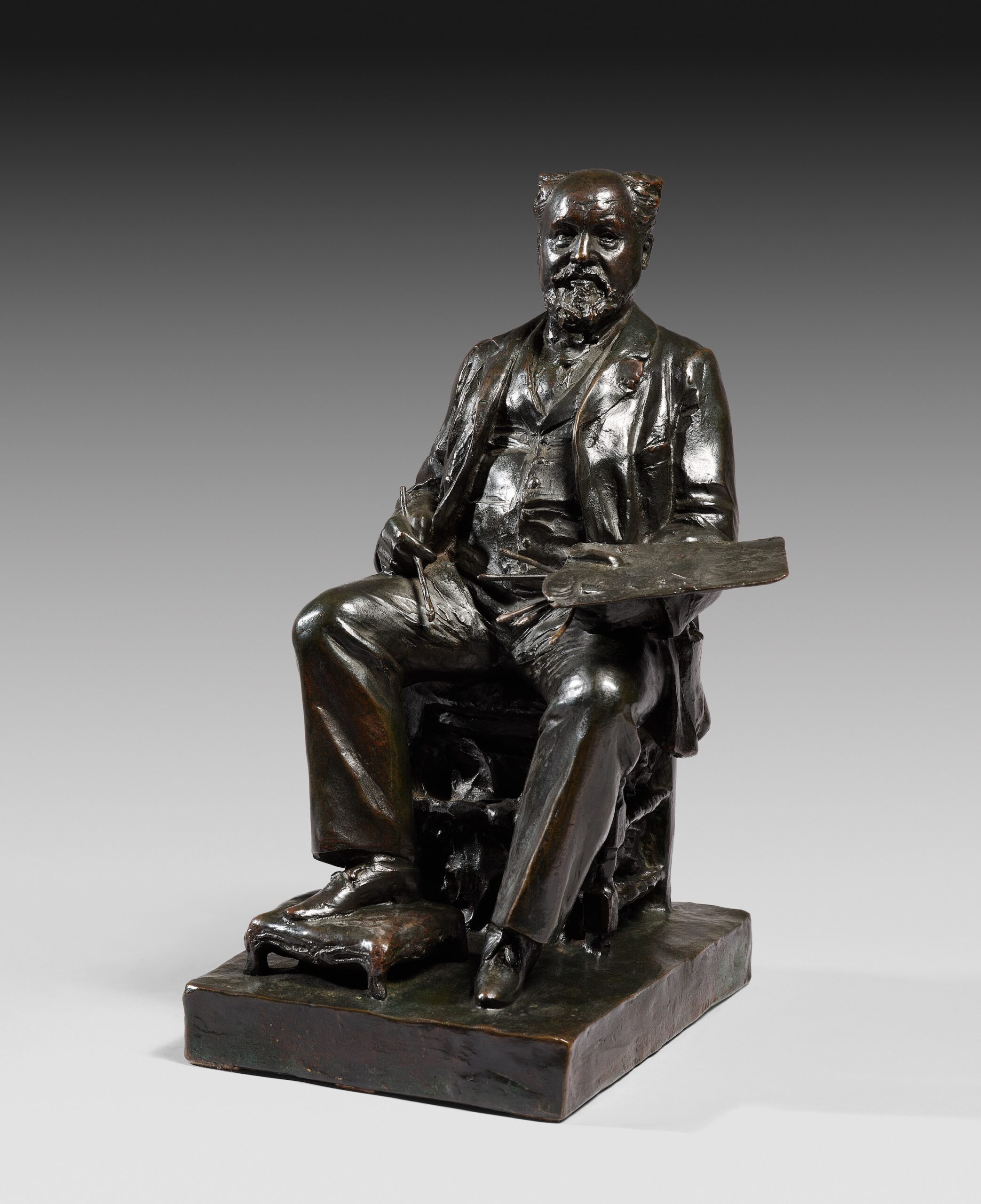
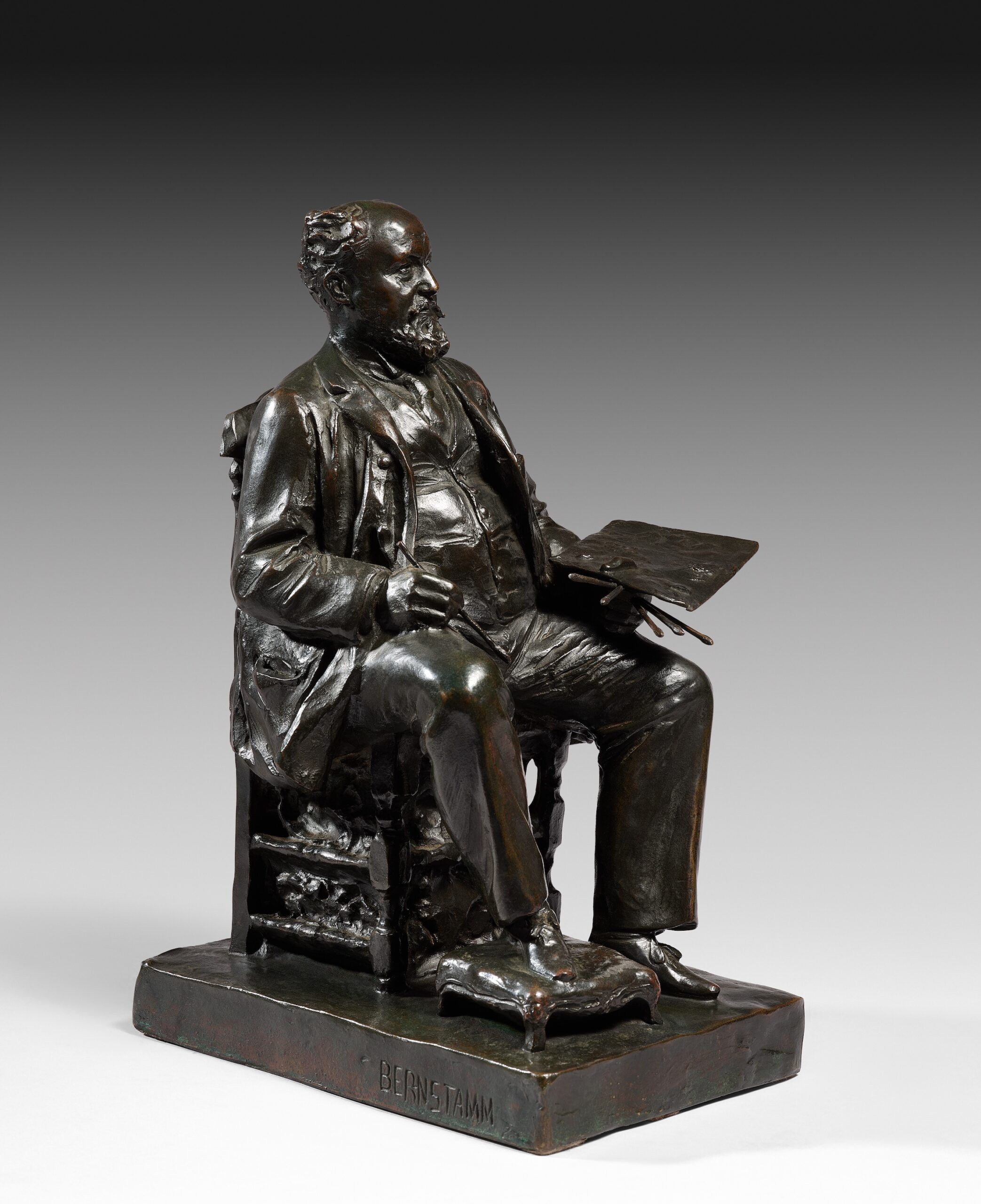
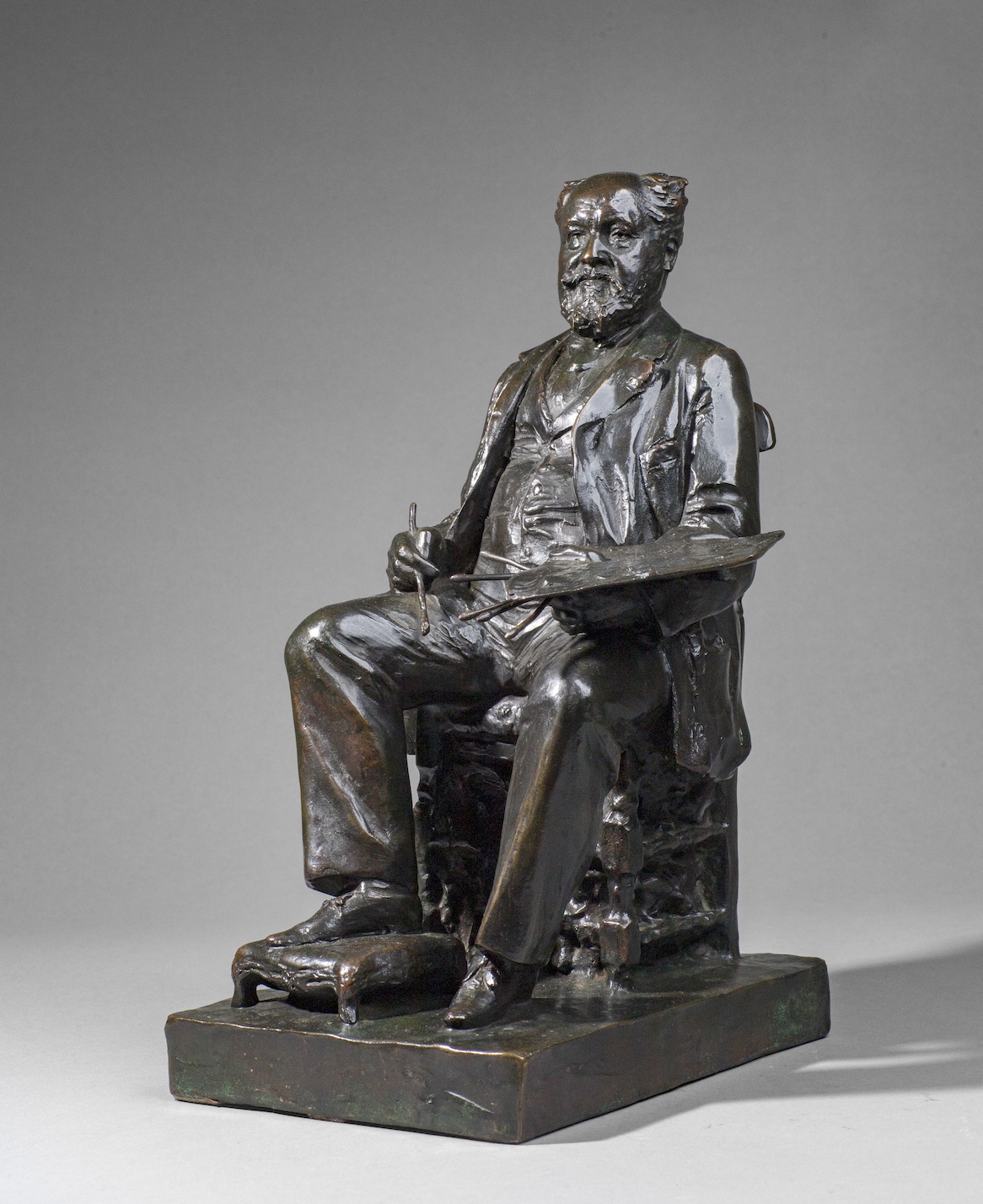
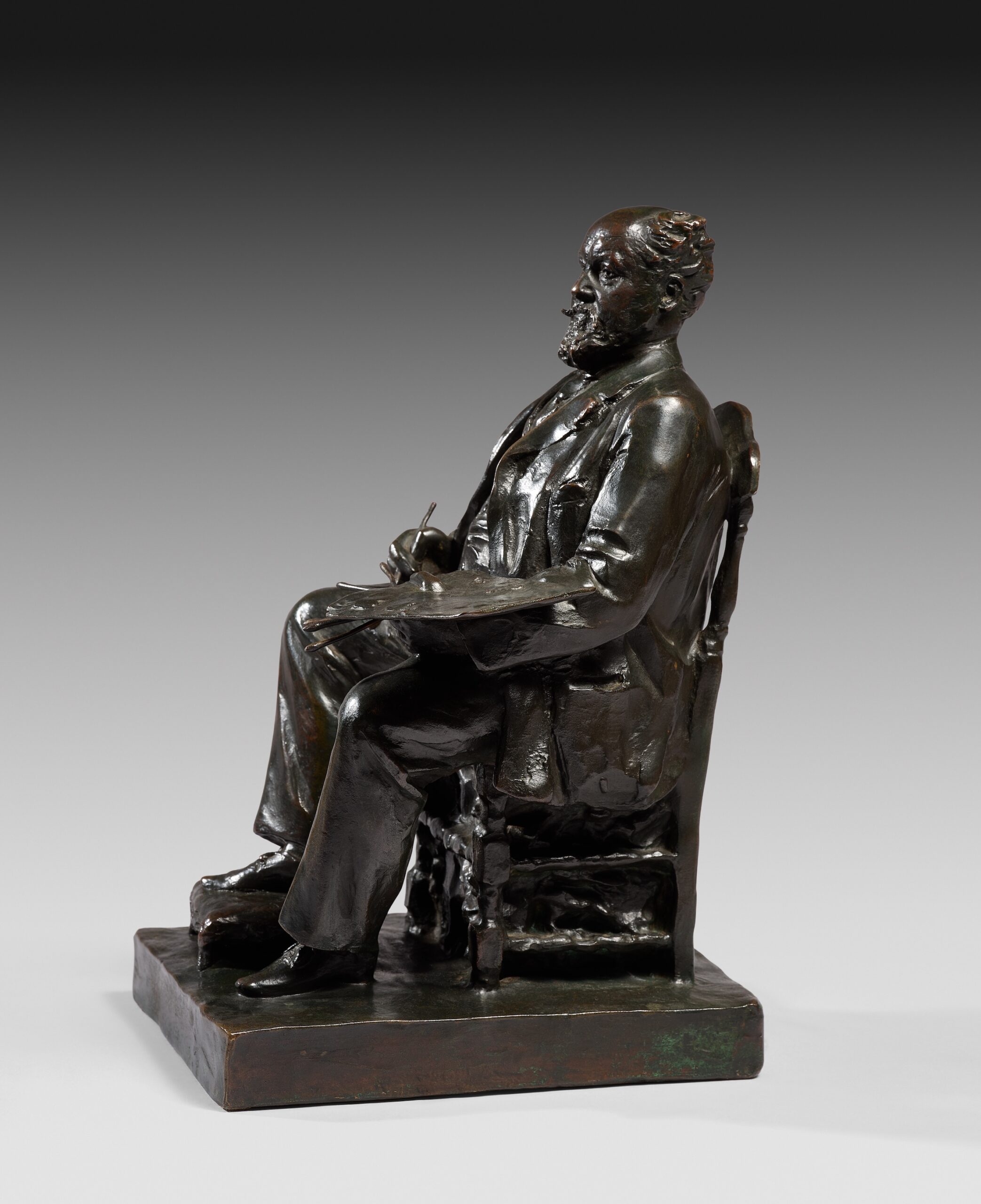
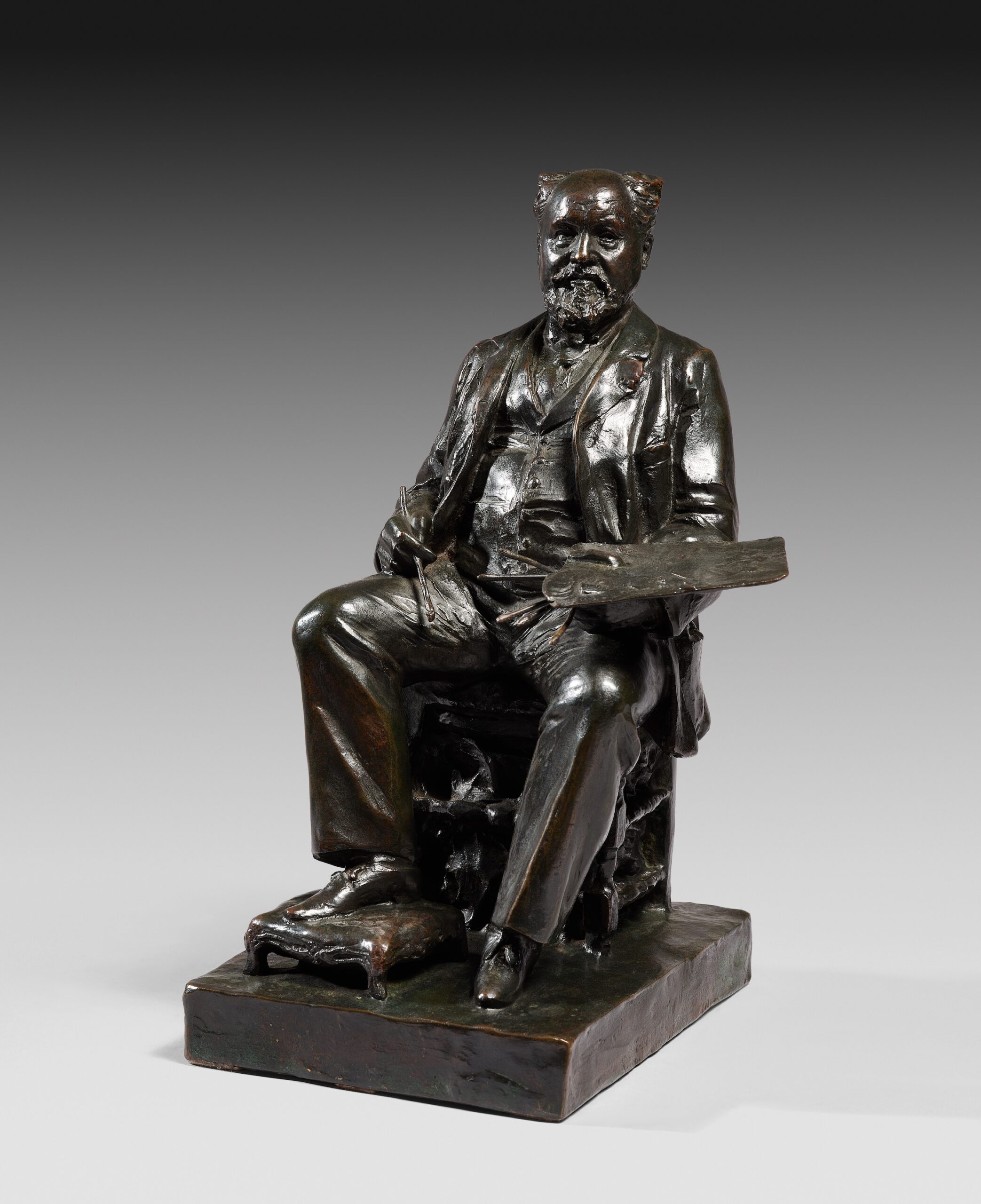
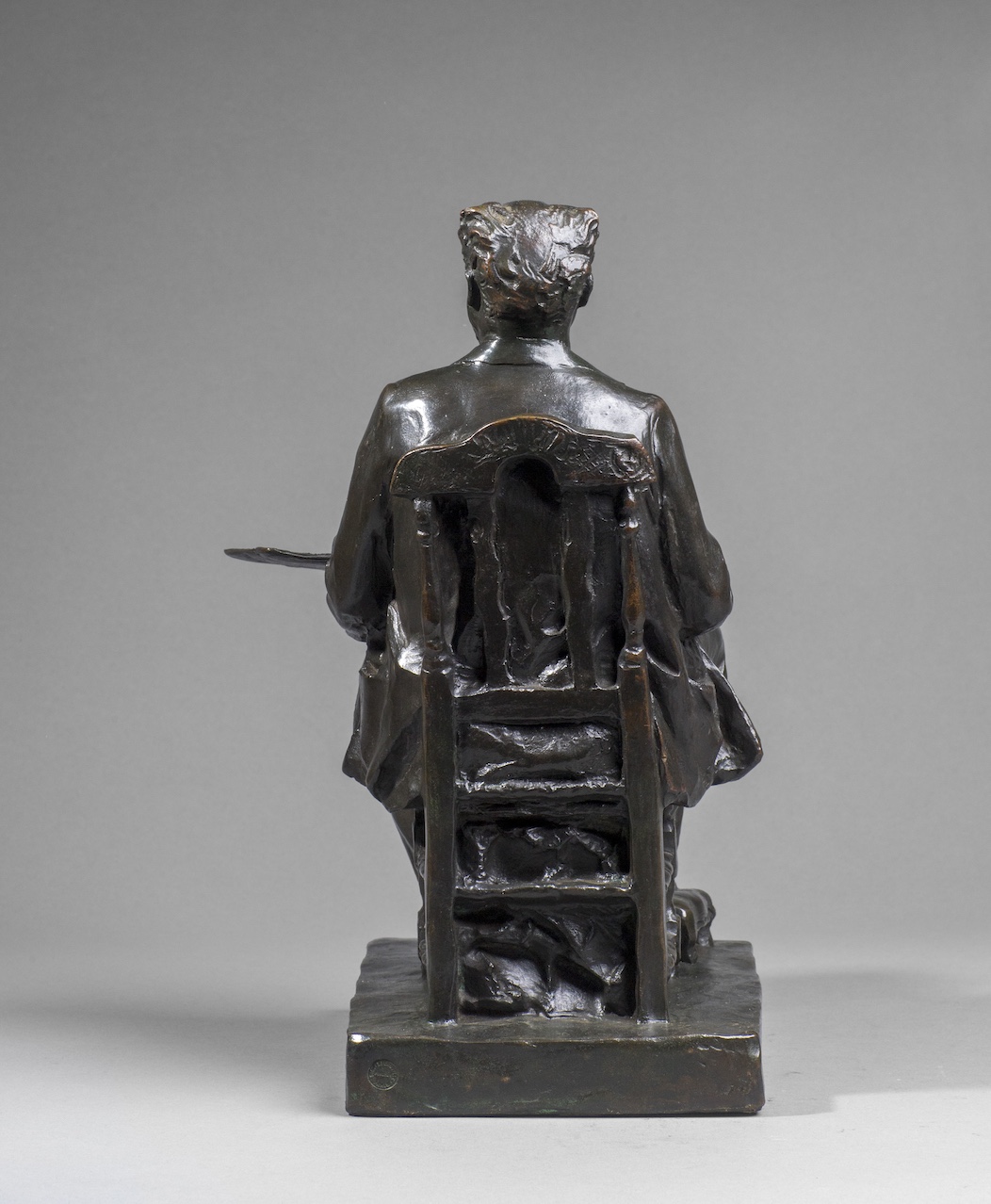
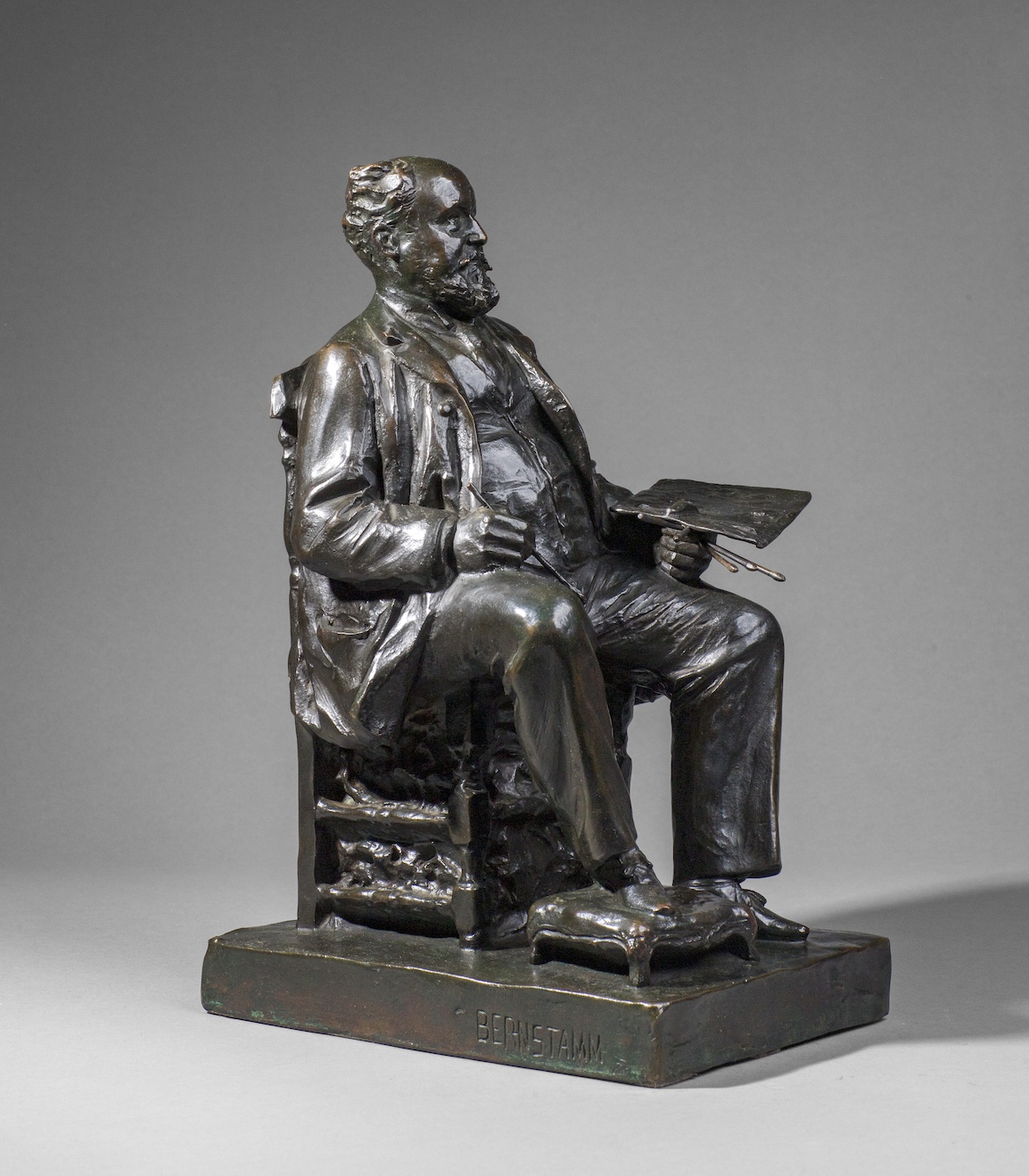
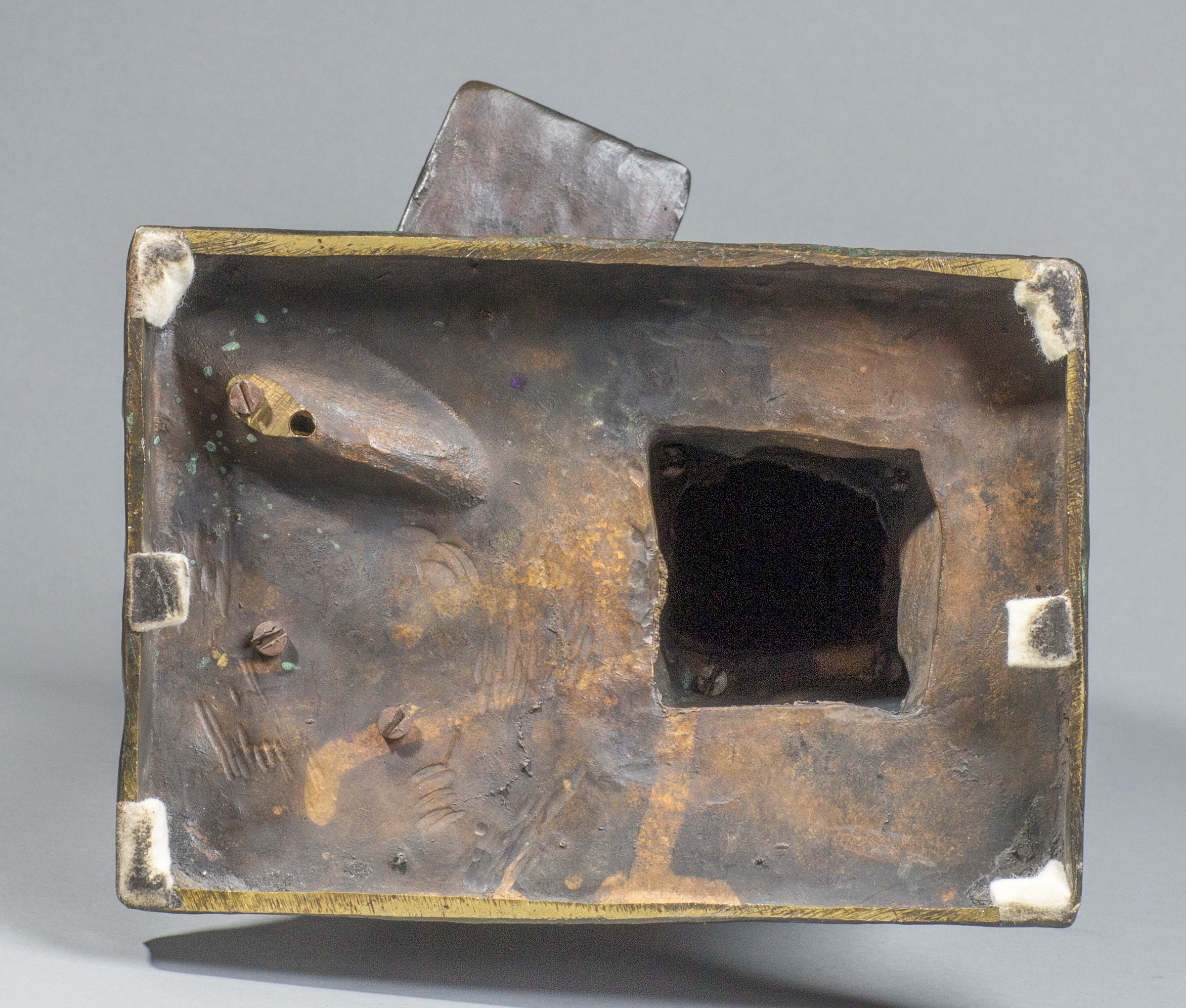
It was in this context that he took part in the Exposition Universelle of 1889, where he encountered the celebrated Russian painter Konstantin Makovsky. Was it at this moment that he decided to create our statuette, depicting the painter elegantly dressed, seated on a turned wooden chair, his right foot resting on a small Louis XV–style footstool, holding his palette in his left hand and his brush in his right? It is known that in 1890 Bernstamm exhibited at the Galerie Georges Petit in Paris an important group of statuettes representing several foreign visitors to the 1889 Exposition Universelle. Was our statuette among them? What is certain, however, is that in 1895 Léopold Bernstamm presented a sculpture depicting Konstantin Makovsky at the Russian Exhibition held at the Champ-de-Mars, in the Galerie des Machines.
The two men, who knew each other well, both belonged to the Russian high society of Paris, supported the Franco-Russian alliance, and frequently exhibited in the same events, particularly those of major prestige. They met again at the Exposition Universelle of 1900.
Thus, when the painter posed for the sculptor, he was already highly famous, wealthy, and content. Beyond the precisely described silhouette of the painter, rendered in a lively and expressive manner, the sculptor admirably conveys—through the pose and the few carefully chosen elements of décor—the painter’s financial ease and joie de vivre.
The casting of our sculpture was entrusted to Siot-Decauville, a foundry with which Bernstamm worked frequently and which enjoyed an excellent reputation at the end of the nineteenth century. The firm also collaborated regularly with the dealer and gallerist Georges Petit, with whom Bernstamm exhibited.
Our bronze is the only known example of this model to date.