Description
A sculptor of Mauritian origin, Prosper d’Epinay completed his apprenticeship in Paris, then in Rome where he became the official sculptor of the international aristocracy and bourgeoisie.
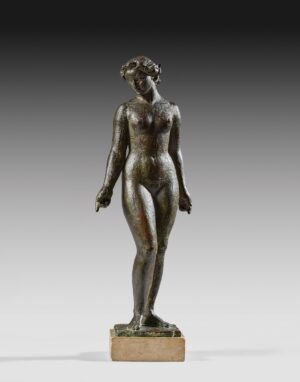
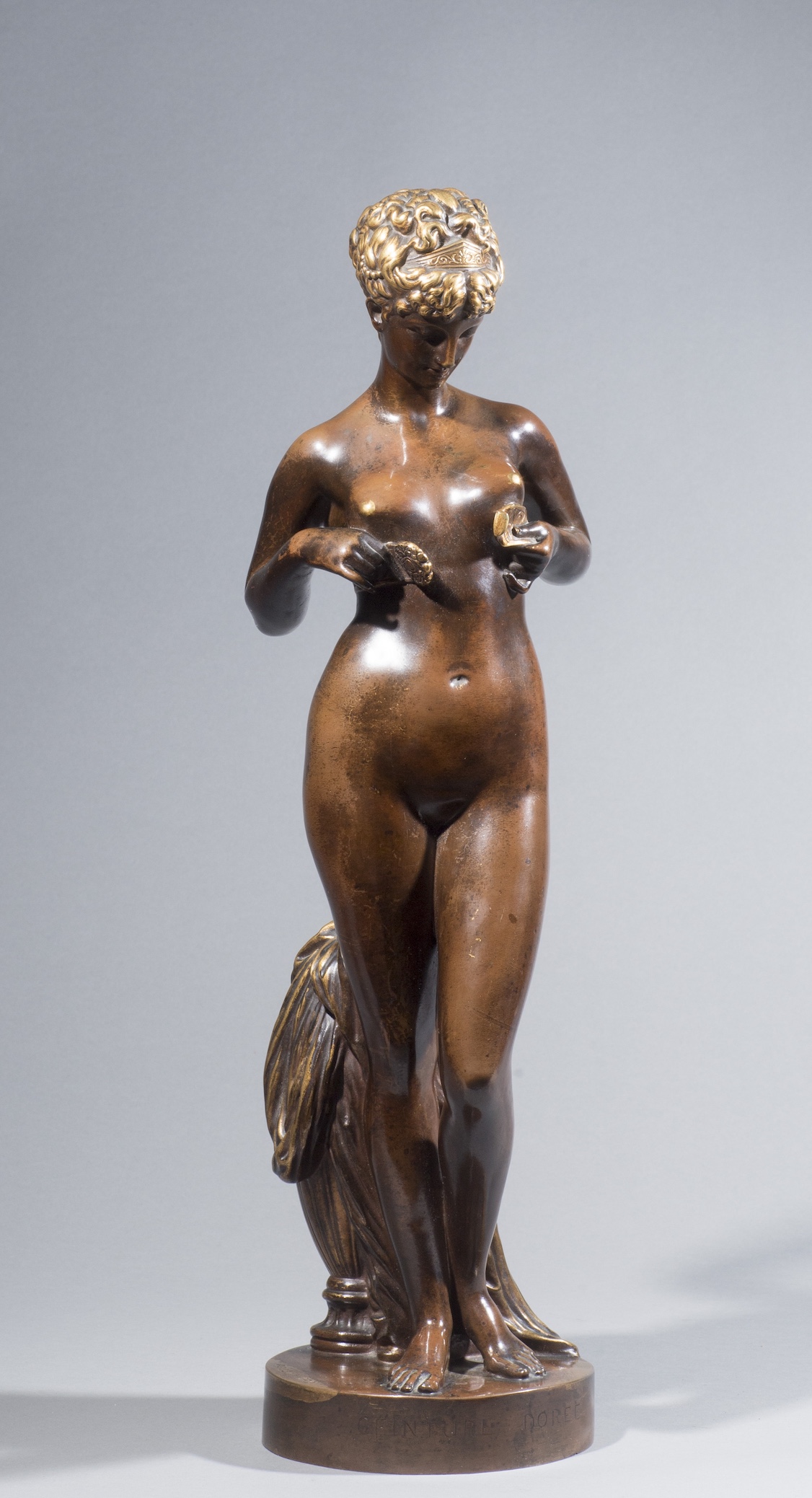
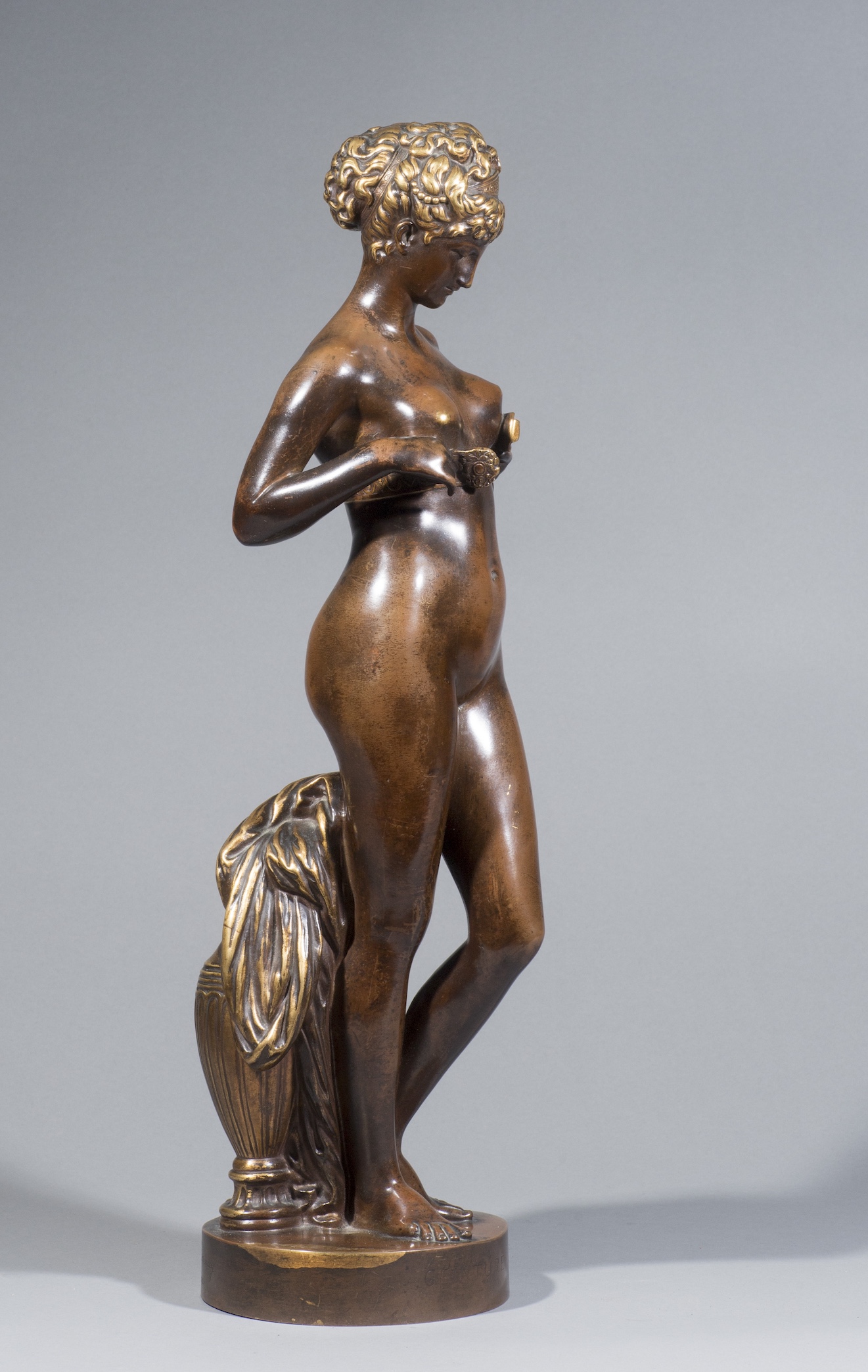
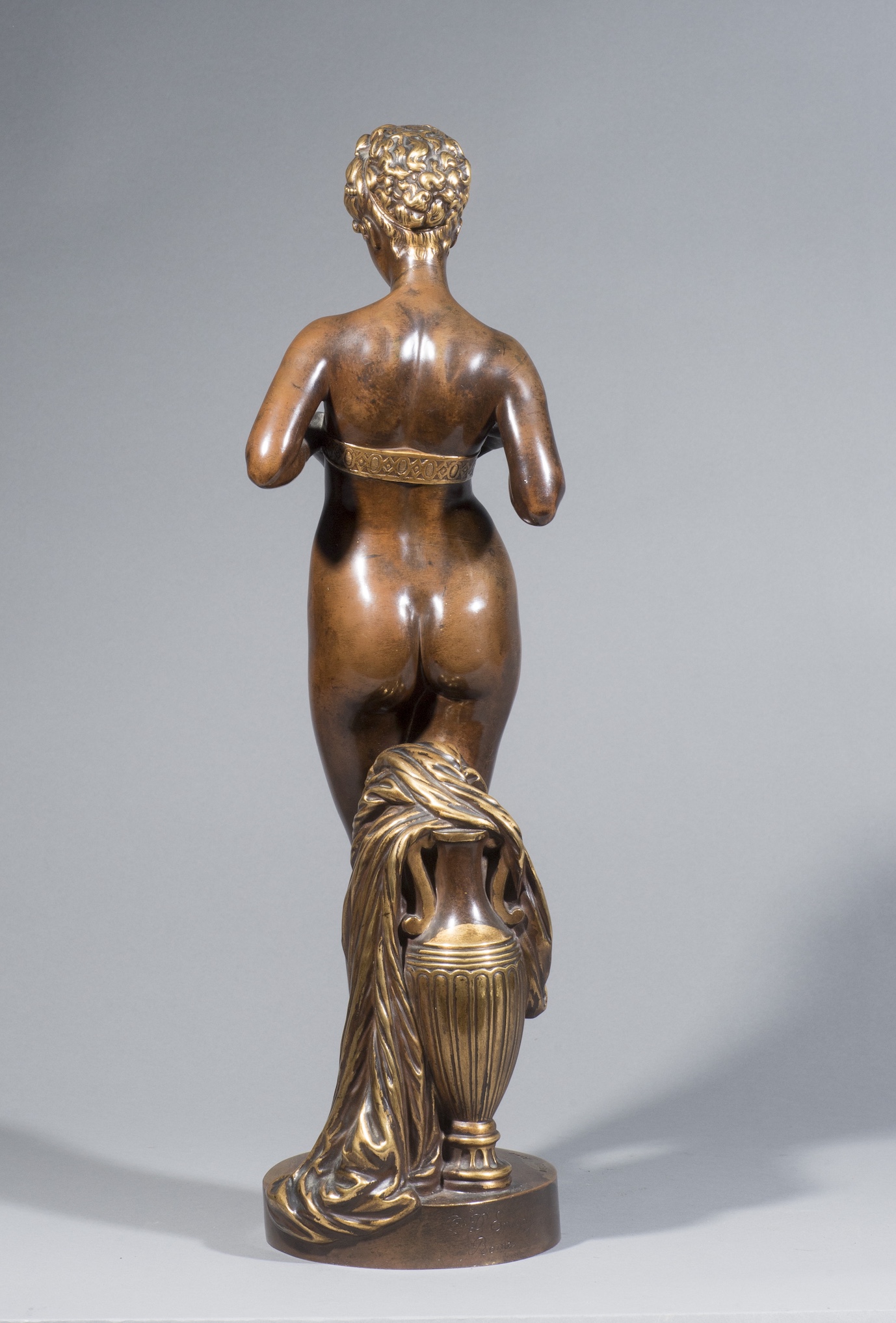
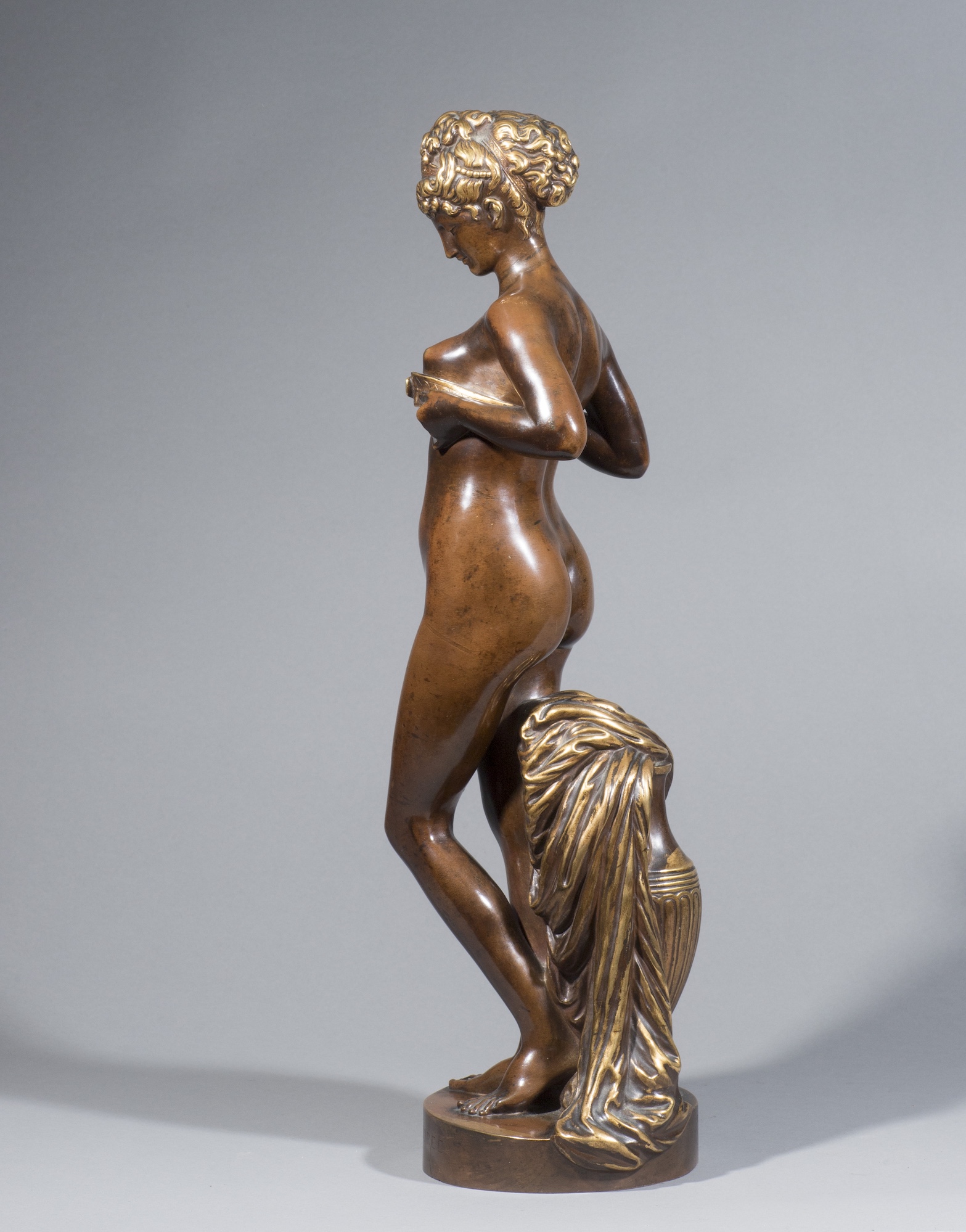
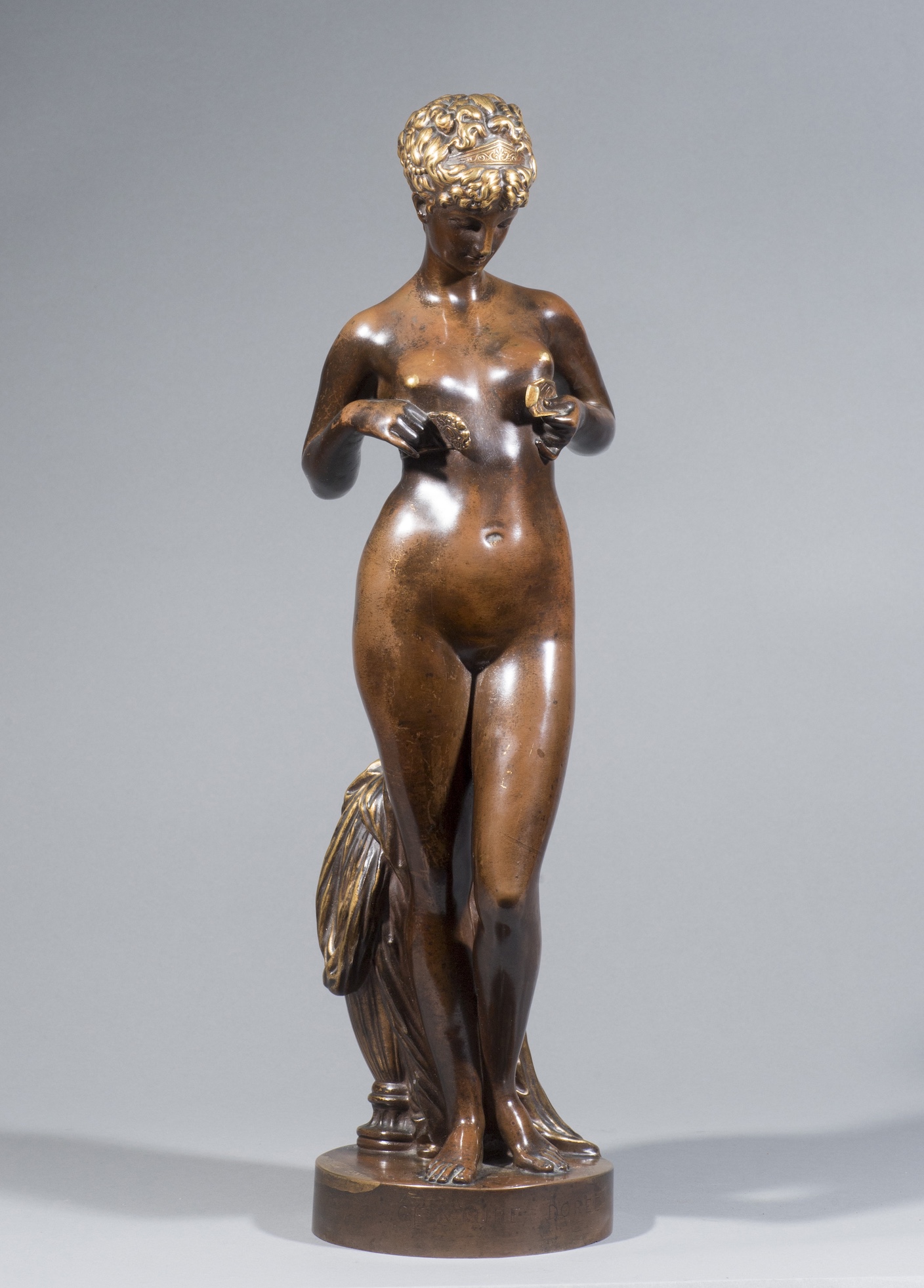
1874 was a pivotal year in his career, as it allowed him to gain considerable renown in Parisian society. Madame de Cassin commissioned him to sculpt an “ideal” representation of the modern woman in marble. He then presented The Golden Belt at the Salon, depicting a young, standing nude woman, holding one end of her belt in each hand. The critic Camille, writing for La Vie Parisienne, called it “The Most Beautiful Statue of the Exhibition”: “At first, I saw only the woman as a lover, so lifelike, so beautiful! Only later did I look at the statue as an amateur. It is a marvel. This statue possesses what the Greeks called the hour. This meant that the work existed par excellence and at the supreme degree, in the way chosen by its creator, and that everything, at the same instant, conspired to make it beautiful in a harmony of delight allowed by the gods”. (April 18, 1874)The statue captivates the viewer with its fluid pose and undulating lines, its respect for beautiful proportions, and the intense sense of harmony conveyed by the female figure. It belongs to the Neo-Greek movement of the Second Empire but also evokes predecessors such as Canova or Pradier with his Phryne (1845).Emperor Alexander III of Russia commissioned a marble version (Hermitage Museum), as did the King of Holland.
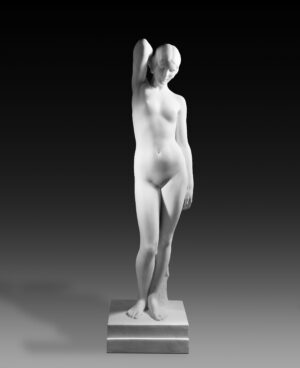
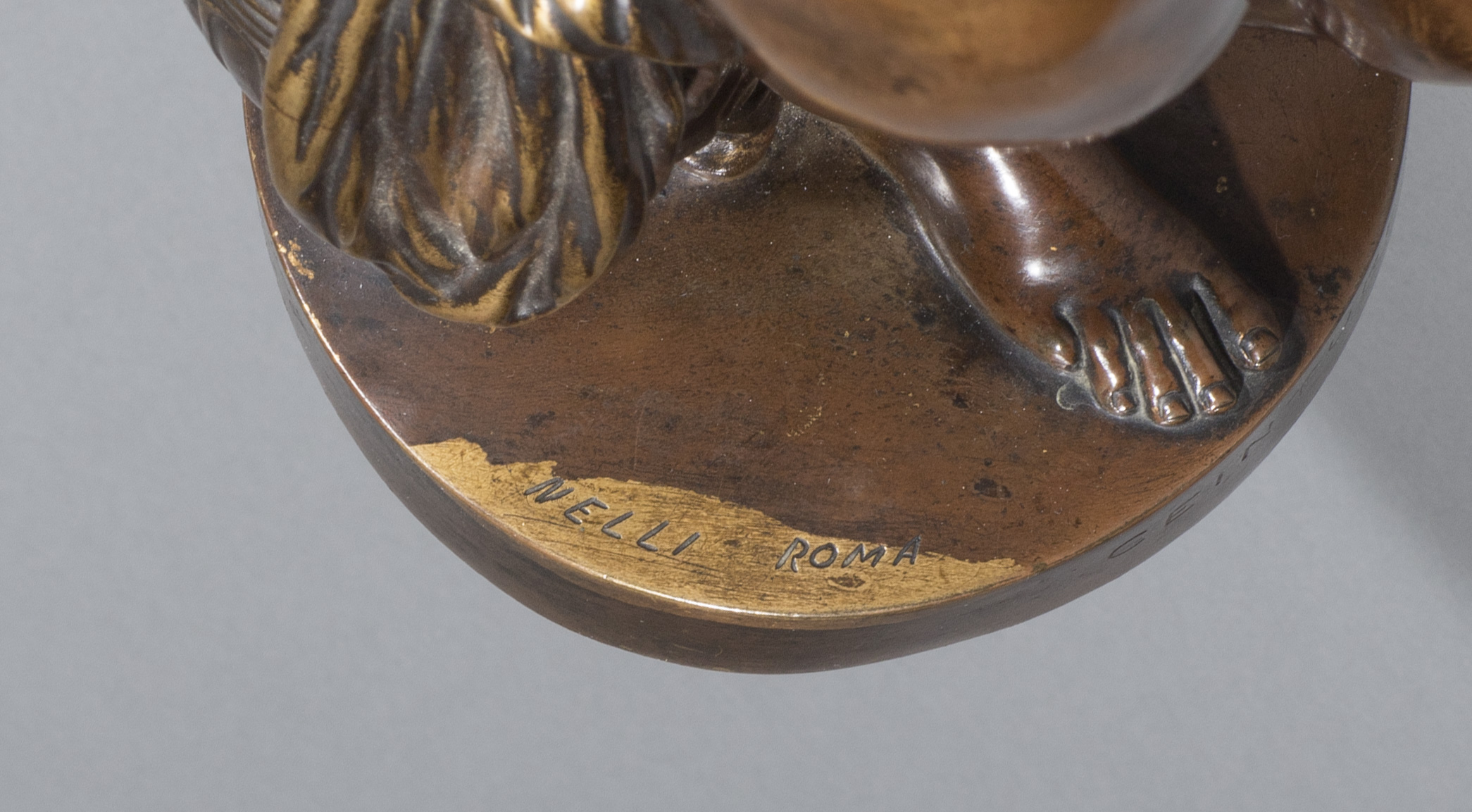
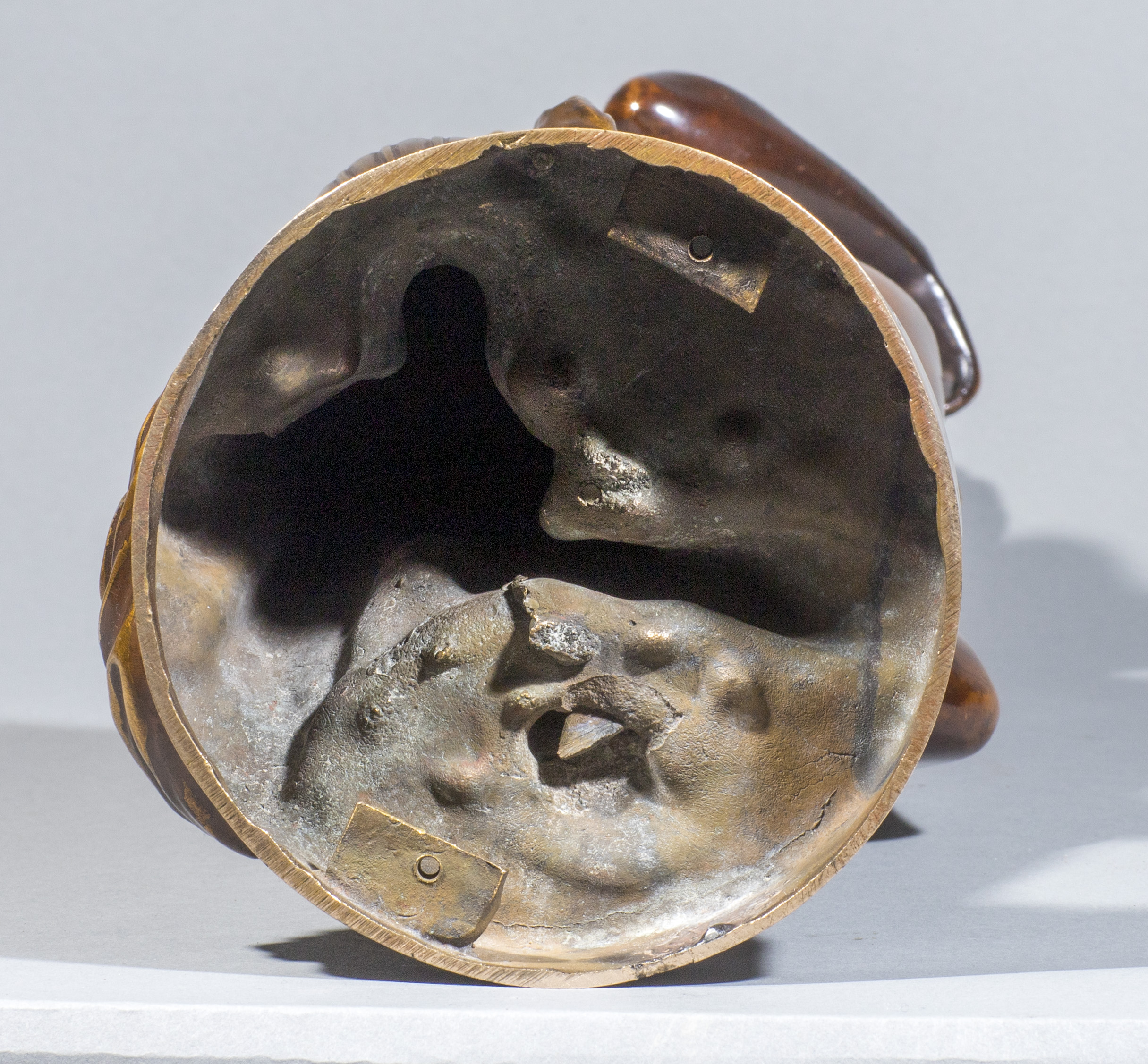
Following this success, bronze reductions were produced, along with several biscuit porcelain casts by Sèvres (one of which is in the Saint-Denis Museum on Réunion Island). Our example was cast by Nelli in Rome, a foundry with an international reputation that was active there around 1880. Nelli worked for the leading sculptors of the Second Empire and received numerous commissions for statues and monuments for various cities (Opéra Garnier, Louvre, Montpellier Faculty of Medicine, Gare du Nord in Paris, etc.).Our example is certainly a unique lost-wax casting, or one of very few. Indeed, Prosper d’Epinay used this foundry only for his artistic castings, not for serial production, hence the particular attention paid to the variations in the brown and gold patina.