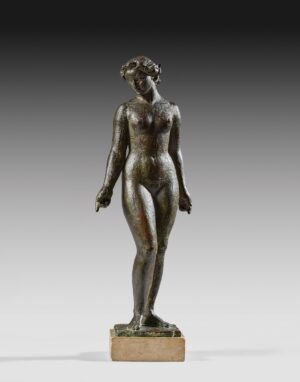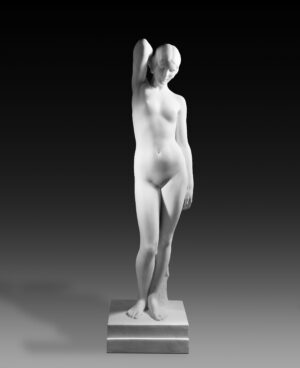
Description
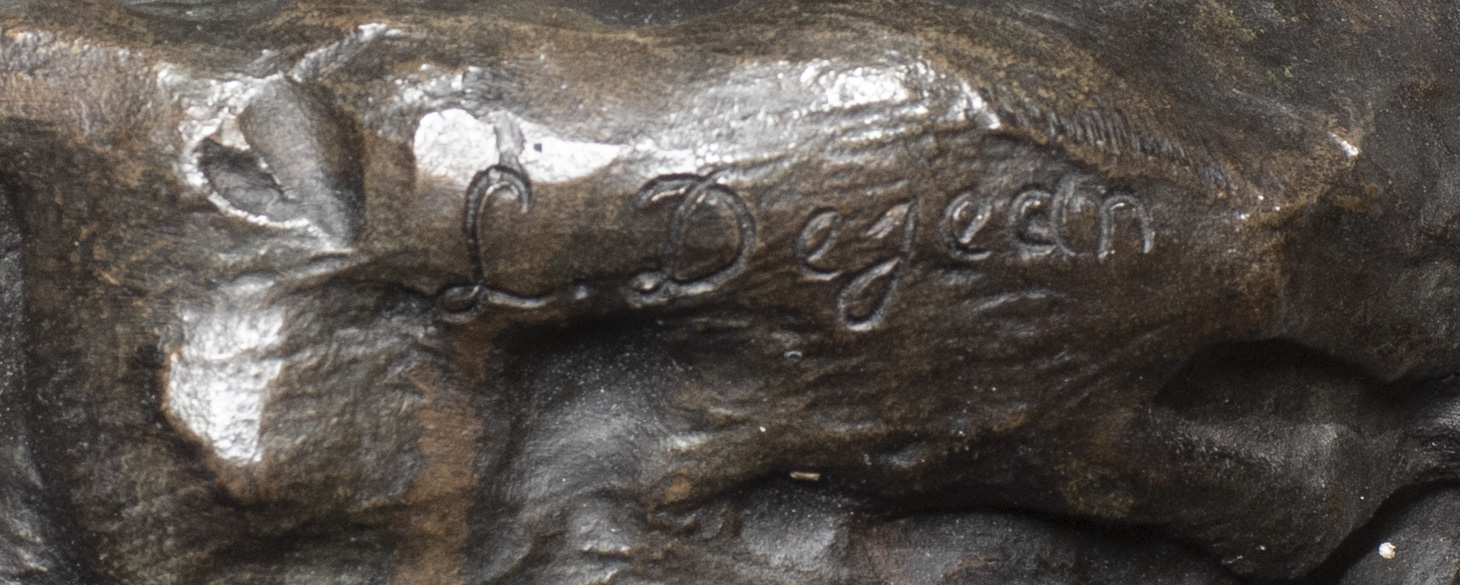
Louis Dejean began his collaboration with Auguste Rodin in 1896. Through this association, his style, initially very smooth and meticulously finished, flourished and evolved toward greater power, intensity, and volume. The disciple held a profound and respectful admiration for his master and later acknowledged that he owed Rodin “his entire understanding of sculpture” (Rodin Museum Archives, 23 March 1904). Although a disagreement over the Balzac led them to cease working together from 1909 onward, Dejean had in fact already begun to take an interest in a different type of sculpture, one marked by greater calm and a more balanced composition. He thus moved toward a more monumental idiom, focusing on forms characterized by increased fullness, gradually approaching the style of Maillol.
During the period in which he worked for Rodin, Dejean also undertook smaller personal projects. Thus, before 1907, Charles Paix-Séailles — a wealthy industrialist and publicist (1879–1921) from a family of intellectuals and artists — commissioned from him an entire group of sculptures intended to decorate a library. The piece comprised three sections surmounted by a pediment. Always intent on linking ornament to the function of the work, Dejean chose as the decorative theme for this “temple of books” the triumph of the Spirit over the Passions.
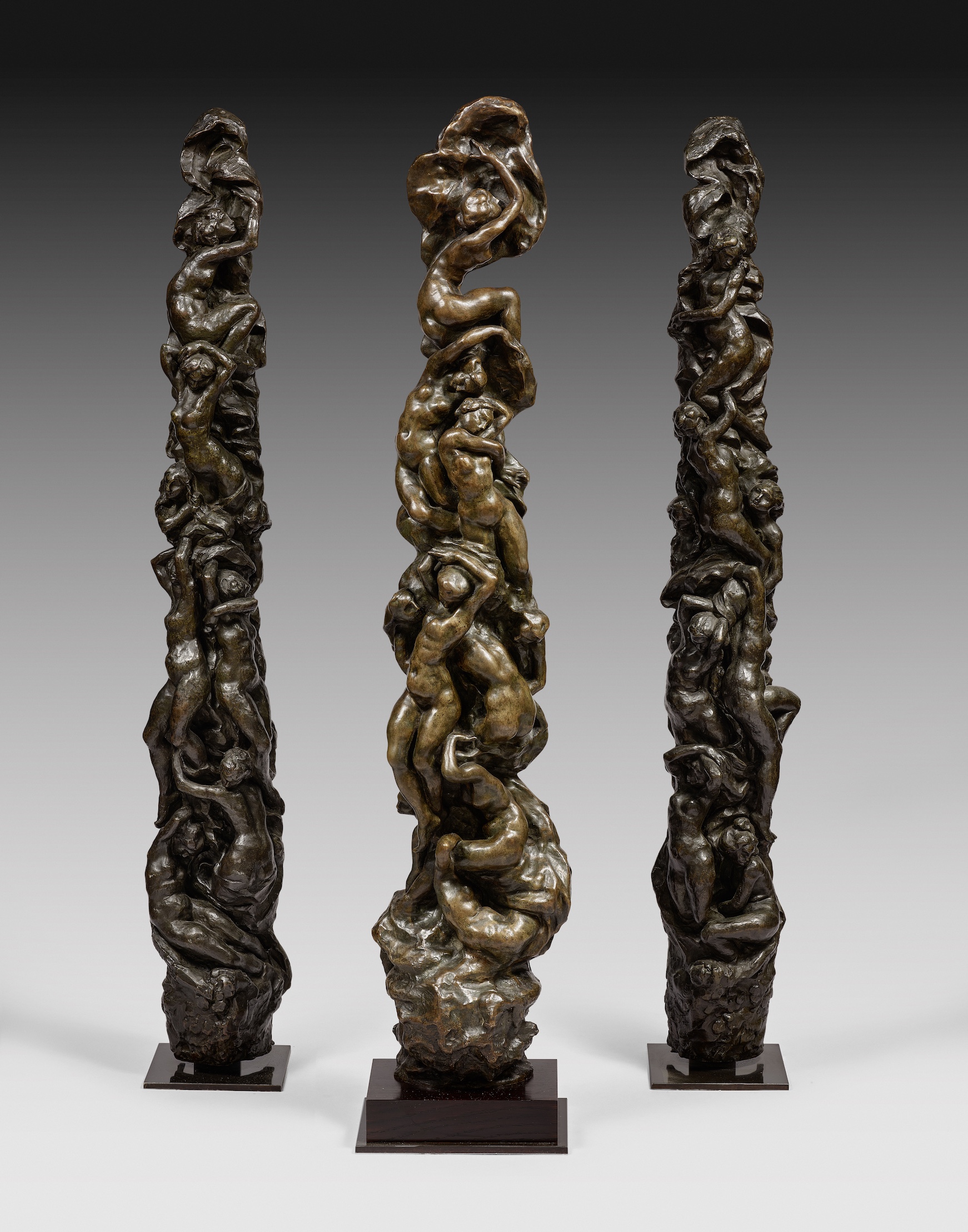
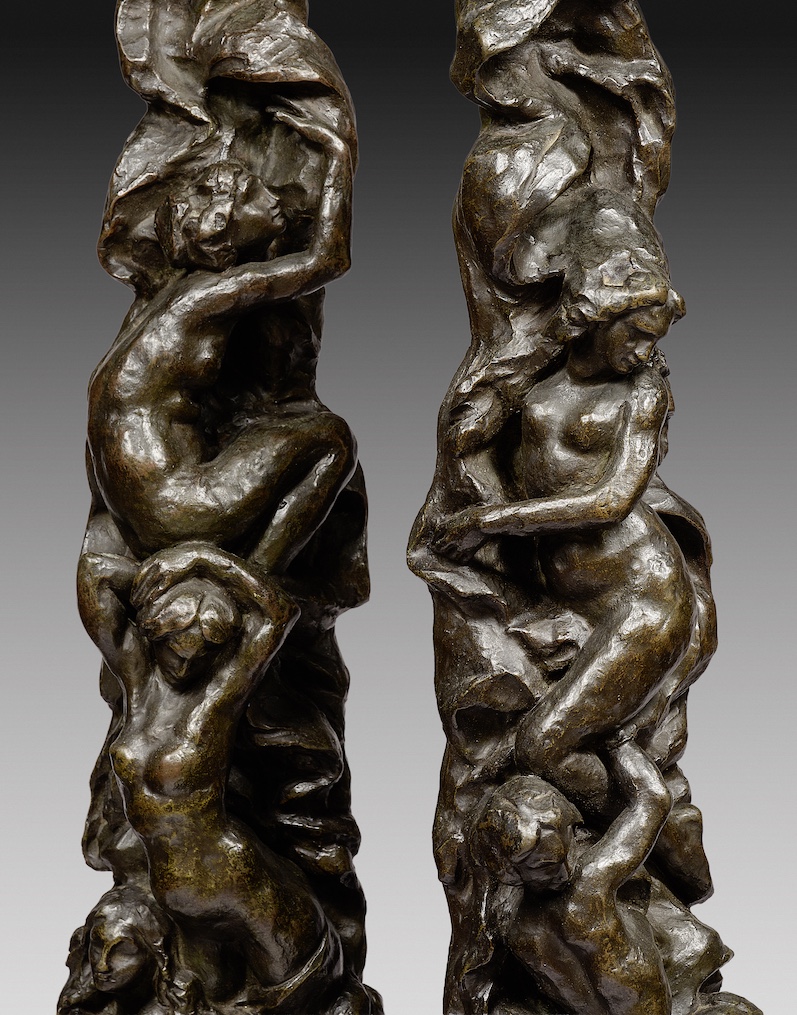
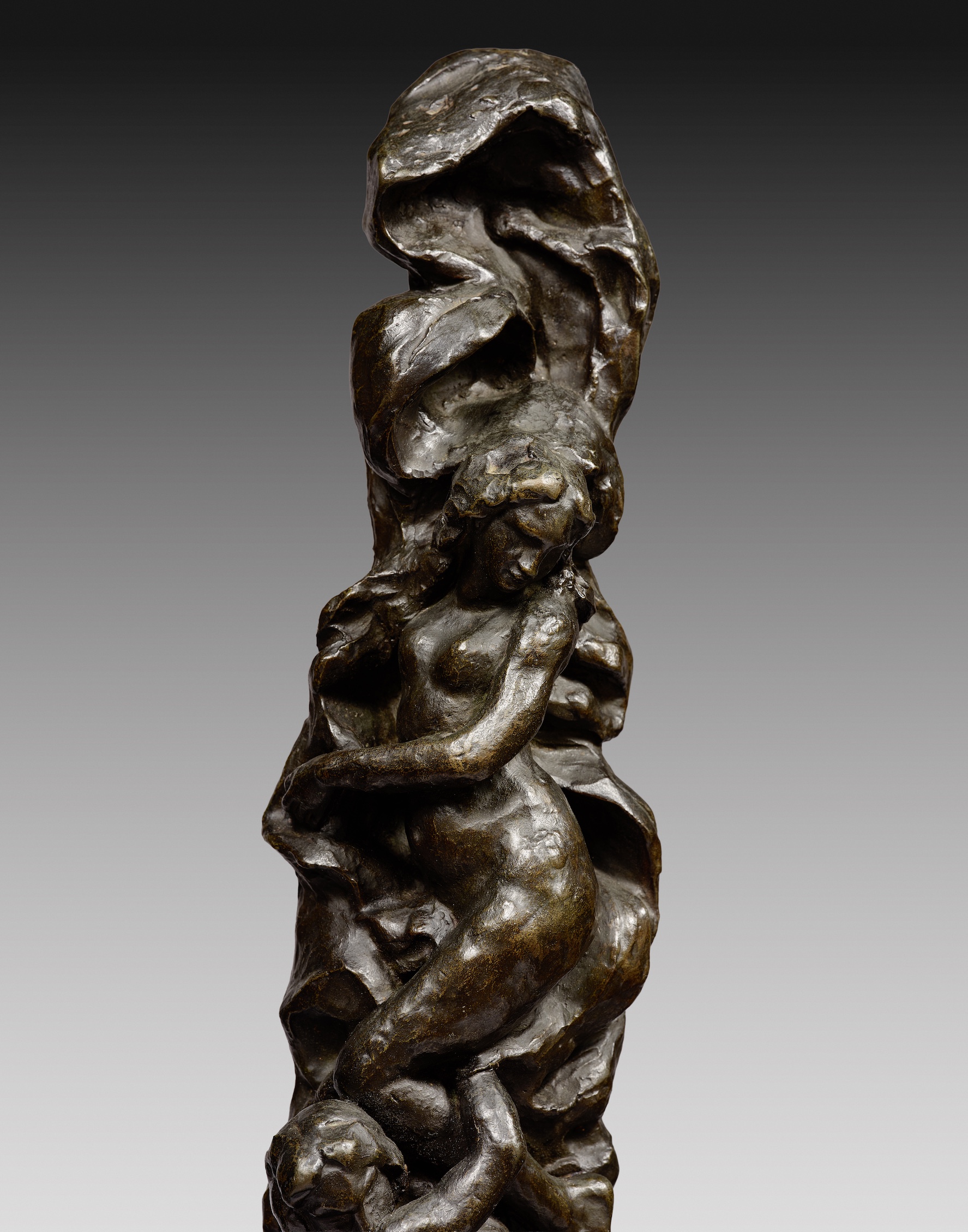
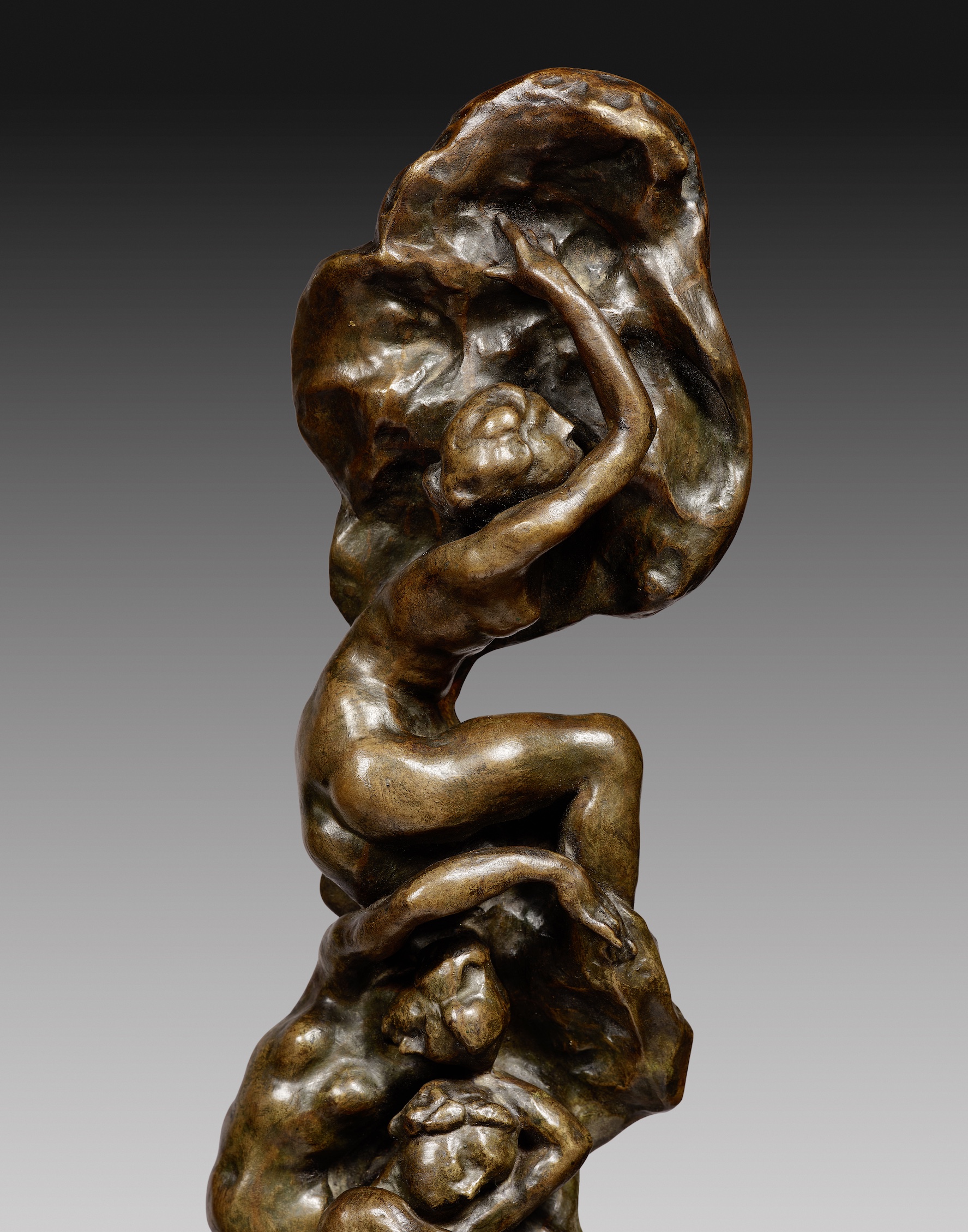
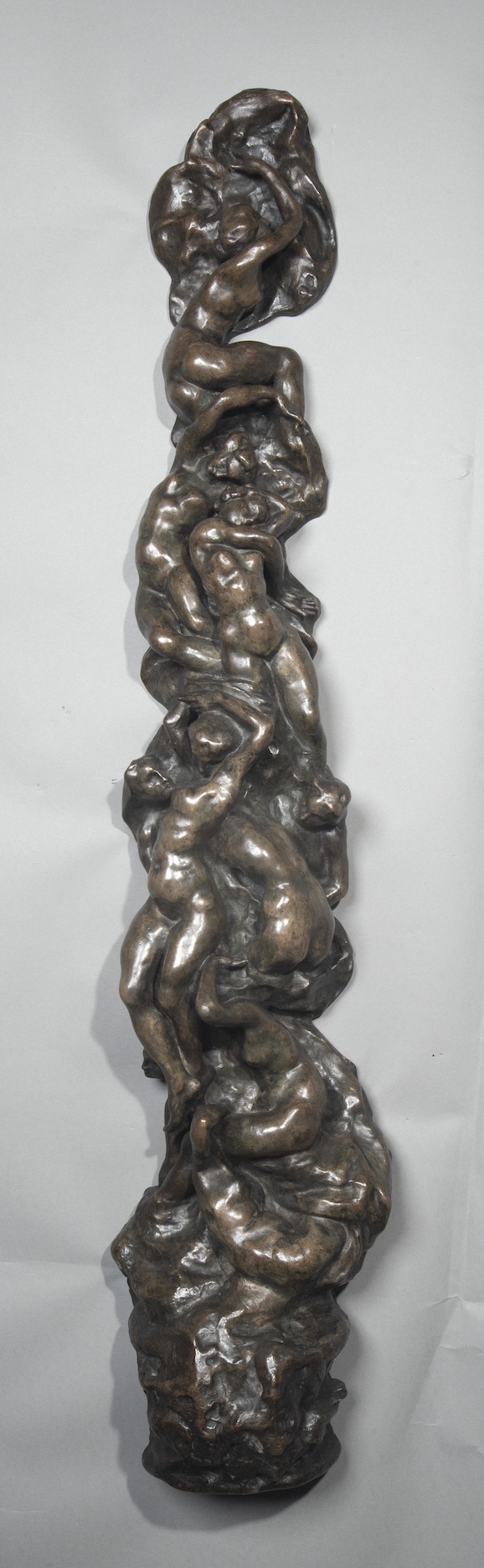
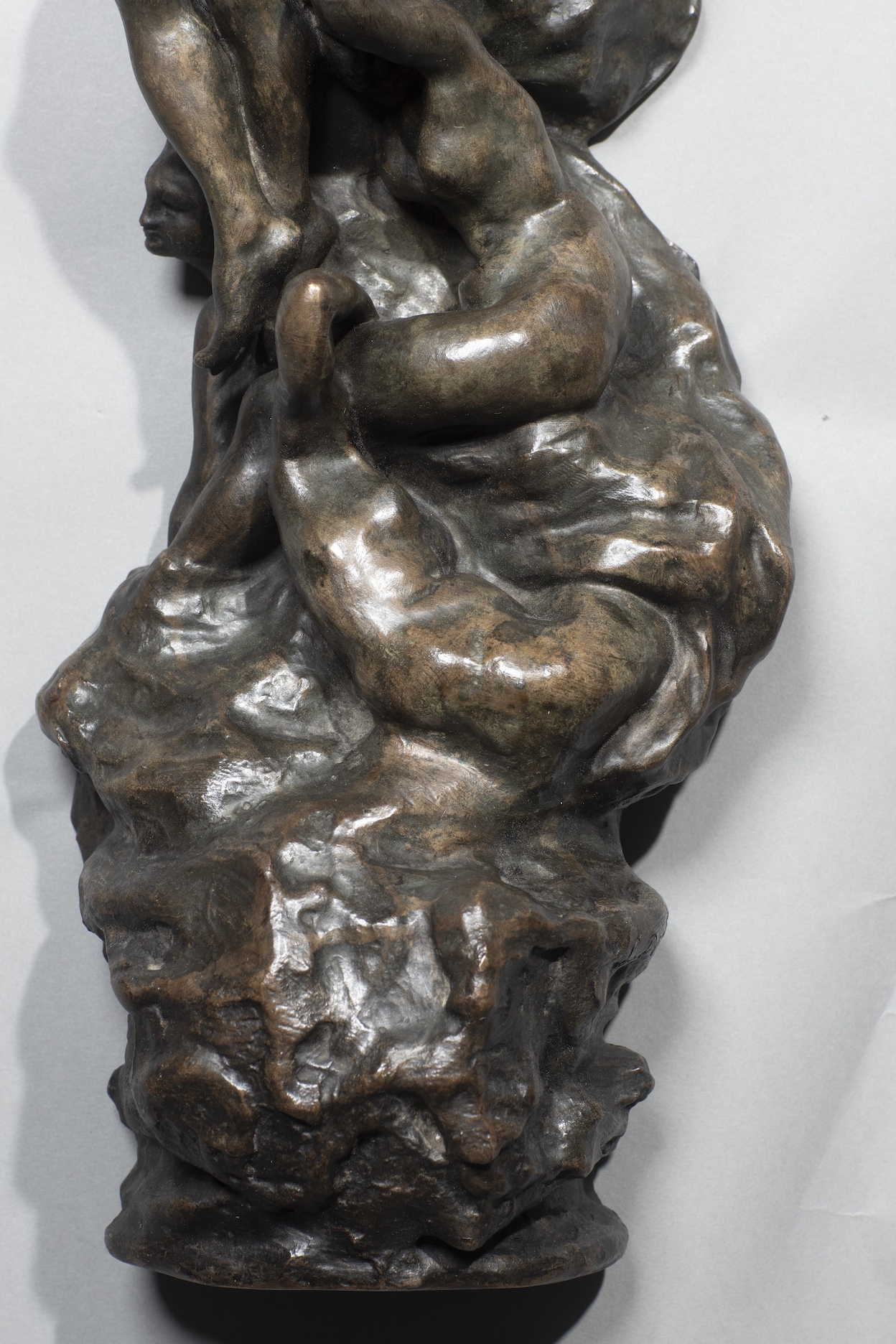
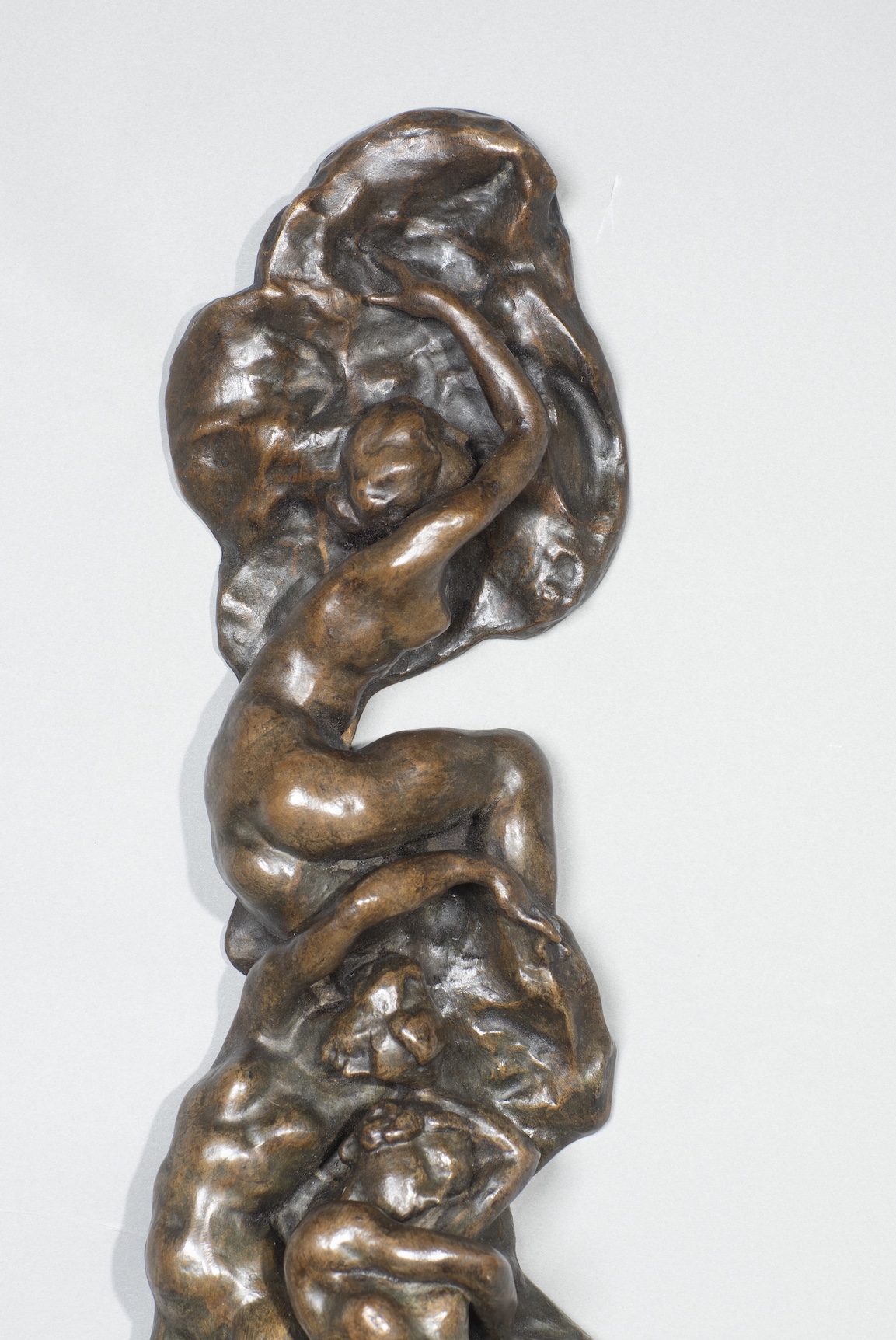
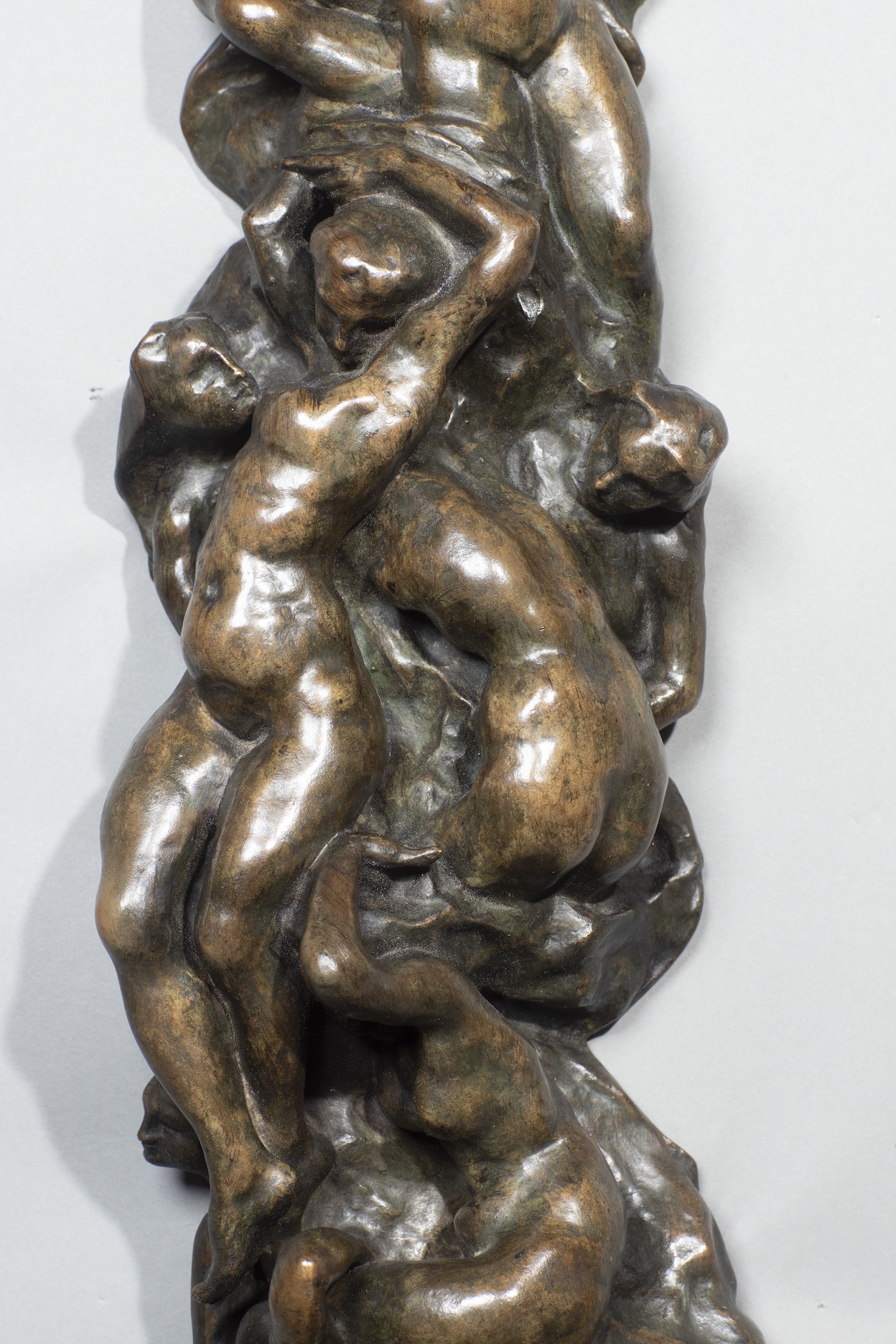
The Spirit, placed in the central crowning element, is symbolized by the figure of Apollo surrounded by the Muses. From right to left are represented Music, Comedy, Tragedy, Astronomy, and Eloquence. The Passions, by contrast, appear on the uprights in the form of nude female bodies intertwined and spiraling upward in an ascending composition. Representing the full range of human emotions and desires, they strive toward Knowledge and toward intellectual and artistic creation, embodied by the Muses.
The three sections of the library were most likely articulated by four uprights, as is customary in this type of design. Indeed, four distinct uprights are documented : the three bronzes presented here and the fourth, which is now part of a private Canadian collection.
In this arrangement of female bodies can be discerned all the lessons learned from Rodin, for whom the only thing that truly mattered in sculpture was the expression of life. This expression is achieved through modeling — the art of using depth, of varying and interlinking masses of shadow and light. By making these women emerge from matter, revealing their forms and exaggerating their poses to play upon their curves, Louis Dejean fully adheres to the great sculptor’s principles while asserting his own fondness for the female nude. The turmoil of these figures inevitably recalls The Gates of Hell. Yet the disorder found in Rodin’s work—stemming from his desire to free sculpture from architecture — is absent in Dejean’s, which instead integrates the movements of his figures within a clearly defined framework. Here, Rodin’s influence is already beginning to fade.
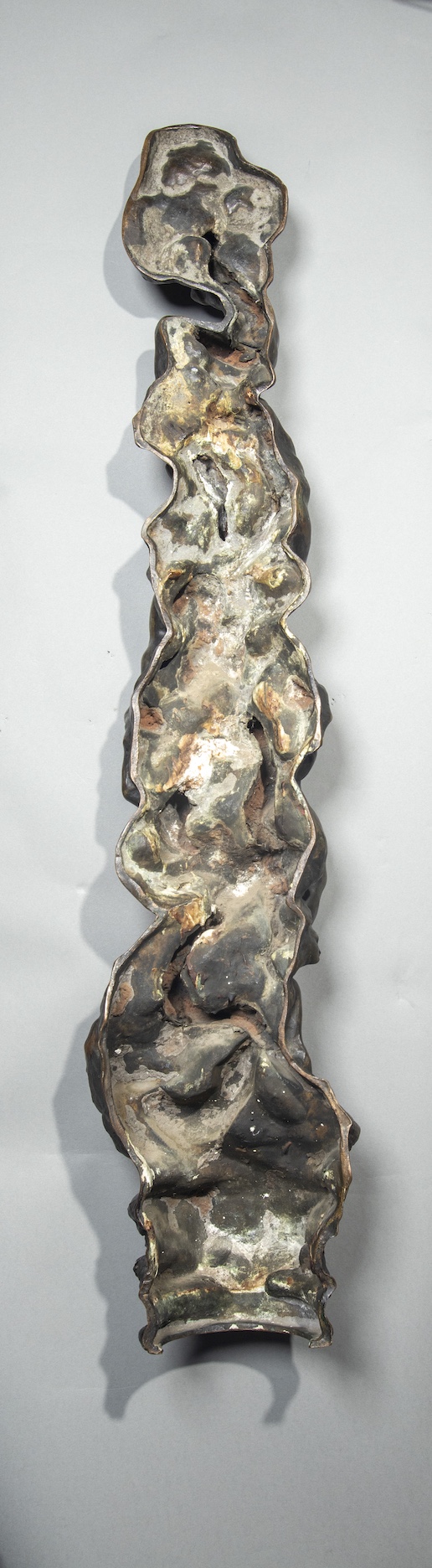
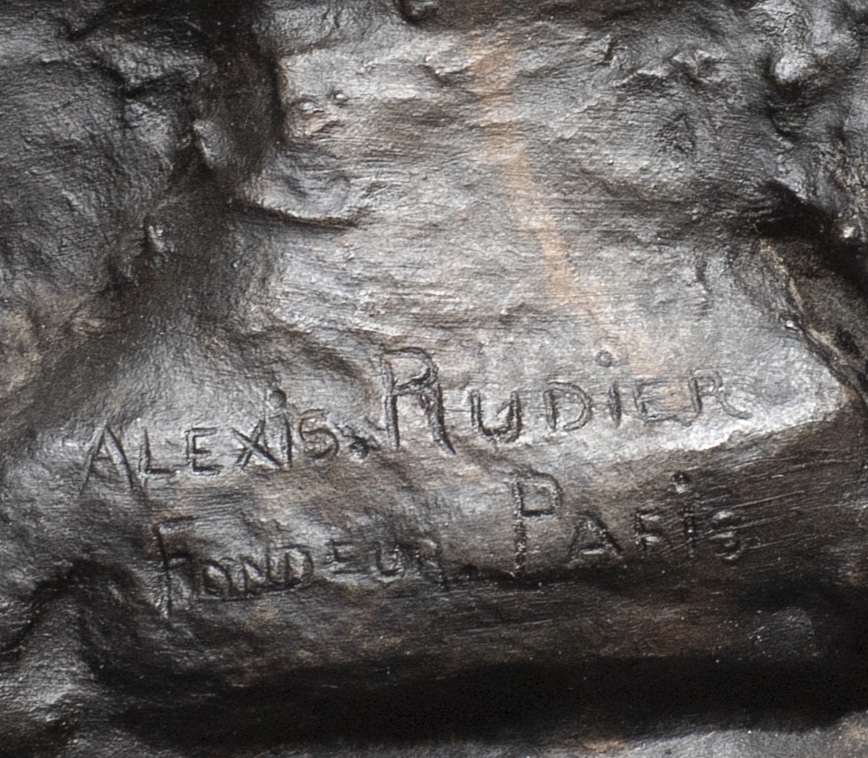
Our three uprights bear the foundry mark of Alexis Rudier, as does the other identified example. The Rudier foundry was renowned for the quality of its casts and worked with the greatest sculptors of the period. It was also entrusted, regrettably after the artist’s death, with the casting of The Gates of Hell.
However, although the stamp bears the name Alexis Rudier, the casting of these bronzes was in fact carried out by his son Eugène, who took over the management of the foundry after Alexis’s death in 1897 and retained the mark created by his father.