Description
Roger Godchaux emerges as an artist of many talents, freely drawing and sculpting the objects that surrounded him. His father, an antiquarian by profession, instilled in him at an early age a taste for decoration and interior objects. Godchaux nonetheless chose to devote himself to animal sculpture and, in 1896, entered the Académie Julian. A few years later, he exhibited his first works, already marked by a predilection for wild beasts and elephants. Like many animal sculptors of his generation, he studied exotic fauna at the Jardin des Plantes, where his fascination with animal life was nourished. His anatomical studies also owe much to Antoine-Louis Barye, whom he deeply admired and whose works he collected extensively.
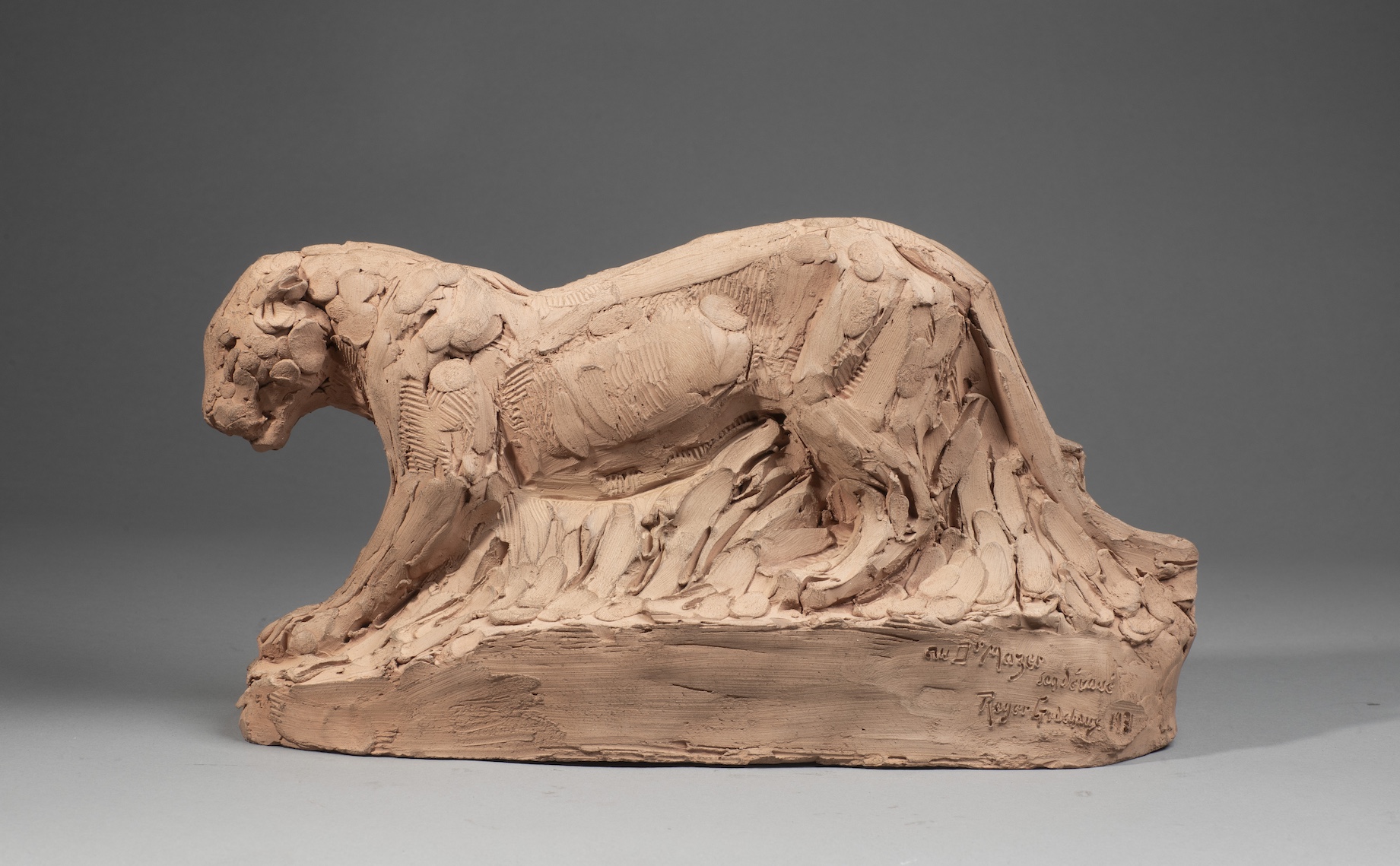
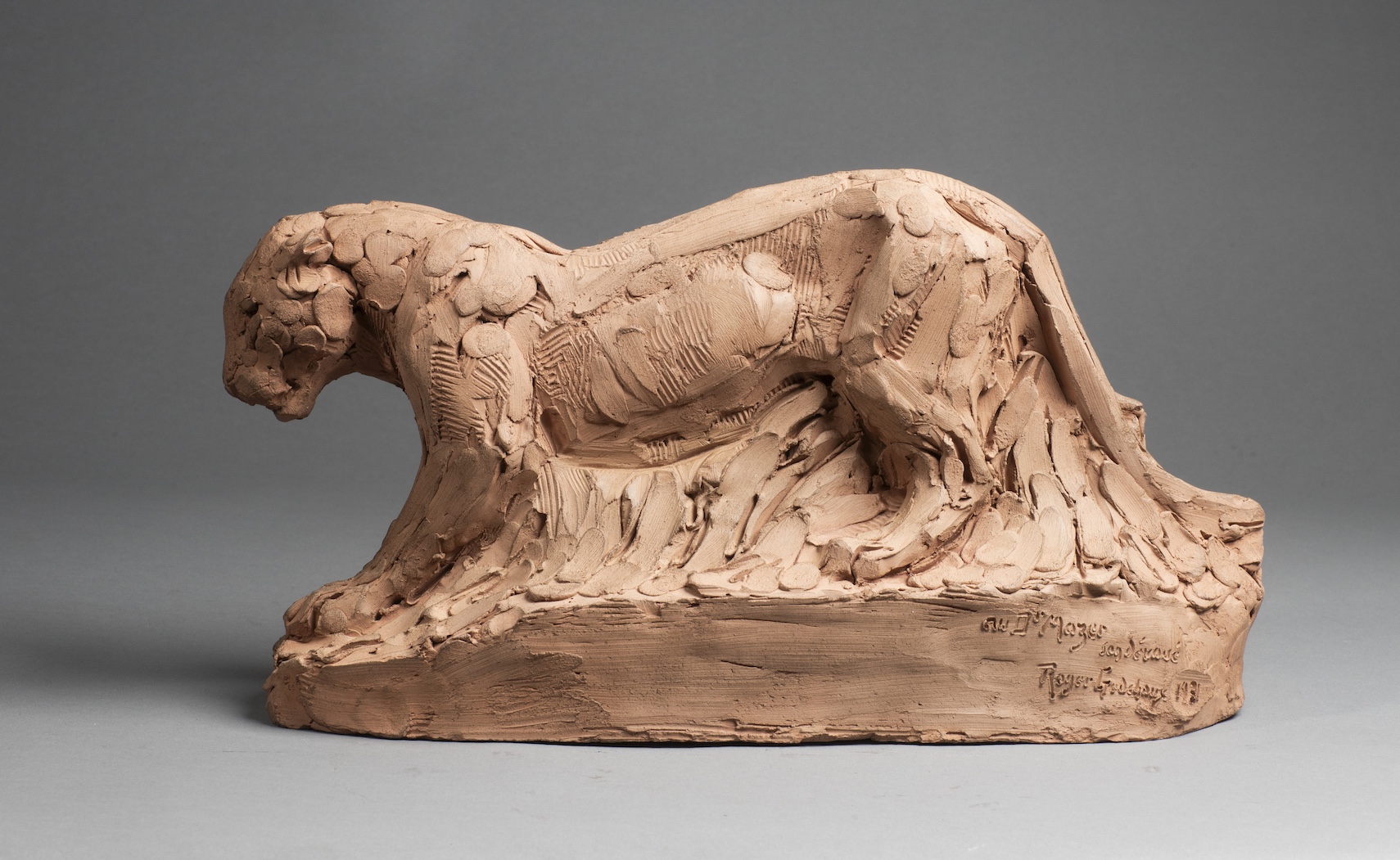
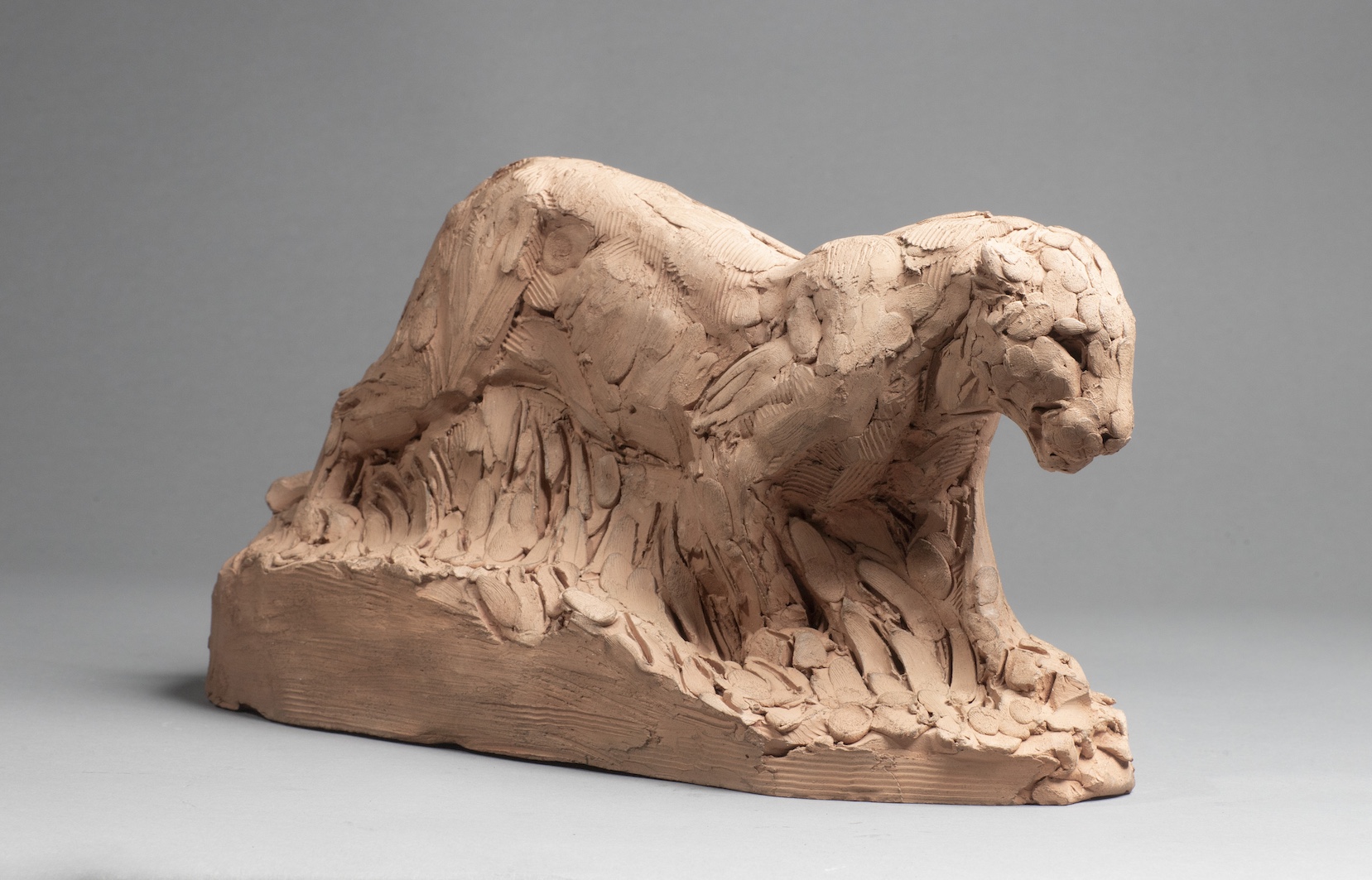
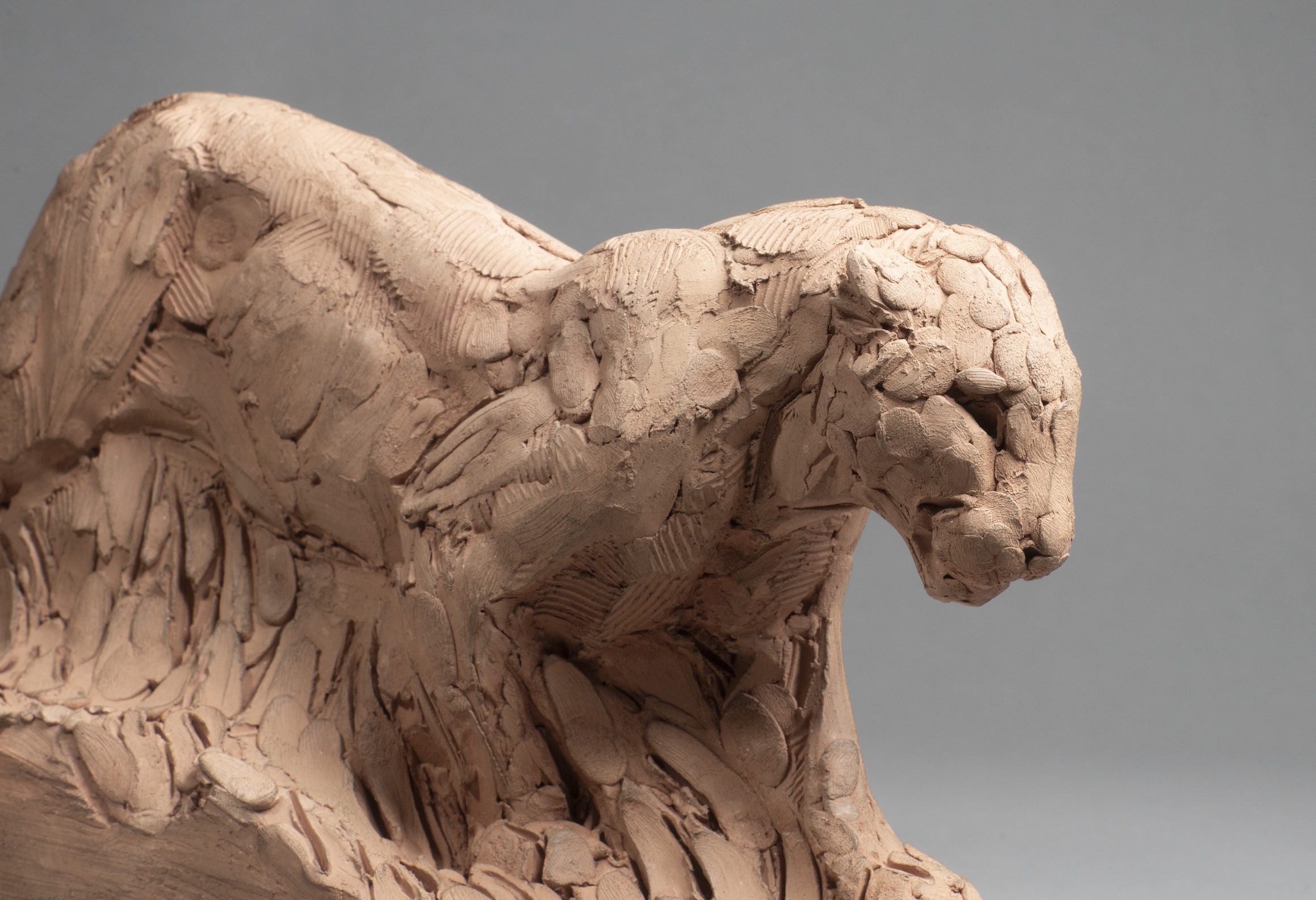
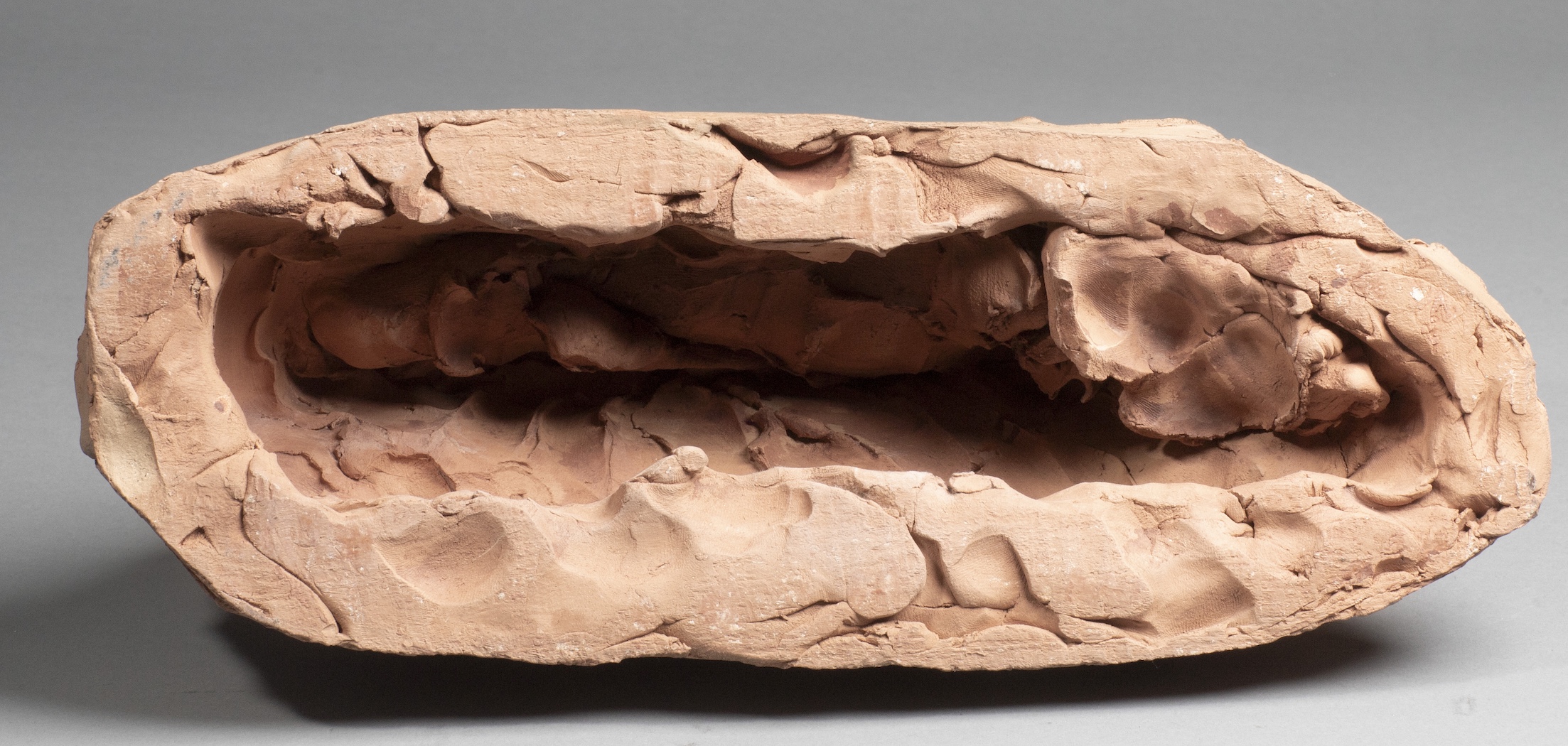
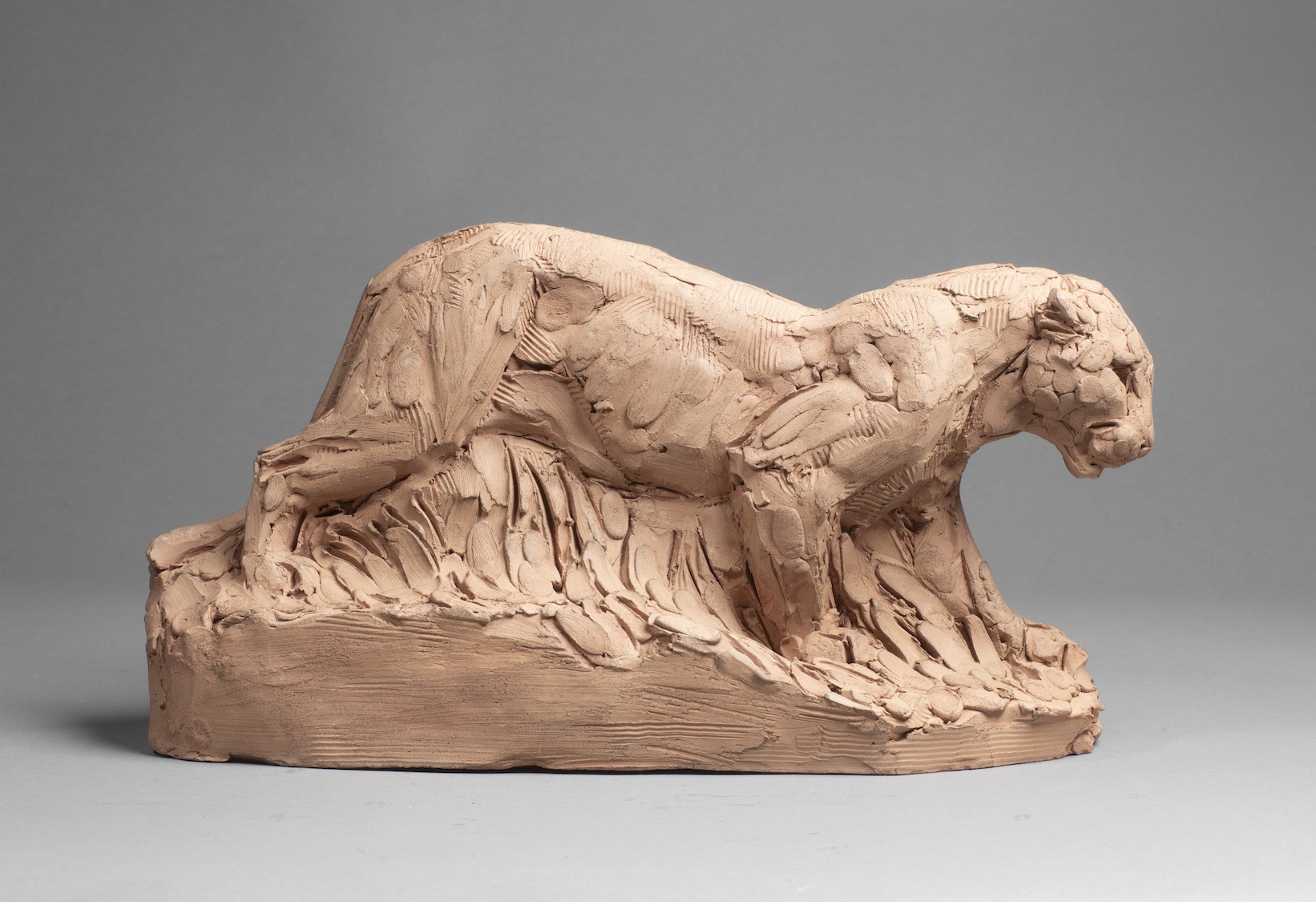
Felines occupy a central place in his bestiary. Unlike Barye, scenes of combat are rare in Godchaux’s œuvre; he preferred to depict wild animals in their everyday attitudes—seated, at rest, on the alert, scenting the air, or moving slowly forward, as in the present terracotta. Here, the artist conveys with great acuity of observation a lioness advancing cautiously, her elongated body low to the ground, powerful shoulder muscles rippling beneath the skin, her head slightly lowered as she fixes her gaze intently on a point on the ground ahead. More a modeler than a carver, Godchaux worked by building up the form through the accumulation of small pellets of clay, then articulating the surfaces with oblique striations and areas of smoothing, deliberately leaving the imprint of his fingers visible in the material.
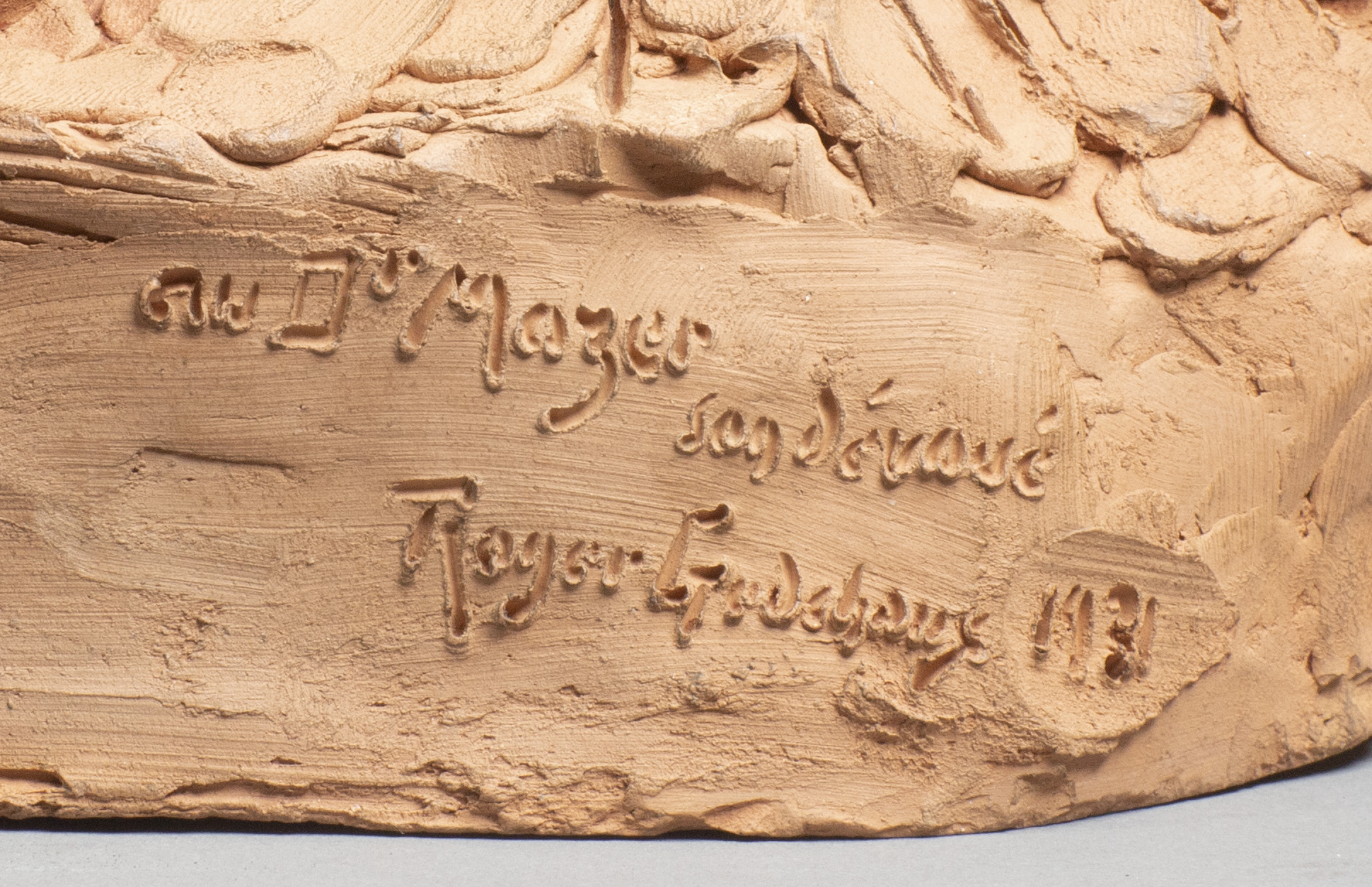
This sculpture, a unique work, is dated 1931 and dedicated to Dr. Mozer, who devoted his life to scientific research on tuberculosis at the Berck hospital. A particular relationship likely existed between the two men. The work may well have been created during a stay by the artist at this institution. Another creation by Roger Godchaux—a medallion dedicated “au docteur Andrieu, ses amis, ses collègues, ses élèves, Berck, 13 octobre 1934”—appears to corroborate this hypothesis.
Godchaux evidently wished to commemorate these personal connections by dating the works associated with them, for most of his sculptures are in fact undated. The present Lioness thus stands as a deeply moving testament, both artistically and humanly, and as a work of exceptional rarity.