Description
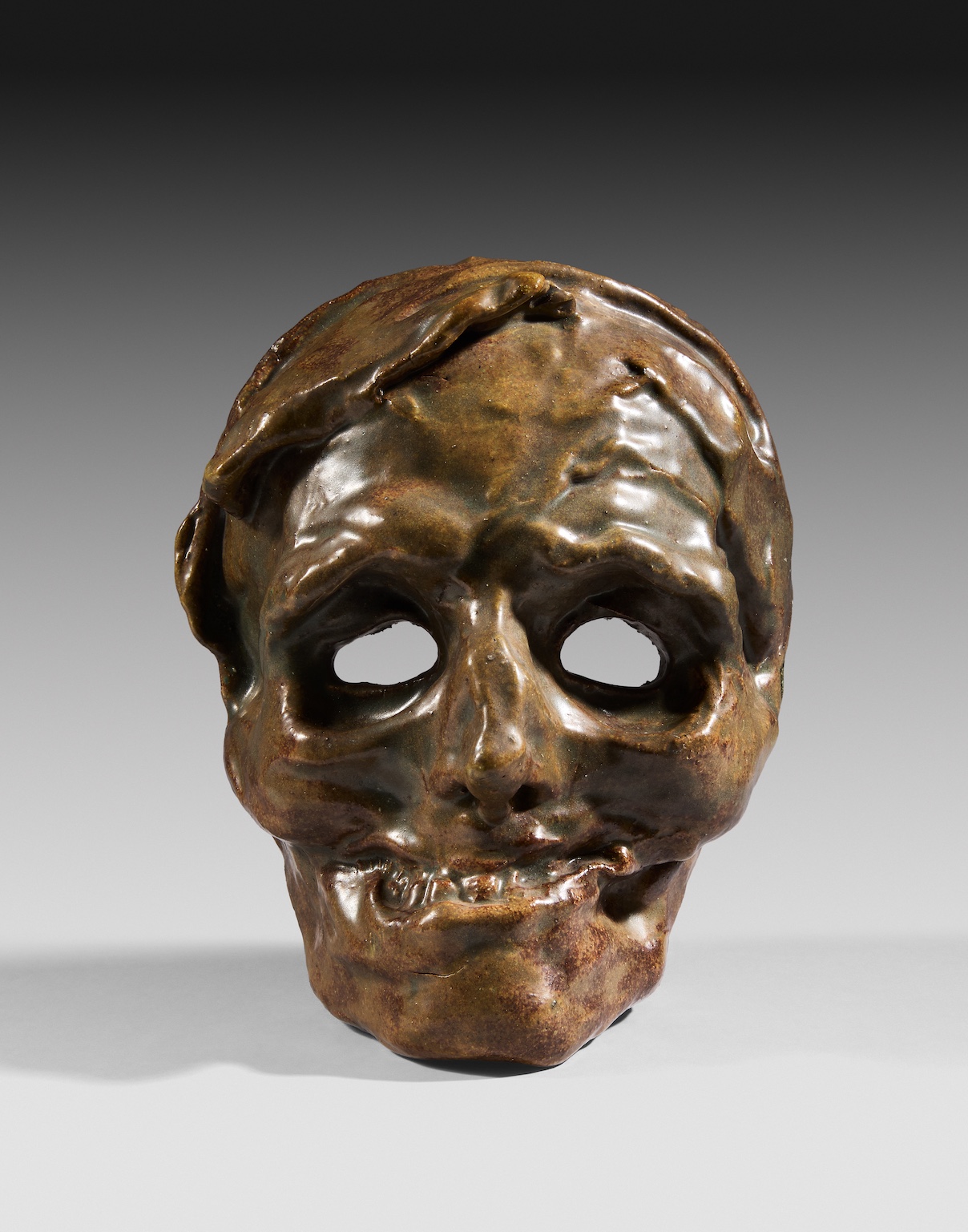
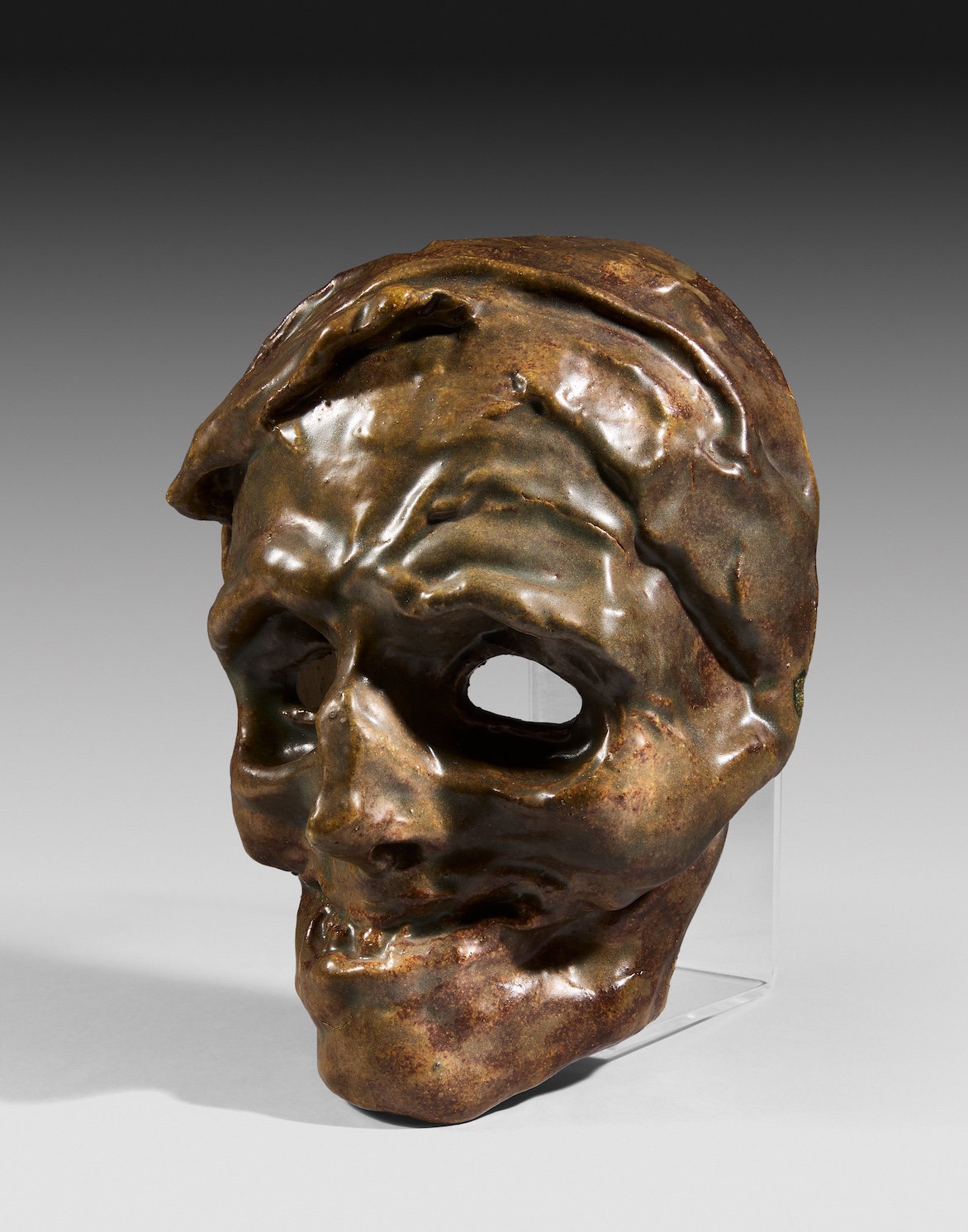
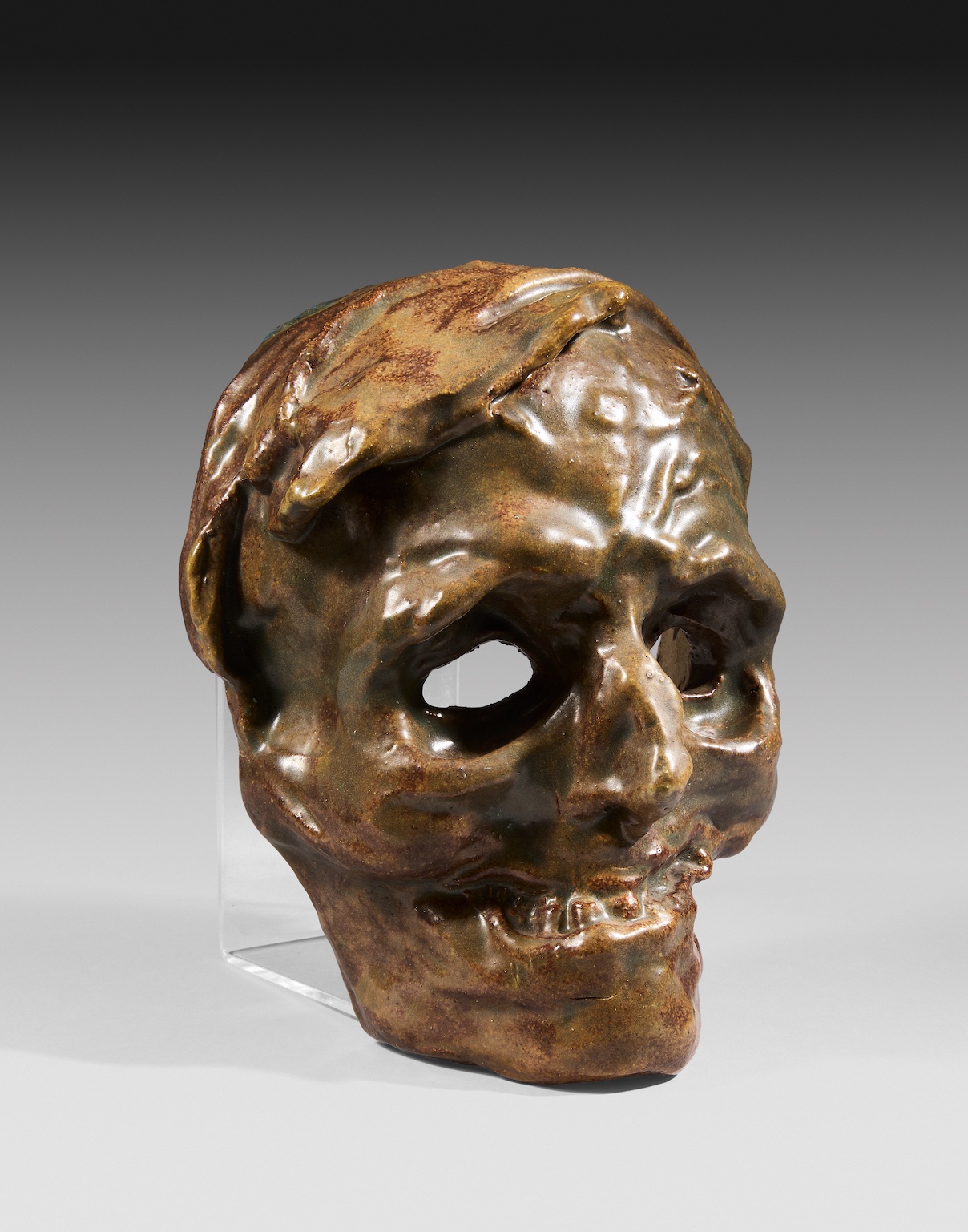
Mask of Death occupies a singular place in the oeuvre of Jules Desbois. Its genesis is closely linked to a recurring figure in his imagination: Death personified, whose contemplation in its most extreme ugliness was intended to release the anxiety it inspires. The modeling of this mask, with its hollowed features and sagging flesh, directly reprises the realist and deeply human aesthetic developed in Death and the Woodcutter, a group exhibited in 1890 at the inaugural Salon of the Société Nationale des Beaux-Arts, which first brought the artist to public attention. The allegory of Death assumes the features of an emaciated old woman — a figure Desbois also employed in the Misery, shown in 1894 — whose prominent cheekbones, toothless grin and cavernous eye sockets reappear in the present mask.
In giving form to such human decay, Desbois aligned himself with the current of expressive sculpture initiated by Auguste Rodin, whom he first met in 1878 while both were working on the decoration of the Palais du Trocadéro, and with whom he collaborated again, more significantly, beginning in 1884.
Desbois first exhibited a Mask of Death in pewter in 1893. Reflecting his taste for the fragment, probably inherited from Rodin, the mask inevitably also evokes the death mask. At the close of the nineteenth century, the genre enjoyed exceptional success, fueled by the discovery of Japanese Noh theatre masks and by the experiments of the ceramicist Jean Carriès, whose stoneware “masks of horror” explored new expressive possibilities.
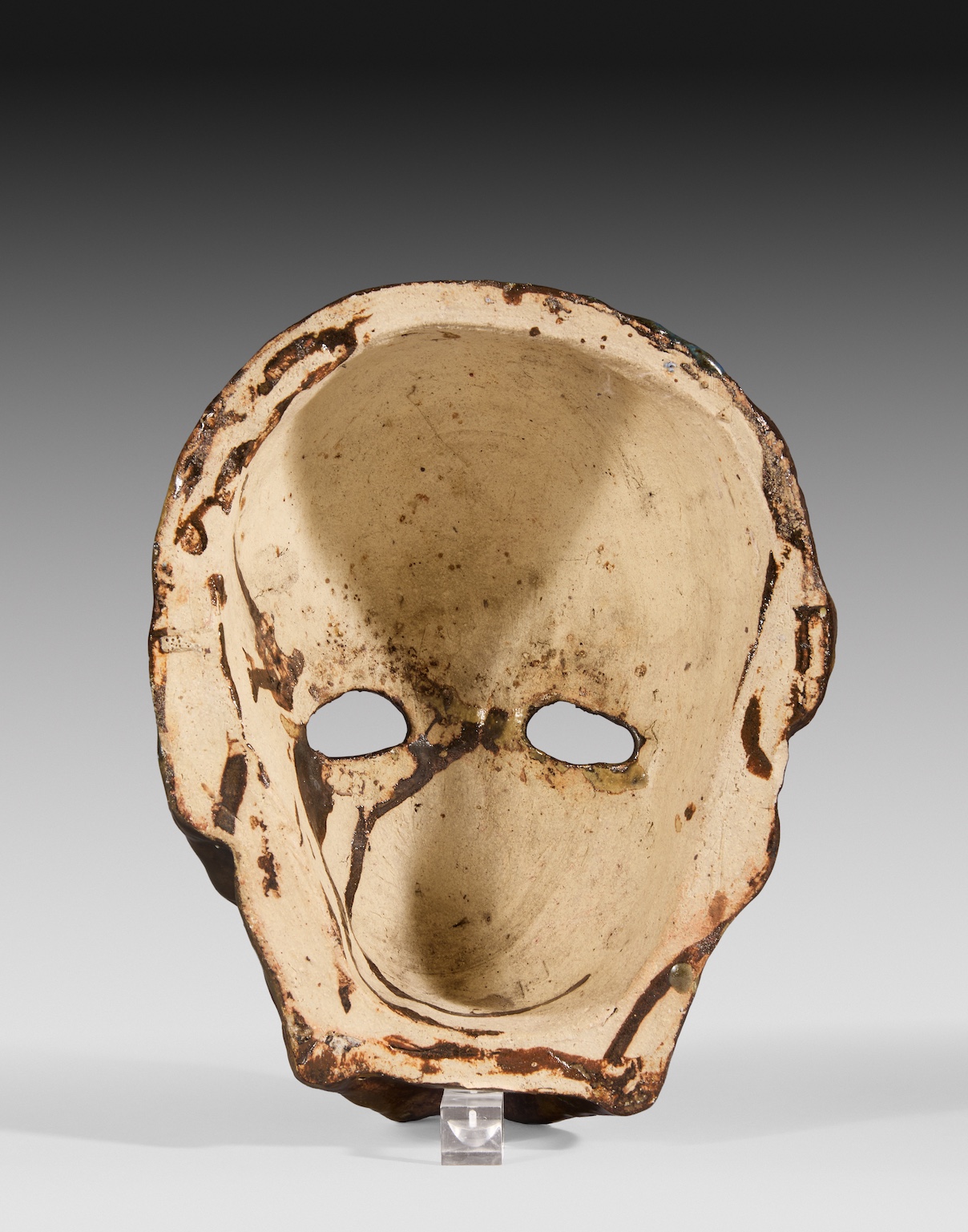
Stoneware was a medium particularly favored by Carriès for the range of effects achievable through varied glazes. Around 1890–1894, Desbois and Carriès were acquainted and maintained friendly relations. Yet it was to Carriès’s pupil, the ceramicist Paul Jeanneney, that Desbois turned to transpose his Mask of Death into stoneware in 1903–1904. Among the few known examples, some bear the signatures of both artists along with the date 1903 (Zimmerli Art Museum) or 1904 (private collection, Sotheby’s sale, 2023) and occasionally the inscription “St Amand,” referring to Saint-Amand-en-Puisaye, the probable site of production where Jeanneney maintained his studio.
The present example is covered in a light brown glaze subtly nuanced with bile-green tones, heightening the anguish of its expression. It once bore an old label bearing Rodin’s signature. It so happens that Paul Jeanneney executed Rodin’s Head of Balzac in stoneware during the same period. Whether this label reflects a misattribution or remains from an earlier exhibition in which both artists participated remains uncertain; in any case, it once again underscores the close ties between them.
Situated at the crossroads of sculpture and the decorative arts, this rare and emblematic work of Symbolism also reflects a characteristic ambition of the period: the fusion of the arts and the reconciliation of artistic creativity with craftsmanship.
We are most grateful to Mr. Florian Stalder, Departmental Curator of Museums for Maine-et-Loire, for the valuable information he has generously provided.