Description
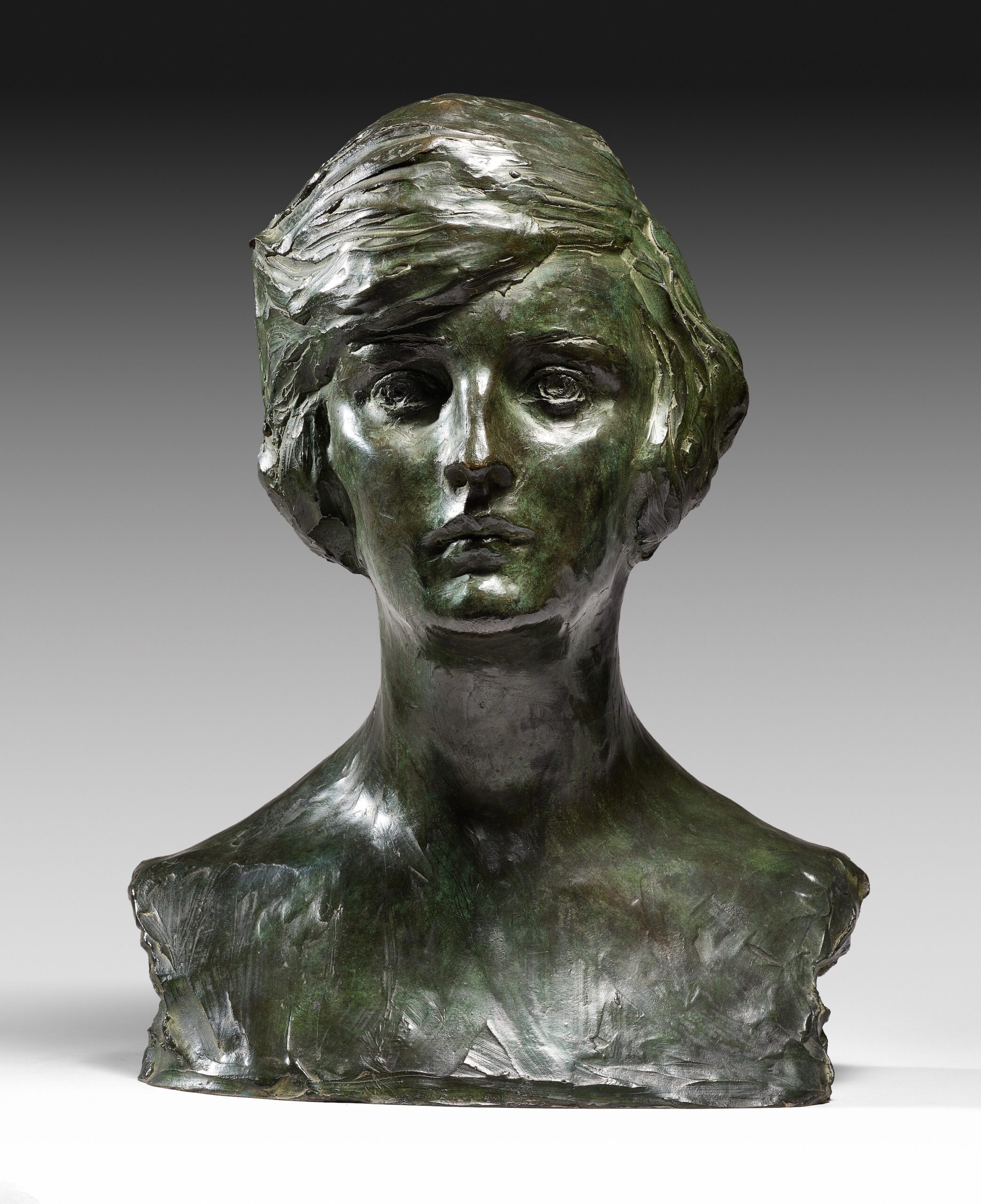
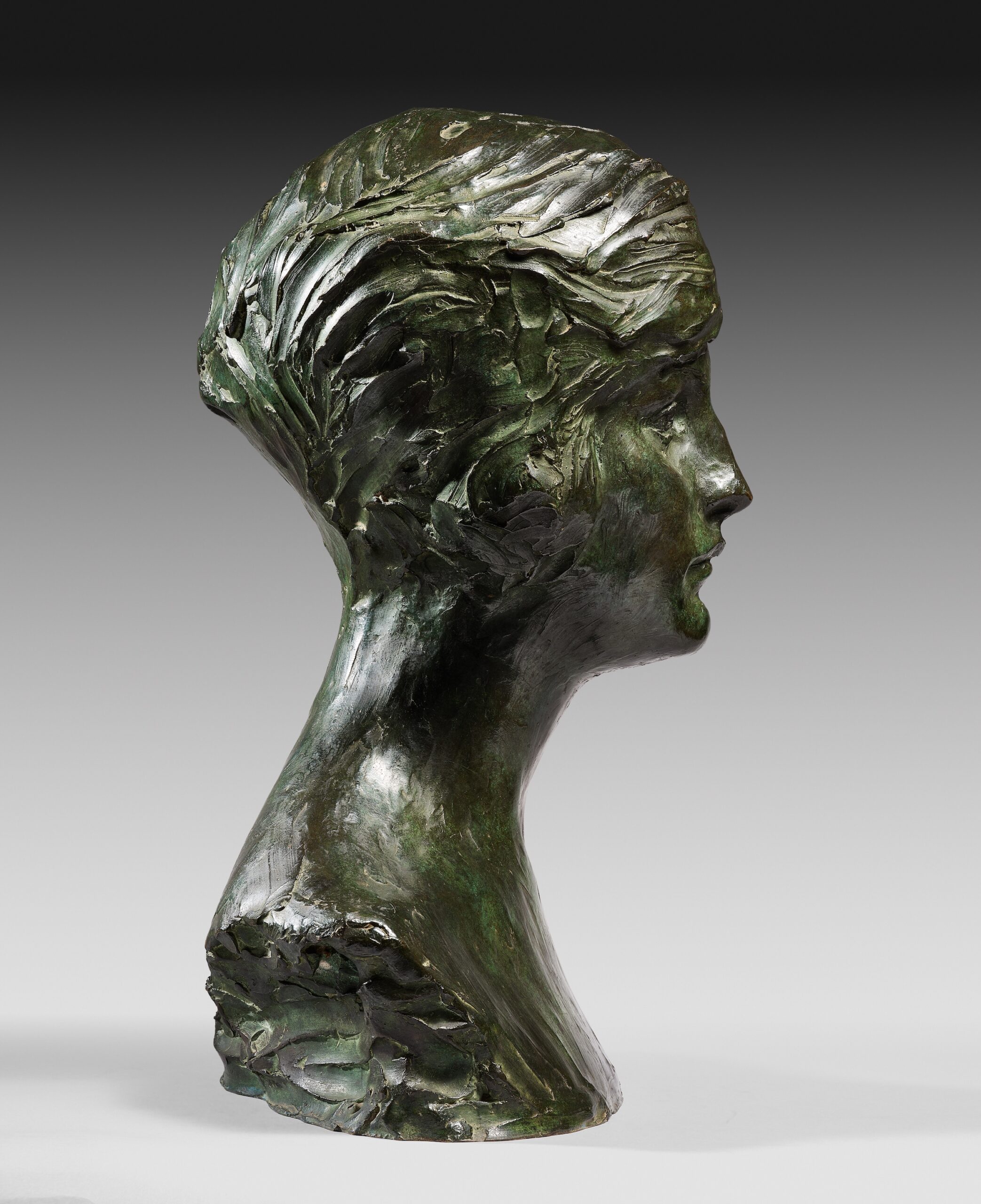
Nicknamed the “Russian Rodin,” Paul Troubetzkoy — son of Prince Pierre Troubetzkoy, a diplomat, and the American pianist Ada Winans—remained famous as a portraitist, which made him sought after by a cosmopolitan elite, from his native Russia to France and the United States. He particularly excelled at capturing the strength of character of his subjects, which is strikingly evident in his bronzes that catch and make light vibrate on their surface, as in this bust modeled with small, energetic touches characteristic of the Impressionist style in sculpture.
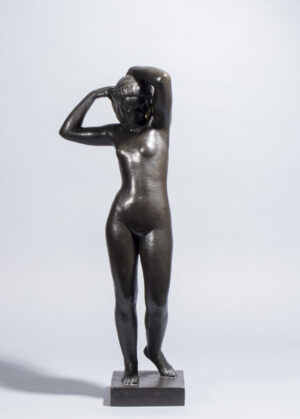
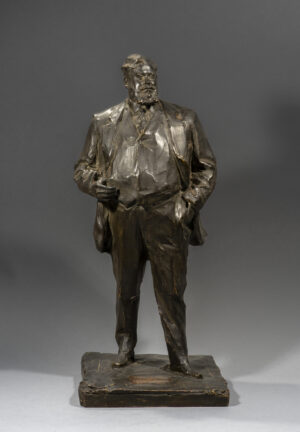
Paul Troubetzkoy and Paul Helleu (1859-1927) were friends from Troubetzkoy’s first stay in France, as evidenced by the statuette of Paul Helleu exhibited at the Troubetzkoy exhibition at the Hispanic and Numismatic Society of New York in 1911. They met again upon the sculptor’s return to Europe in 1920. The painter had a daughter, Paulette, born in 1904, whose full-length portrait (plaster) at about the age of twenty is held in the Museo del Paesaggio in Verbania. Paulette’s identification was confirmed by Elisabetta Giordani in her work “Identita Rivelate, personaggi ritratti dallo scultore Paolo Troubetzkoy” (Identities Revealed, Persons Portrayed by the Sculptor Paolo Troubetzkoy). One is struck by the immediate resemblance between the face of this plaster cast and our bronze: similarity of bearing, features, and hairstyle.For Mathias de Labretoigne, Troubetzkoy specialist and author of Paul Troubetzkoy: Le roman d’une vie et d’une œuvre, this identification is beyond doubt. It is indeed Paulette Helleu at approximately 20 years old; this precise age is itself corroborated by a bronze similar to ours, dated 1925 and also cast by Valsuani (Christie’s auction, June 4, 2018, lot 381).The Bonnat-Helleu Museum holds a full-length bronze Portrait of Paulette Helleu, standing, with her arms behind her back (H. 46.5 cm), dated 1930. The physiognomy, the treatment of the hair, and the sensitivity of the modeling once again support the identification of our bust. Moreover, the representation of the same sitter as a young girl both in full-length (statuette) and bust-length (life-size) already existed in Troubetzkoy’s work, since he had thus represented Barbara, William Kissam Vanderbilt’s daughter-in-law in 1910.