Description
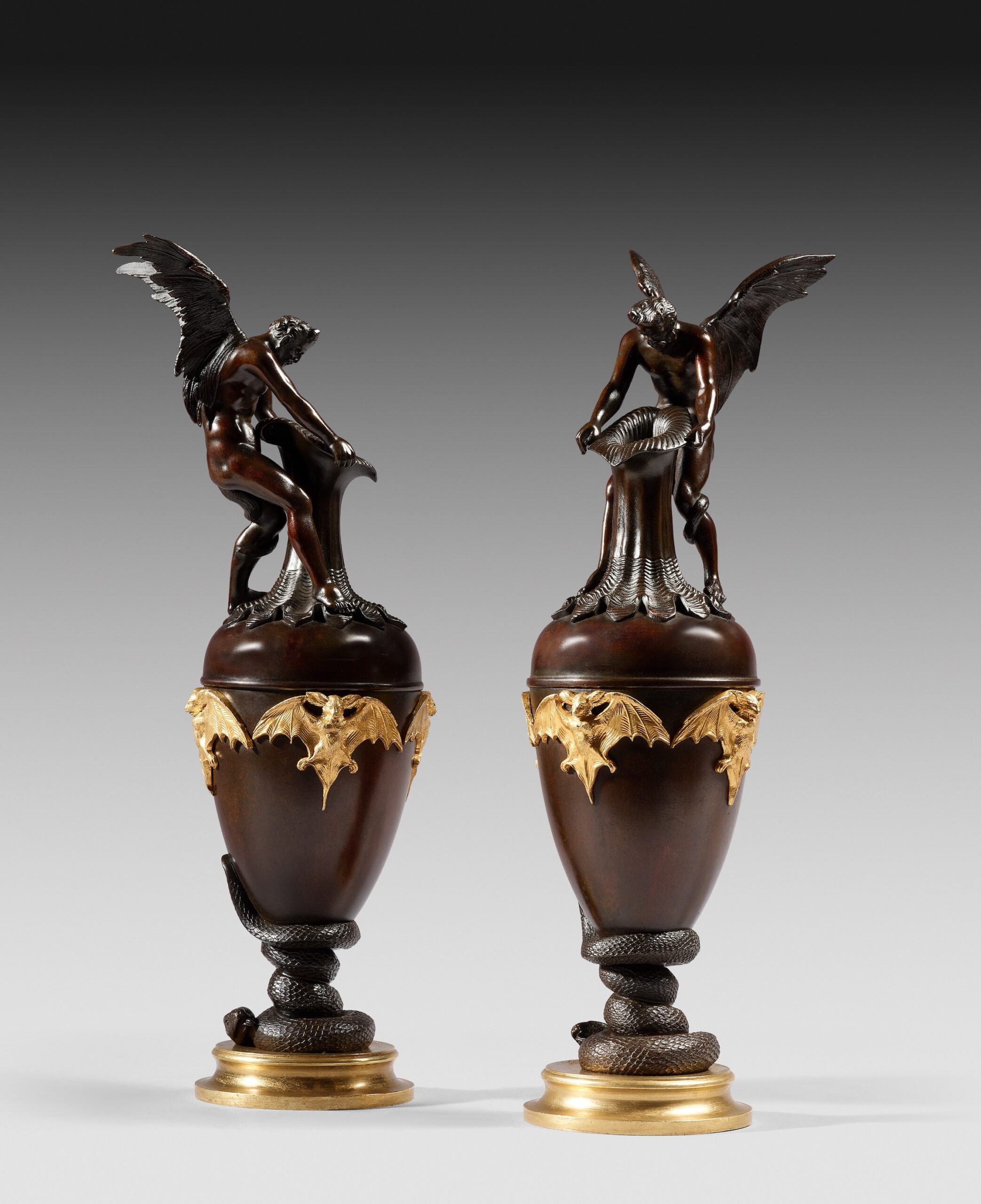
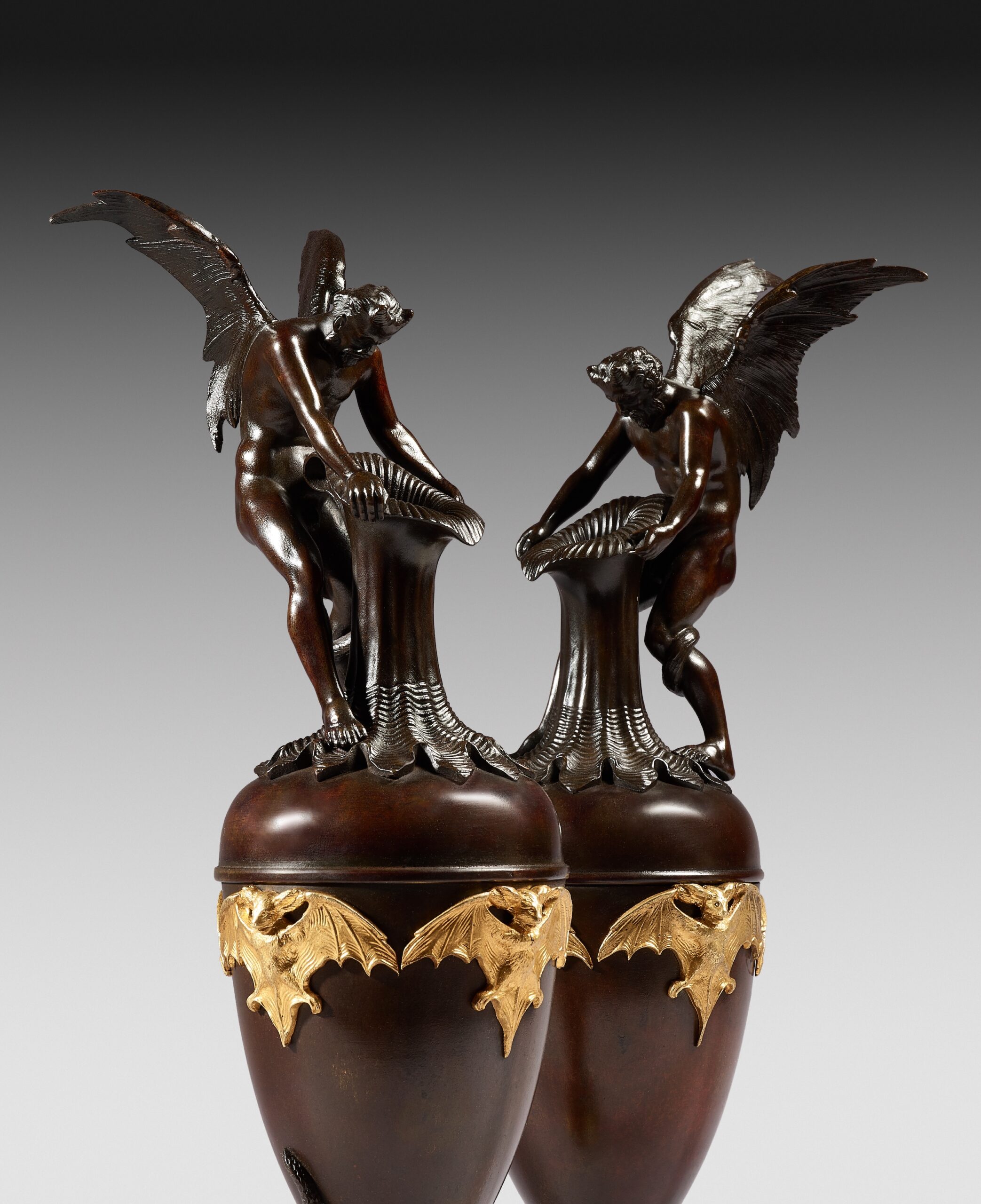
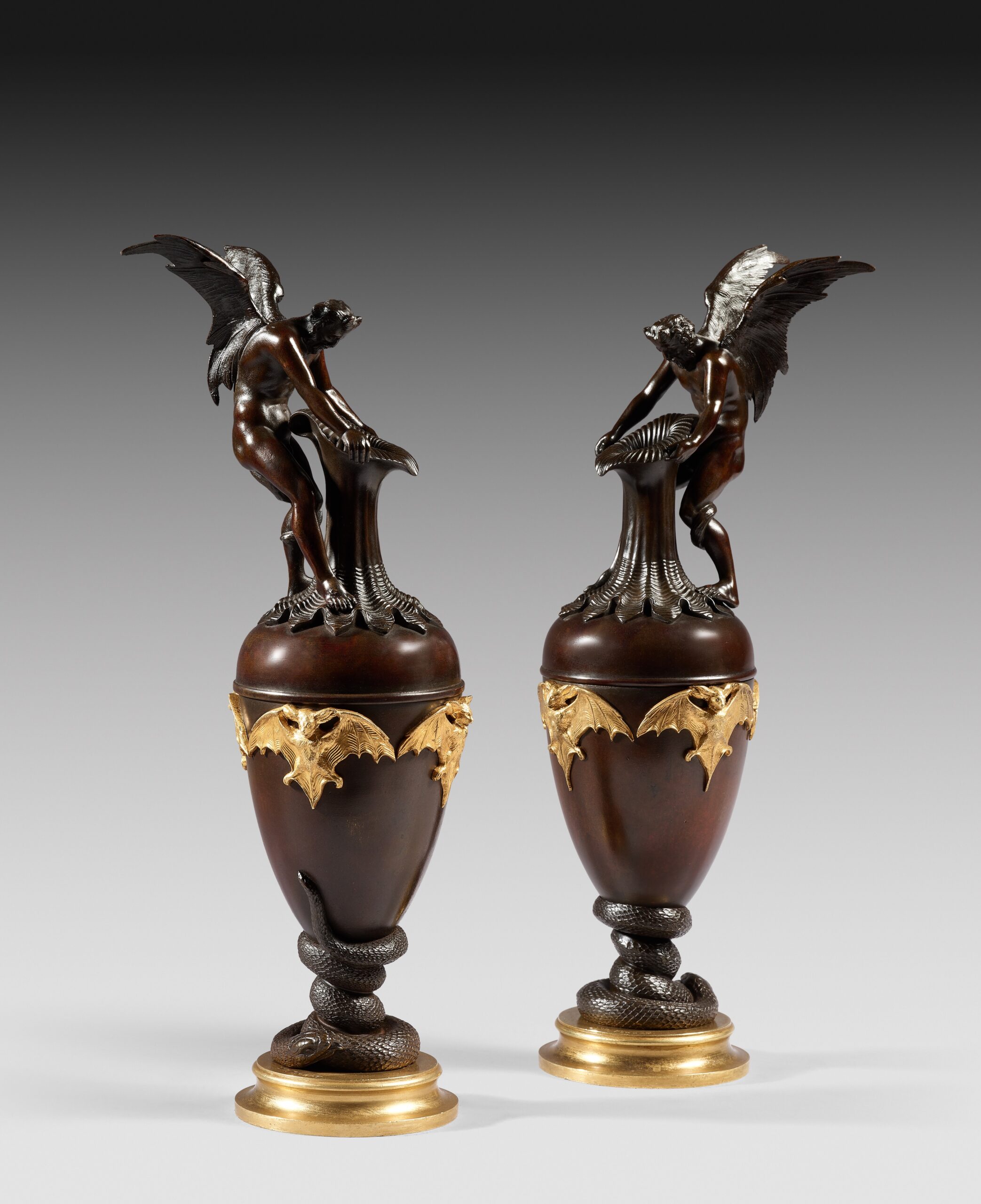
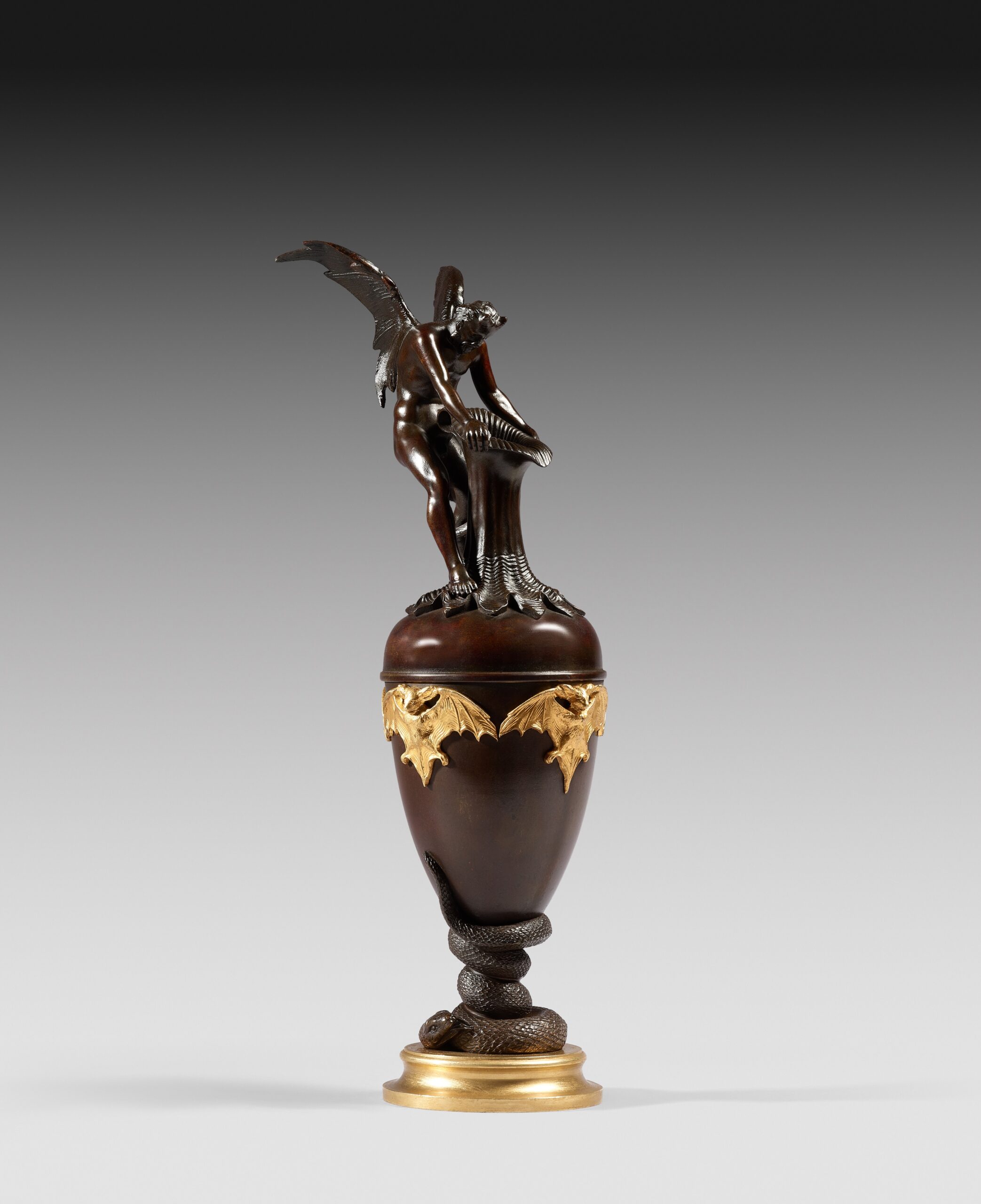
A 2006 book by Daniel Maurin brought to light the career of Hyppolyte Ferrat, a sculptor originally from Aix-en-Provence. Trained at the Aix School of Drawing, then at the École des Beaux-Arts in Paris under James Pradier (1790-1852), he subsequently joined the master’s studio on the rue de l’Abbaye. He would remain for twelve years with the man he nicknamed “the French Phidias,” absorbing his art. It was also there that he mingled with Parisian high society and formed friendships with Louise Colet and Gustave Flaubert. He did not exhibit at the Salon until 1849, presenting a plaster cast of The Fall of Icarus; the following year, he was awarded a second Grand Prize for sculpture for a freestanding figure, The Death of Achilles. From this date onwards, he seems to have enjoyed a certain degree of credit with Le Fuel, the emperor’s architect, who was no stranger to the occasional commissions he received from the State. Apart from the monumental sculpture of which he produced his finest creations upon his return to Aix and later in the city of Marseille, Ferrat seems to have tried his hand at sculpting decorative art objects, as evidenced by his bronze vase decorated with a subject representing the Hymn to Love, exhibited at the Salon of 1852. Our Pair of vases with bats after a model by Jean-Jacques Feuchère could very well have been executed during this same period, Ferrat certainly having made replicas of decorative objects for a refined Parisian clientele; he was indeed often short of money, as evidenced by his repeated requests to his friend Flaubert in their correspondence.Our two vases, models by Jean-Jacques Feuchère (1807-1852), each have a foot formed by a serpent coiled around a frieze of bats with outstretched wings and crowned by a neck resembling a kind of membrane stretched over a very fine frame held by a demon serving as a handle. They were originally designed to form a set in which Satan is placed at the center, like a mantelpiece ornament. These two devils forming the handles evoke another aspect of the demonic world, that of malevolent goblins closer to those of Antonin-Marie Moine (1796-1849) than to the fallen angel at the center of the composition.
The cast displays a beautiful polychromy that highlights the reddish, Venetian-style patina, and is very fine on the body. This is indeed the style of Feuchère, who so admired Italian bronzes, whether Florentine or Venetian, and which Ferrat has perfectly captured here in this only pair known to date from his hand.